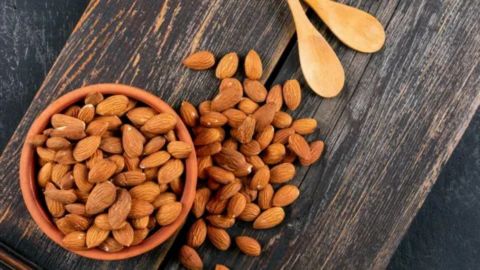
Almonds—those crunchy, nutrient-packed nuts—are far more interesting than most people realize. Whether sprinkled over your breakfast bowl, turned into creamy milk, or eaten straight out of the jar, almonds have a story that stretches back thousands of years.
Beyond their delicious flavor and health benefits, these little powerhouses are full of surprising secrets. Let’s uncover 10 interesting facts about almonds that will make you appreciate them even more!
10 Interesting Facts About Almonds
1. Almonds Aren’t Actually Nuts
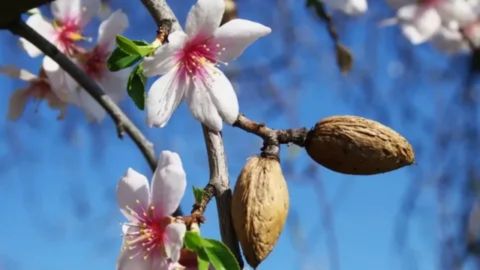
Surprise! Almonds are technically seeds, not nuts. They come from the fruit of the almond tree (Prunus dulcis), which is closely related to peaches and cherries. The almond is the seed found inside the fruit’s hard shell.
2. Biblical References
Almonds are mentioned in the Bible, most notably in the Book of Numbers, where Aaron’s rod is said to have budded and borne almonds.
“Aaron’s rod miraculously “budded … and brought forth … ripe almonds” (Numbers 17:8).”
3. World’s Largest Producer
The United States, specifically the Central Valley of California, produces approximately 80% of the world’s commercial almond supply.
4. A Bee’s Best Friend
Almond crops are almost entirely dependent on honeybees for pollination. The annual almond bloom in California requires the largest managed pollination event in the world, with millions of beehives being trucked in.
5. Nutrient Powerhouse
Almonds are rich in nutrients, including a high amount of vitamin E, magnesium, manganese, fiber, and healthy monounsaturated fats. A standard one-ounce serving is about 23 almonds.
| Nutrient | Amount per 100 g | % Daily Value (Approx.) | Health Benefits |
|---|---|---|---|
| Calories | 579 kcal | 29% | Provides sustained energy |
| Protein | 21.2 g | 42% | Supports muscle growth and repair |
| Total Fat | 49.9 g | 77% | Contains heart-healthy monounsaturated fats |
| Saturated Fat | 3.8 g | 19% | Moderate amount of healthy fats |
| Monounsaturated Fat | 31.6 g | — | Promotes heart health |
| Polyunsaturated Fat | 12.1 g | — | Aids in lowering bad cholesterol |
| Carbohydrates | 21.6 g | 7% | Provides steady energy release |
| Dietary Fiber | 12.5 g | 50% | Supports digestion and gut health |
| Sugars | 4.4 g | — | Naturally low in sugar |
| Calcium | 269 mg | 27% | Strengthens bones and teeth |
| Iron | 3.7 mg | 21% | Boosts red blood cell production |
| Magnesium | 270 mg | 68% | Helps regulate blood pressure and nerve function |
| Phosphorus | 481 mg | 48% | Vital for bone and cell health |
| Potassium | 733 mg | 21% | Supports heart and muscle function |
| Vitamin E | 25.6 mg | 171% | Acts as a powerful antioxidant for skin and cells |
| Vitamin B2 (Riboflavin) | 1.1 mg | 85% | Enhances energy metabolism |
| Folate | 44 µg | 11% | Essential for cell growth and repair |
6. Zero Waste Crop
Almond farming is remarkably sustainable, as almost every part of the crop is used. The kernel is the edible part, the shell is used for livestock bedding, and the hull is used for cattle feed.
7. Long Shelf Life
Due to their high vitamin E content, which acts as an antioxidant, whole unblanched almonds can be stored for up to two years if kept in an airtight container in the refrigerator.
National Almond Day is celebrated every year on February 16, honoring one of the world’s most nutritious and beloved nuts!
8. Ancient Symbol of Fertility and Good Fortune
In ancient Rome, newlyweds were showered with almonds as a fertility charm. This tradition evolved into the custom of giving sugared almonds (Jordan almonds) as wedding favors, with different colors used to mark various milestones: white for weddings, red for graduations, and pink or blue for a baby.
9. The Almond Tree’s Long Wait
An almond tree takes a significant amount of time to become productive. A young tree will typically take about three to five years to start producing a significant crop, and it may take as long as five to twelve years to reach its full nut-bearing potential. A mature tree can then continue to produce fruit for up to 25 years.

10. Bitter Almonds Are Naturally Toxic
There are two main types of almonds: sweet (the kind we snack on) and bitter. Bitter almonds contain a compound called amygdalin, which can be converted into a form of cyanide when consumed. They are not sold for general consumption and are illegal to import in some countries (like the U.S.).
They are sometimes used to make extracts and liqueurs, but only after special processing to remove the toxic compound.
FAQs
1. Are almonds good for your heart?
Yes, they help lower bad cholesterol and improve heart health.
2. How many almonds should I eat daily?
About 20–23 almonds a day is ideal.
3. Are raw or roasted almonds healthier?
Raw almonds have slightly more nutrients, but both are healthy.
4. Can lactose-intolerant people drink almond milk?
Yes, almond milk is dairy-free and safe for lactose-intolerant people.
References
https://biblia.com/bible/esv/numbers/17/8
https://fdc.nal.usda.gov/fdc-app#/food-details/170567/nutrients

Curious by nature, storyteller by choice. I run Interesting Facts to bring you mind-blowing stories, hidden truths, and fascinating insights from around the globe. If it makes you say “Wow, I never knew that!”—my job is done.
Laiba Hanif is a professional fact-finder and the writer behind “Interesting Facts.” Fueled by a degree in Anthropology and over five years of experience unearthing hidden truths, she specializes in digging up the most bizarre, fascinating, and mind-bending tidbits the world has to offer. She’s here to prove that reality is stranger—and more amazing—than fiction.