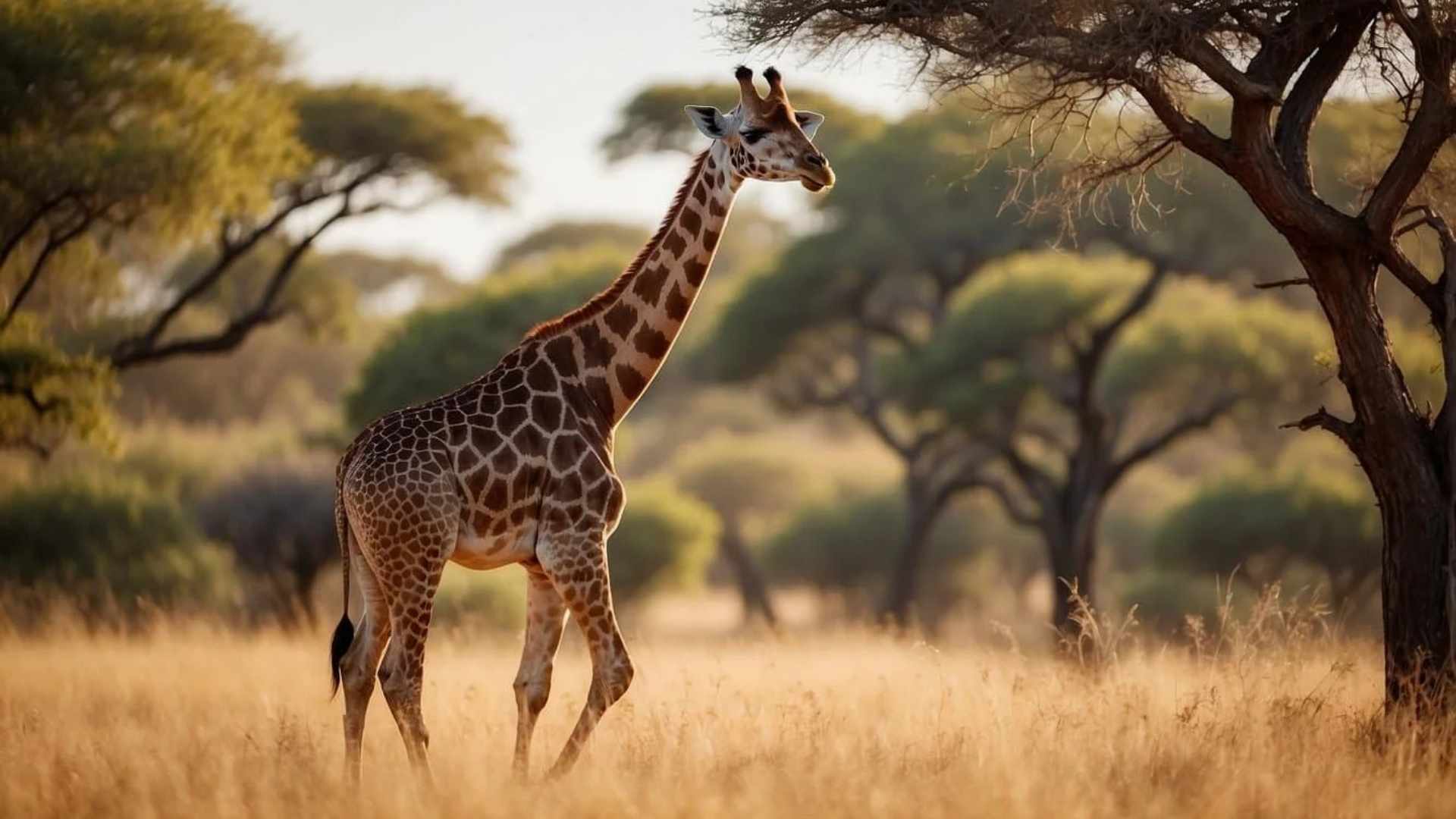
The tallest animals on Earth, but there’s way more to these gentle giants than just long necks. From their blue-black tongues to spot patterns as unique as fingerprints, giraffes are packed with surprises that most people have never heard of. In this guide, we’ll learn 10 interesting facts about giraffes that reveal just how extraordinary—and important—these towering mammals really are.
Think you know giraffes?
Most of us picture giraffes as tall, gentle creatures quietly grazing in the savannah. But beyond their height lies a world of wild surprises—like tongues almost two feet long, spot patterns as unique as fingerprints, and hearts powerful enough to pump blood up that towering neck. These fascinating animals aren’t just the tallest on Earth—they’re also some of the most extraordinary.
Quick Key Facts About Giraffes
| Features | Details |
|---|---|
| Common Name | Giraffe |
| Scientific Name | Giraffa camelopardalis (with several subspecies) |
| Family | Giraffidae |
| Average Height | Males: up to 5.5–6 m (18–20 ft); Females: up to 4.5–5 m (14–16 ft) |
| Average Weight | Males: ~1,200 kg (2,600 lbs); Females: ~830 kg (1,800 lbs) |
| Lifespan | 20–25 years in the wild; up to 28 years in captivity |
| Unique Traits | Long neck, blue-black tongue, ossicones (horn-like structures) |
| Group Name | A “tower” of giraffes (when standing); a “journey” (when moving) |
1. Giraffe as a Standing Animal
Giraffes spend most of their lives standing—eating, sleeping, and even giving birth. A newborn calf drops nearly six feet to the ground when delivered but quickly learns to stand within an hour. This standing lifestyle helps giraffes stay alert and ready for predators.
Quick Fact: Giraffes have horn-like bumps on their heads called ossicones, made of bone and covered with skin and hair.
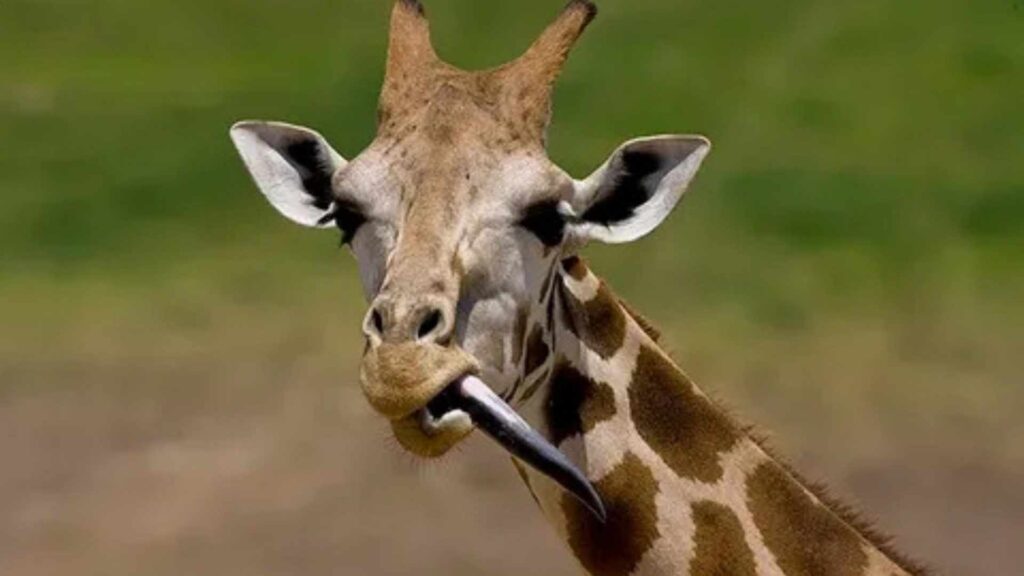
2. The Super Tongue of a Giraffe
Did you know? A giraffe’s tongue is as long as your arm—almost 20 inches. It’s dark blue to keep it safe from the sun. Giraffes use their super tongue to grab yummy leaves from tall, thorny trees without getting poked.
3. Their Long Necks Aren’t Just for Eating:
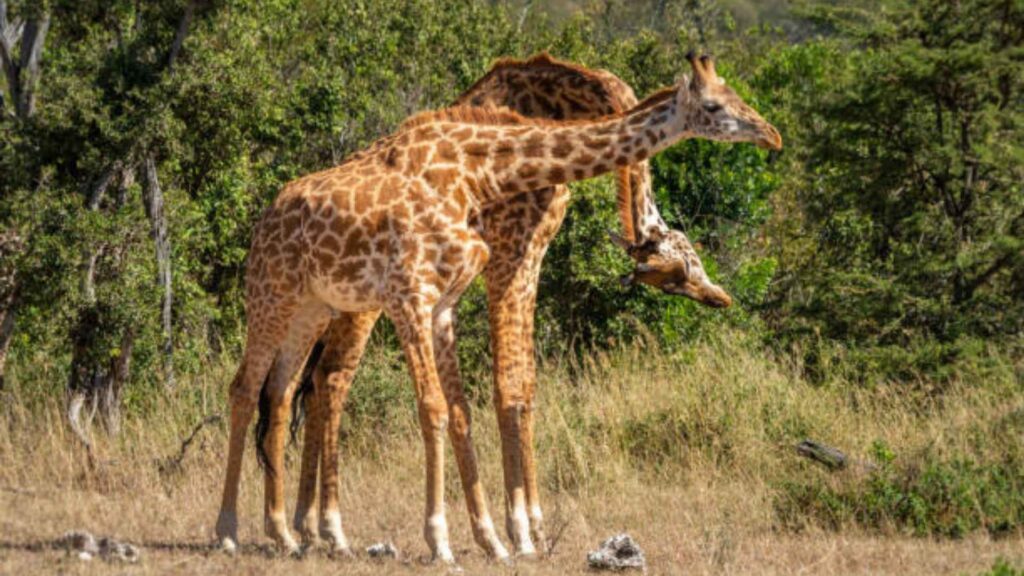
While the popular theory for their long necks is to reach high leaves, scientists now believe the length is also a result of sexual selection.
Male giraffes use their powerful necks for “necking,” a form of combat where they swing their heads at each other to establish dominance and win mating rights.
4. Have the Same Number of Neck Vertebrae as Humans
Despite their incredibly long necks, giraffes have only seven cervical vertebrae, the same number as humans and most other mammals. However, each of a giraffe’s neck bones can be over 10 inches long.
Quick Fact: A group of giraffes standing together is called a tower, while a moving group is known as a journey.
5. They Can Go a Long Time Without Drinking Water
Giraffes get most of their water from the plants they eat, particularly from the succulent leaves and fruit of acacia trees. This allows them to go for several days without needing to drink, which is a vulnerable position for them since they must splay their front legs awkwardly to reach the ground.
6. They Have a “Fission-Fusion” Social Structure
Giraffes don’t live in stable, permanent herds like elephants. Instead, they have a “fission-fusion” society, meaning their group composition changes frequently. Individuals can join or leave a group at will, and the group size can range from a small gathering of a few individuals to a large one of up to 50.
Quick Fact: Giraffes are not mute—they make low humming sounds, snorts, and even grunts, often too deep for humans to hear easily.
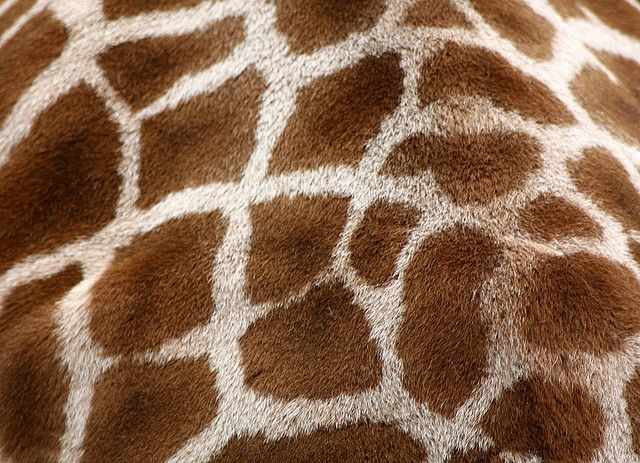
7. Unique Patterns as Fingerprints
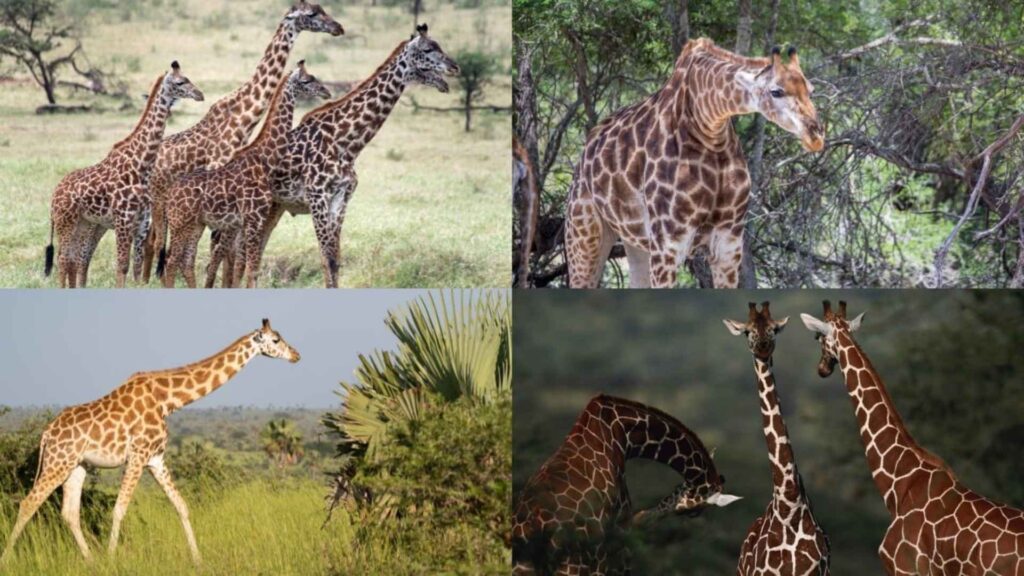
Just like human fingerprints, every giraffe has a unique coat pattern. The arrangement and shape of their spots are distinct to each individual.
8. They Can Eat Bones
While giraffes are herbivores, they have been observed chewing on bones, a behavior called osteophagia. This is believed to be a way for them to supplement their diet with essential minerals like calcium and phosphorus, which may be lacking in the plants they eat.
9. They Sleep Very Little
In the wild, giraffes are on high alert for predators and only need to sleep for about 5 to 30 minutes in a 24-hour period, often in quick, one- or two-minute naps while standing up.
10. Giraffe Classifications are Under Debate
For many years, giraffes were classified as a single species with several subspecies. However, recent DNA and genetic studies suggest that there are at least four distinct species of giraffes: the northern giraffe, the southern giraffe, the Masai giraffe, and the reticulated giraffe. The debate on their exact classification is ongoing.

Curious by nature, storyteller by choice. I run Interesting Facts to bring you mind-blowing stories, hidden truths, and fascinating insights from around the globe. If it makes you say “Wow, I never knew that!”—my job is done.
Laiba Hanif is a professional fact-finder and the writer behind “Interesting Facts.” Fueled by a degree in Anthropology and over five years of experience unearthing hidden truths, she specializes in digging up the most bizarre, fascinating, and mind-bending tidbits the world has to offer. She’s here to prove that reality is stranger—and more amazing—than fiction.