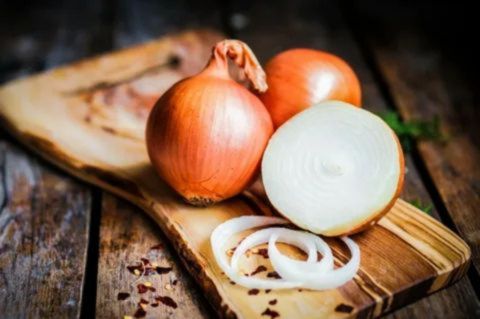
Onions are one of the most widely used vegetables in the world, adding flavor and aroma to countless dishes. But beyond the kitchen, these humble bulbs hold some surprising secrets.
Quick Facts About Onions
| Attribute | Details |
|---|---|
| Common Name | Onion |
| Scientific Name | Allium cepa |
| Family | Amaryllidaceae (previously Liliaceae) |
| Genus | Allium |
| Origin | Central Asia (likely Iran and Pakistan) |
| Type | Bulb vegetable |
| Other Relatives | Garlic, Leeks, Chives, Shallots |
10 Interesting Facts About Onions
1. Ancient Symbol of Eternity
Ancient Egyptians considered onions a symbol of eternity due to their circular layers and even placed them in tombs of pharaohs.
Did you know??
The largest onion ever grown weighed over 18 pounds (about 8.5 kg), a true behemoth!
2. Onions Are Packed with Nutrients
Rich in vitamin C, fiber, and antioxidants, onions support immunity and digestion.
| Nutrient | Amount | Health Benefit |
|---|---|---|
| Calories | 40 kcal | Low in calories, great for weight management |
| Carbohydrates | 9.3 g | Provides natural energy |
| Sugars | 4.2 g | Natural sweetness, not harmful in moderation |
| Dietary Fiber | 1.7 g | Supports healthy digestion |
| Protein | 1.1 g | Helps in body repair and growth |
| Fat | 0.1 g | Virtually fat-free, heart-friendly |
| Vitamin C | 7.4 mg (12% DV) | Boosts immunity and skin health |
| Folate (B9) | 19 µg (5% DV) | Supports cell growth and metabolism |
| Vitamin B6 | 0.1 mg (6% DV) | Aids brain function and energy metabolism |
| Potassium | 146 mg (4% DV) | Maintains fluid balance and heart health |
| Calcium | 23 mg (2% DV) | Strengthens bones and teeth |
| Iron | 0.2 mg (1% DV) | Helps oxygen transport in blood |
| Antioxidants | High (esp. quercetin) | Reduces inflammation and protects cells |
3. Early Currency
During the Middle Ages in Europe, onions were so valuable that they were sometimes used to pay rent and were even given as gifts.
4. Tear Gas Science
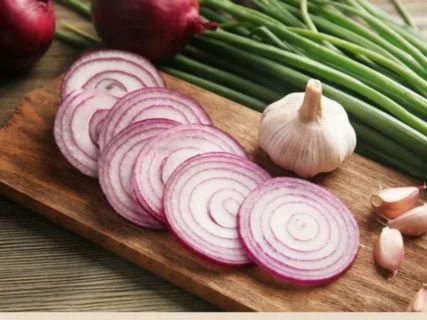
The tear-inducing effect is caused by a chemical compound (propanethiol S-oxide) that is released when the onion cells are cut, which then reacts with the moisture in your eyes to form a mild sulfuric acid.
Bonus Fact
The country that consumes the most onions per capita is often cited as Libya, with a staggeringly high annual average consumption per person.
5. Olympic Boost
Ancient Greek athletes reportedly ate pounds of onions and drank onion juice before the Olympic games, believing it would boost their strength and courage.
6. A Natural Weather Forecaster
An old English rhyme suggests that the thickness of an onion’s skin can predict the severity of the coming winter: “Onion skins very thin, mild winter coming in.” Onion skins are very tough; the coming winter will be very rough.”
7. A Nickname for the Big Apple
Before “The Big Apple,” New York City was reportedly nicknamed “The Big Onion.” This was because it was seen as a place with many layers, which you could peel away without ever reaching the core.
Additional Tip
A cut onion can be used to clean rust off knives or to help clean a grill grate.
8. Historical Medicine
For centuries, onions have been used medicinally. Ancient Romans and medieval doctors prescribed them for a variety of ailments, including headaches, hair loss, and even snakebites.
9. State Vegetables
The humble onion holds a place of honor as the official state vegetable in multiple U.S. states. For example, the Vidalia onion is the official state vegetable of Georgia, and the Texas Sweet onion is the official state vegetable of Texas.
10. The Word’s Origin
The English word “onion” comes from the Latin word unio, which means “one” or “unity,” referring to the single bulb it grows as.
Did you know??
During the American Civil War, onions weren’t just food—they were seen as medicine. General Ulysses S. Grant, who later became the 18th President of the United States, valued onions so highly that he once declared:
“I will not move my army without onions!”
FAQs
1. Why do onions make you cry?
Onions release a sulfur-based compound called syn-Propanethial-S-oxide when cut, which irritates the eyes and causes tears.
2. What are the health benefits of onions?
Onions are rich in vitamin C, fiber, and antioxidants like quercetin, which help boost immunity, improve digestion, and fight inflammation.
3. Are all types of onions the same nutritionally?
No. Red onions have the highest antioxidant content, while sweet onions are milder and better for raw dishes like salads.
4.How long have onions been used by humans?
Onions have been cultivated for over 5,000 years, making them one of the oldest known vegetables in human history.

Curious by nature, storyteller by choice. I run Interesting Facts to bring you mind-blowing stories, hidden truths, and fascinating insights from around the globe. If it makes you say “Wow, I never knew that!”—my job is done.
Laiba Hanif is a professional fact-finder and the writer behind “Interesting Facts.” Fueled by a degree in Anthropology and over five years of experience unearthing hidden truths, she specializes in digging up the most bizarre, fascinating, and mind-bending tidbits the world has to offer. She’s here to prove that reality is stranger—and more amazing—than fiction.