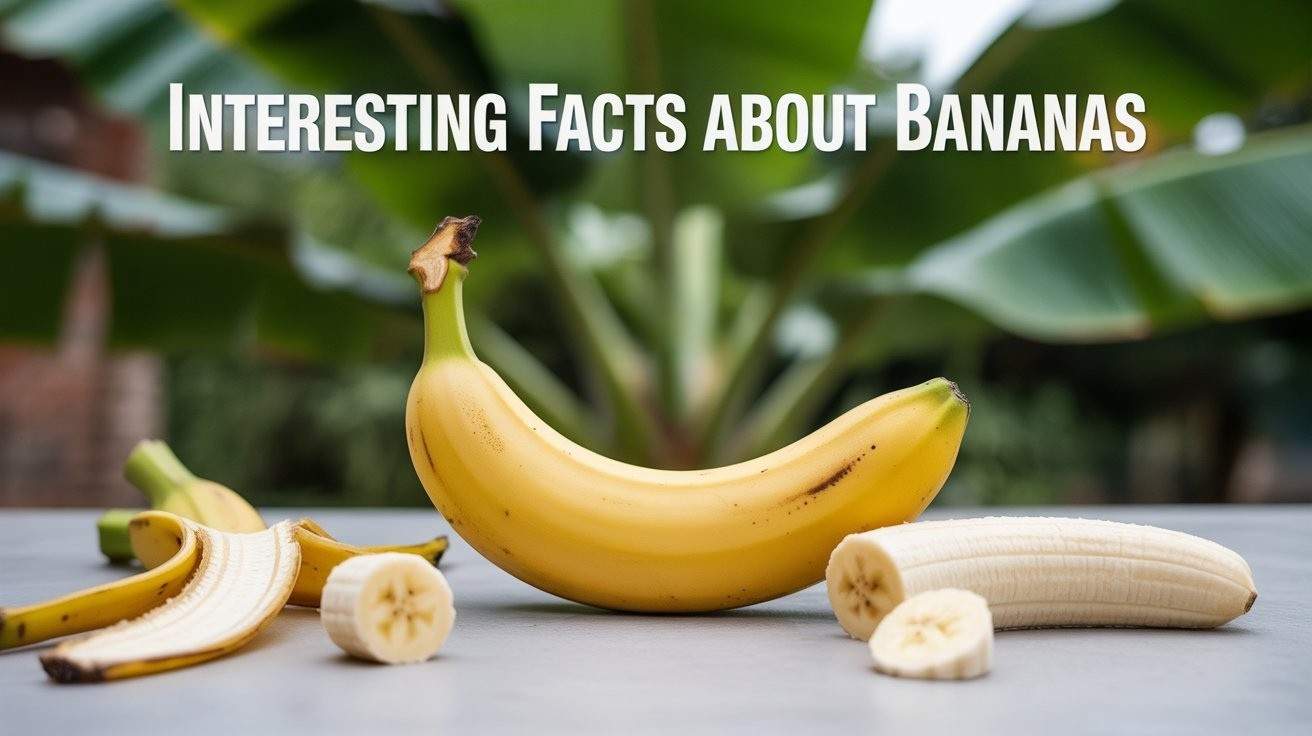
Bananas are one of the most loved fruits in the world. Easy to peel, naturally sweet, and full of nutrients, they’re a staple in many diets. But beyond being a quick snack, bananas have fascinating secrets hidden beneath their yellow skin. Let’s explore 12 interesting facts about bananas that prove they’re more than just a fruit.
The Banana: Beyond the Peel
Bananas: the world’s most popular fruit, but they’re not what they seem! This yellow powerhouse is botanically a giant herb and the berry of its plant. Packed with potassium and history, the banana you know today is just one of over a thousand varieties, a food staple with a truly global and surprisingly wild past.
Quick Facts About Bananas
| Category | Details |
|---|---|
| Common Name | Banana |
| Scientific Name | Musa acuminata (and hybrids like Musa × paradisiaca) |
| Family | Musaceae |
| Genus | Musa |
| Plant Type | Herbaceous perennial (not a tree) |
| Native Origin | Southeast Asia & Papua New Guinea |
| Number of Varieties | Over 1,000 (Cavendish, Plantain, Red Banana, Blue Java, Baby Banana, etc.) |
| Edible Part | Fruit (technically a berry) |
12 Interesting Facts About Bananas
1. Bananas Are Technically Berries
Surprising, right? Botanically speaking, bananas are classified as berries because they grow from a single flower with multiple ovaries. Ironically, strawberries aren’t true berries at all.
2. Bananas Don’t Grow on Trees
Although they look like trees, banana plants are actually giant herbs. Their “trunk” is made of tightly packed leaves, known as a pseudostem.
3. They are used to make “Banana Silk.”
The stems of the banana plant, which are usually thrown away after harvest, are made up of strong fibers. These fibers can be extracted and spun into yarn to create textiles known as “banana silk” or Musa fiber, which is used to make fine clothing, mats, and paper.

4. Bananas Can Boost Your Mood
Thanks to tryptophan, vitamin B6, and natural sugars, bananas support the production of serotonin and dopamine—the brain’s “happy chemicals.” This is why they’re often called natural mood boosters.
5. Bananas Can Float on Water
Similar to coconuts, bananas can float due to their low density and water-resistant peel. This quality even helped them spread naturally across islands centuries ago.
6. Over 1,000 Varieties of Bananas Exist
While the Cavendish banana dominates global markets, there are many varieties, including red bananas, mini bananas, plantains, and the rare Blue Java, also called the “ice cream banana” for its creamy texture.

7. Bananas Are Naturally Radioactive
Bananas contain potassium-40, a naturally occurring radioactive isotope. But don’t worry—the levels are so tiny that you’d need to eat millions of bananas at once to see any harmful effects.
8. Banana Peels Have Many Uses
Banana peels aren’t just trash. They can polish shoes, whiten teeth, remove splinters, and even soothe insect bites. Some cultures also cook banana peels as part of traditional dishes.

9. Bananas Ripen Faster Near Other Fruits
Bananas release ethylene gas, a natural ripening agent. This means they not only ripen quickly themselves but can speed up the ripening of nearby fruits like apples and avocados.
10. Bananas Provide Quick Energy
Rich in natural sugars, carbohydrates, and fiber, bananas are a favorite among athletes. A single banana can provide a quick energy boost before or after workouts.
| Nutrient | Amount |
|---|---|
| Calories | 89 kcal |
| Water | 74.9 g |
| Carbohydrates | 22.8 g |
| Sugars | 12.2 g |
| Dietary Fiber | 2.6 g |
| Protein | 1.1 g |
| Fat | 0.3 g |
| Potassium (K) | 358 mg |
| Magnesium (Mg) | 27 mg |
| Vitamin B6 | 0.4 mg (31% DV) |
| Vitamin C | 8.7 mg (10% DV) |
| Folate (B9) | 20 µg |
| Iron | 0.3 mg |
| Calcium | 5 mg |
11. They are used to make beer and wine
In many parts of Africa, particularly Uganda and Tanzania, bananas (often a different, starchier variety) are a key ingredient for making traditional alcoholic beverages like banana beer and banana wine (or tonto).

12. Humans Share Genetic Material with Bananas
It’s often cited that humans share about 50%−60% of their genes with a banana. This is due to the fact that all life on Earth evolved from a common ancestor, meaning we share many of the basic “housekeeping” genes necessary for cell function.
FAQs
Q1: Are bananas good for weight loss?
Yes, bananas are low in calories and high in fiber, which keeps you full longer, making them helpful in weight management.
Q2: Can diabetics eat bananas?
Yes, but in moderation. Pairing bananas with protein or healthy fats can help balance blood sugar.
Q3: What’s the healthiest type of banana?
Green bananas have more resistant starch, while ripe ones provide quick energy. Both are healthy depending on your needs.
Q4: Why do bananas turn brown so fast?
As bananas ripen, their starches turn into sugars. Exposure to oxygen causes the peel to brown quickly.
Q5: What is the rarest banana variety?
The Blue Java banana, with its vanilla-like flavor, is considered one of the rarest and most unique.
Q6: How many bananas can you eat in a day?
Most people can safely eat 1–2 bananas daily as part of a balanced diet.

Curious by nature, storyteller by choice. I run Interesting Facts to bring you mind-blowing stories, hidden truths, and fascinating insights from around the globe. If it makes you say “Wow, I never knew that!”—my job is done.
Laiba Hanif is a professional fact-finder and the writer behind “Interesting Facts.” Fueled by a degree in Anthropology and over five years of experience unearthing hidden truths, she specializes in digging up the most bizarre, fascinating, and mind-bending tidbits the world has to offer. She’s here to prove that reality is stranger—and more amazing—than fiction.