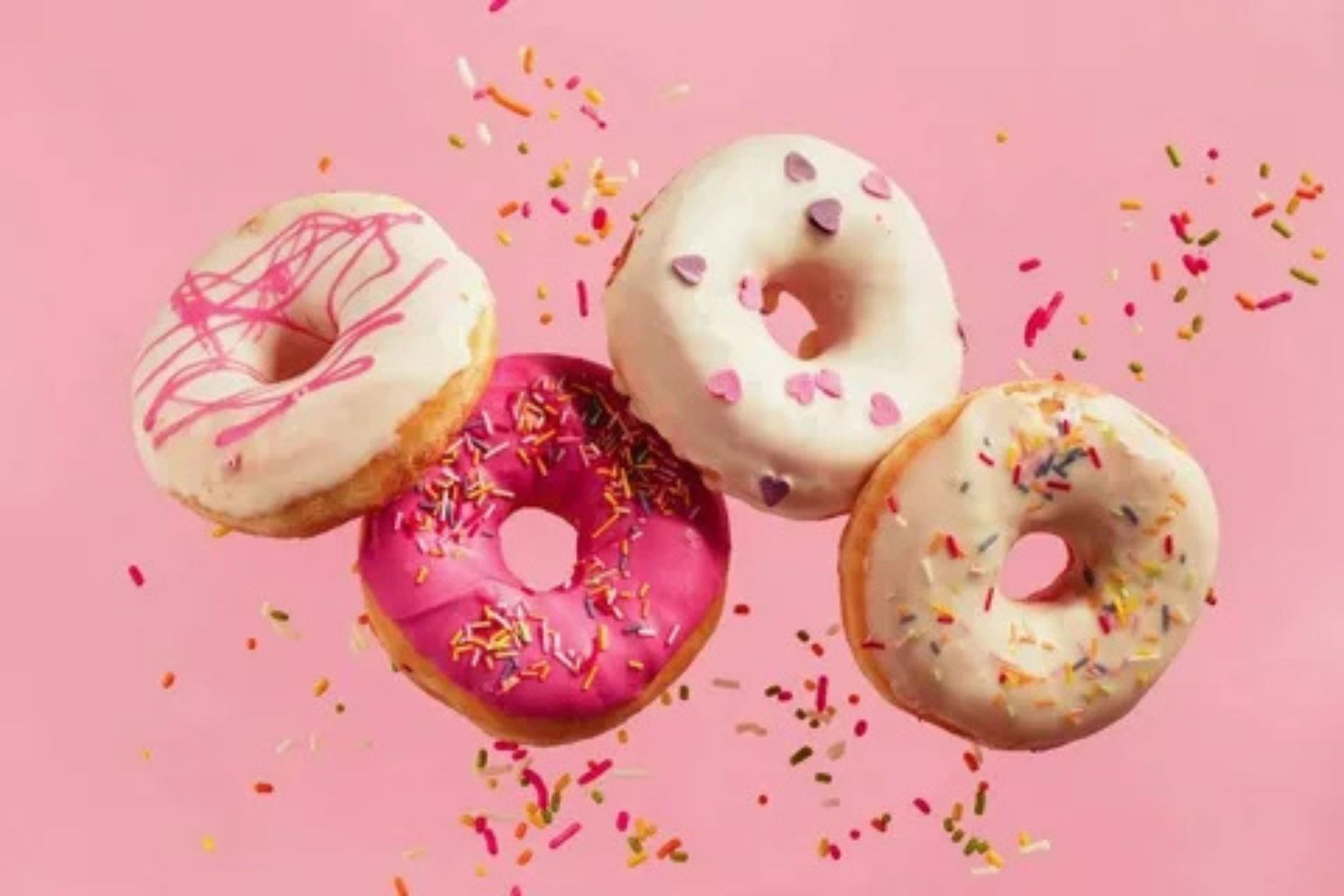
Few treats are as universally loved as the donut—that soft, golden ring of sweetness that instantly brightens any day. Whether glazed, filled, or powdered, donuts have a rich history and surprising stories behind them. Here are 15 interesting facts about donuts that’ll make you appreciate these sweet circles even more.
15 Attention-Grabbing Facts About Donuts
1. The “Donut Hole” was invented at sea, using a pepper box. The signature ring shape wasn’t a chef’s artistic choice but a practical invention by a 16-year-old American sailor named Hanson Gregory in 1847. Frustrated with the raw, doughy centers of traditional fried dough balls, he supposedly punched a hole in the middle of a batch using a ship’s tin pepper box. This ensured the dough cooked evenly all the way through, birthing the modern donut shape.
2. They Were Originally Known as “Olykoeks.” The earliest direct ancestors of the American donut were brought by Dutch settlers to New Amsterdam (now New York) in the 17th century. They were called olykoeks, or “oily cakes,” and were simple, sweet balls of dough fried in pork fat. The name “doughnut” is often attributed to the nuts or fruit placed in the center of the dough balls to replace the uncooked part.
3. The Word “Donut” Was Popularized by a Machine Manufacturer. While “doughnut” is the original and still-accepted spelling, the shortened “donut” gained popularity in the early 20th century. It wasn’t purely an American casualism; the New York-based Display Doughnut Machine Corporation abbreviated the word in 1920 to make it easier for their international buyers to pronounce and for their advertising to fit on smaller signage.
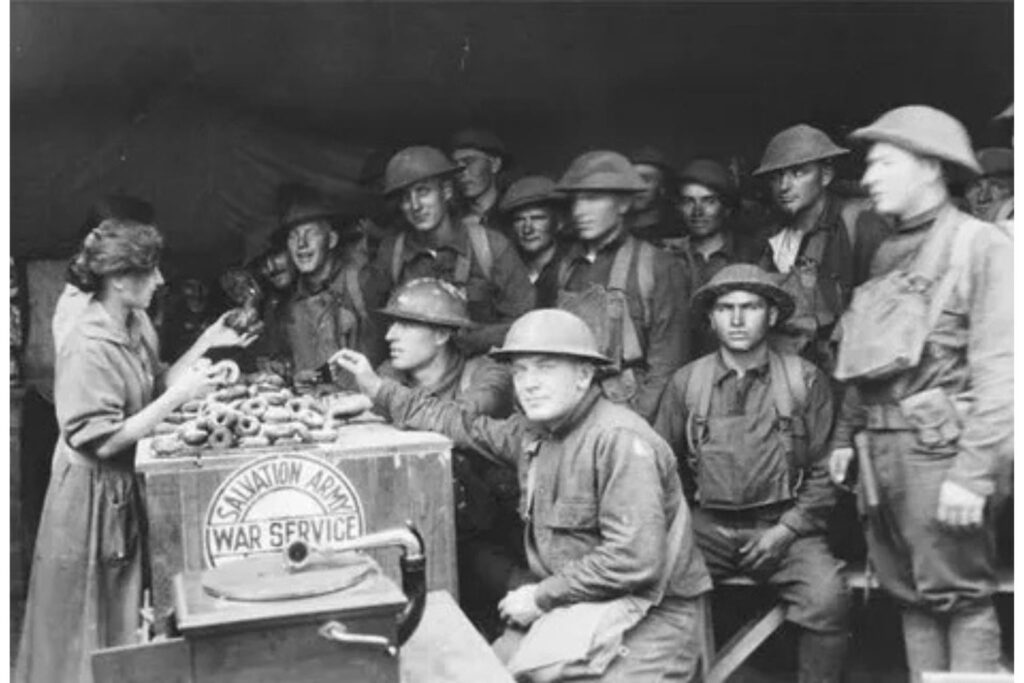
4. Doughnuts Saved Lives and Morale in World War I. The Salvation Army’s “Donut Lassies” became heroes of the trenches. Female volunteers in France used rudimentary equipment—including soldiers’ helmets for frying—to make and serve fresh donuts to American troops. This simple treat provided a powerful and morale-boosting taste of home, leading soldiers to be nicknamed “Doughboys.”
5. The First Automated Donut Machine Was Invented by a Russian Refugee. In 1920, Adolph Levitt, a Jewish refugee from Russia, invented the first automated donut-making machine in New York City. This revolutionized the industry, allowing for mass production and guaranteeing consistent quality, making donuts cheap and accessible—a staple during the Great Depression.
6. A Donut Was Once Declared “The Food Hit of the Century.” At the 1934 Chicago World’s Fair, machine-produced donuts were given the lofty title of “The Food Hit of the Century of Progress.” Their ability to be made quickly, cheaply, and consistently made them a symbol of American mechanical efficiency and a popular working-class comfort food.
7. Canada Has More Donut Shops Per Capita Than Any Other Country. While the U.S. produces over 10 billion donuts annually, Canada, with a significantly smaller population, boasts the world’s highest number of donut shops per person, cementing its deep cultural love for the fried treat, largely thanks to national chains.
8. The French Have a Donut Cousin Called “Nun’s Farts.” The delicate, airy fried dough fritters, a French cousin to the donut, are known as Pets de Nonne (literally “Nun’s Farts”). This amusingly named treat is typically small, yeast-leavened, and dusted with powdered sugar.
9. The World’s Largest Donut Weighed 1.7 Tons. A Guinness World Record for the largest donut ever made was set in 1993 in Utica, New York. This colossal, jelly-filled pastry measured 16 feet across and weighed 3,739 pounds (about 1.7 metric tons).
10. “Spudnuts” are donuts made with potato flour. A unique variation exists where the dough is made using mashed or dehydrated potatoes instead of traditional wheat flour. These “Spudnuts” were so popular in the mid-20th century that they spawned a chain of independent franchise shops across the U.S.
11. The Hanukkah Tradition Features a Jelly Donut. In Israel and among Jewish communities worldwide, the Hanukkah holiday is celebrated with sufganiyot, deep-fried, jelly-filled donuts. The act of eating deep-fried foods commemorates the miracle of the oil that burned for eight nights in the Temple of Jerusalem.
12. The “Cop and Donut” Trope Has a Historical Basis. The stereotype of police officers loving donuts developed in the 1950s. During their graveyard shifts, donut shops were often among the few establishments open late, offering a safe, well-lit place to complete paperwork, grab a cheap snack, and enjoy a cup of coffee.
13. A World Record Exists for Eating a Donut Without Licking the Lips. Competitive eating records related to donuts include specific, difficult challenges, such as eating a powdered donut in a specific time limit, or the record for eating a jam donut in 11.41 seconds without using hands and without licking the lips—a feat designed to maximize the messiness.
14. A Donut Was Sent to the Edge of Space. In a whimsical 2017 publicity stunt, a Canadian coffee chain successfully launched a maple-glazed donut into the stratosphere using a weather balloon. It reached over 100,000 feet, making it perhaps the most well-traveled piece of fried dough in history.
15. Donut glaze is a delicate chemistry experiment. The perfect donut glaze is a scientific blend of sugar, liquid, and temperature. The glossy, delicate sheen is achieved through controlled sugar saturation and rapid cooling, which causes the sugar to crystallize into a thin, glassy layer that “cracks” when you bite into it.

Curious by nature, storyteller by choice. I run Interesting Facts to bring you mind-blowing stories, hidden truths, and fascinating insights from around the globe. If it makes you say “Wow, I never knew that!”—my job is done.
Laiba Hanif is a professional fact-finder and the writer behind “Interesting Facts.” Fueled by a degree in Anthropology and over five years of experience unearthing hidden truths, she specializes in digging up the most bizarre, fascinating, and mind-bending tidbits the world has to offer. She’s here to prove that reality is stranger—and more amazing—than fiction.