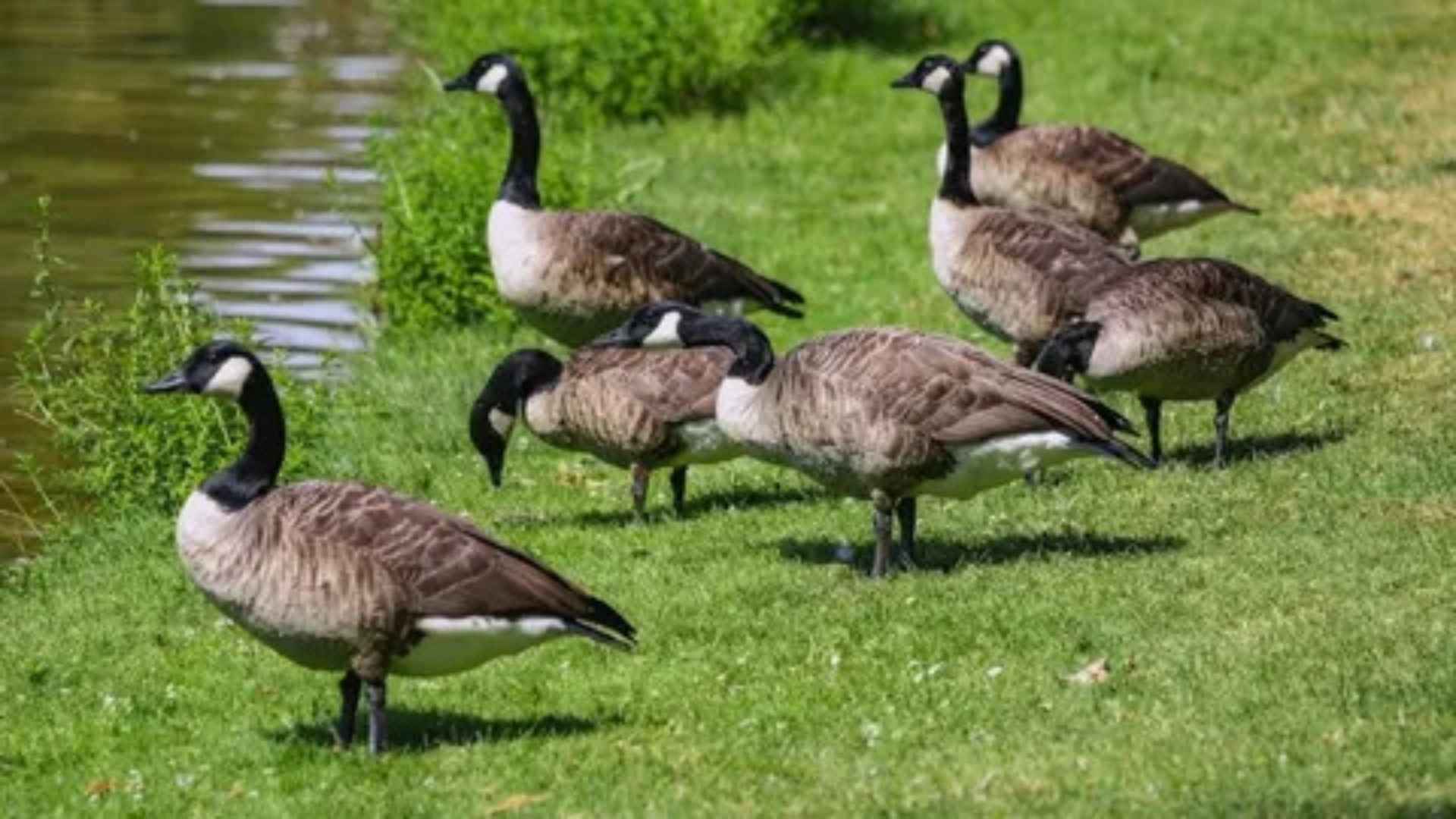
Ever wondered what makes geese so special? Beyond their honking and migration, these birds have secrets that might surprise you. From flying smarter than airplanes to staying loyal for life, here are 12 interesting facts about geese that prove they’re some of nature’s most fascinating creatures.
Goose Quick Facts
| Characteristic | Details |
|---|---|
| Common Name | Goose (plural: Geese) |
| Scientific Family | Anatidae (same family as ducks and swans) |
| Average Lifespan | 10–24 years in the wild; up to 40+ years in captivity |
| Diet | Mostly vegetarian—grass, seeds, roots, aquatic plants (sometimes insects) |
Think You Know Geese??
Think geese are just noisy birds that honk and waddle around ponds? Think again! These fascinating creatures are full of surprises—from flying in perfect formation to remembering human faces. In this guide, we’ll uncover 12 interesting facts about geese that will change the way you see them forever.
12 Interesting Facts About Geese
Geese are fascinating birds with unique habits and abilities that make them stand out in the animal world. Here are 12 simple and fun facts about them:
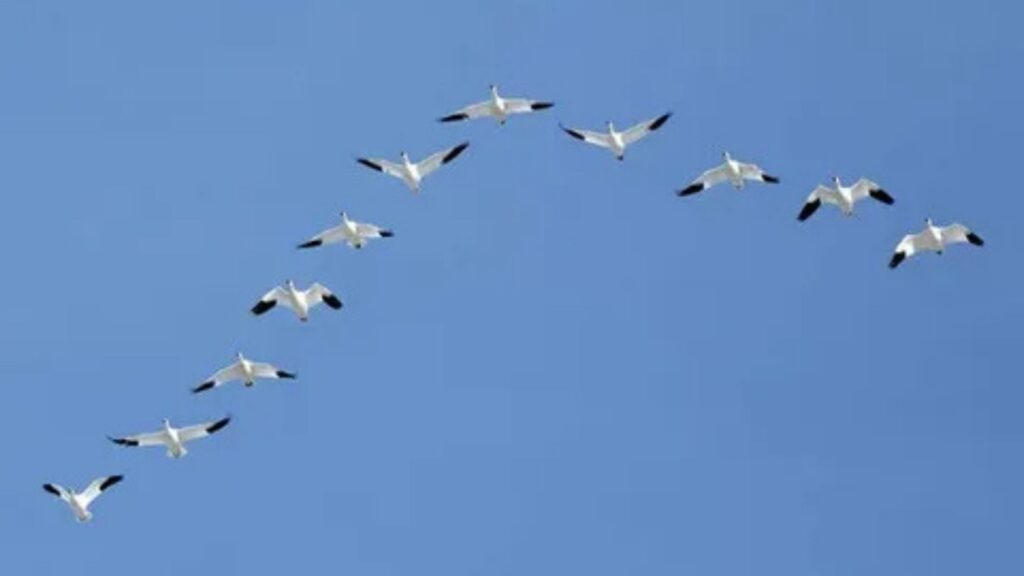
1. Smart Flyers
Geese fly in a V-shape to save energy. The lead goose works the hardest, then falls back to rest while another takes the lead.
2. Lifelong Love
Once geese find a mate, they stay together for life, showing loyalty and strong family bonds.
3. Long Lives
Wild geese usually live 10–24 years, but in safe captivity, some have lived over 40 years.
4. Natural Guards
Their loud calls and protective nature make geese great “guard animals” on farms.
Quick Fact
Geese have ultraviolet vision, allowing them to see light patterns and details invisible to the human eye.
5. Not Really Teeth
Geese don’t have real teeth, but their beaks and tongues have sharp, tooth-like ridges called tomia that help them grip food.
6. Good Memory
Geese can recognize human faces—and even remember who treated them kindly or badly.
7. Different Names for Groups
A group on land is called a gaggle, while in the sky they’re known as a skein or a wedge.
8. Highly Intelligent
Geese are problem solvers and use impressive “mental maps” to navigate during migration.
Quick Fact
Goslings begin calling to their parents from inside the egg before they hatch.
9. Half-Asleep Watchers
Geese can sleep with one eye open, resting one side of their brain while staying alert for danger.
10. Mostly Plant-Eaters
Their diet includes grass, seeds, roots, and water plants, though they sometimes nibble on small insects.
11. Built for Saltwater
Some species have a special gland that removes excess salt, letting them drink seawater safely.
12. Imprinting Instinct
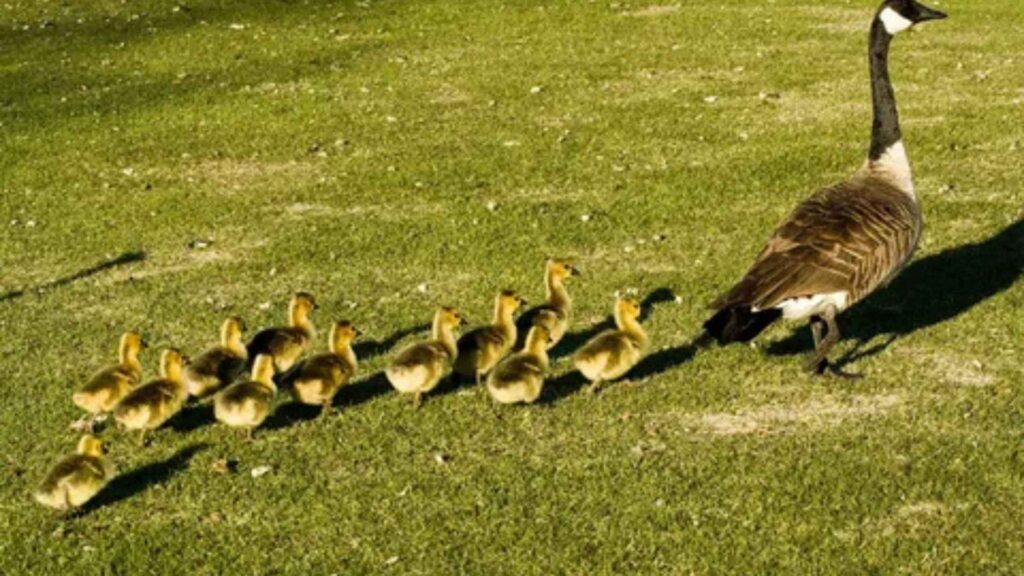
Baby geese, called goslings, follow the first moving thing they see after hatching—whether it’s their mom, a human, or even another animal
Differences between ducks, swans, and geese
| Feature | Ducks | Geese | Swans |
|---|---|---|---|
| Size | Smallest | Medium | Largest |
| Neck Length | Short | Medium | Long, graceful |
| Bill Shape | Broad, flat (dabbling/diving) | Short, tapered (grazing) | Long, straight |
| Diet/Feeding | Insects, aquatic plants, small fish (dabbling/diving) | Grasses, grains, plants (grazers) | Aquatic plants, roots, stems |
| Vocalization | Quacking | Honking | Trumpeting, hissing |
| Behavior | Often form seasonal pairs | Mate for life, strong family bonds | Mate for life, swim in pairs |
| Habitat Use | Ponds, rivers, marshes | Wetlands, fields, lakes | Lakes, rivers, wetlands |
| Flight | Fast, agile flyers | Strong migratory V-formation | Powerful flyers, but less maneuverable |
FAQs
1. Do geese really mate for life?
Yes, most geese form lifelong bonds with a single partner, sharing responsibilities like nesting, protecting, and raising their goslings together.
2. Why do geese fly in a V formation?
Flying in a V shape helps geese save energy, communicate better in flight, and rotate leaders to keep the flock strong during long migrations.
3. Can geese see things humans can’t?
Geese have ultraviolet vision, which lets them detect patterns, food sources, and signals invisible to the human eye.

Curious by nature, storyteller by choice. I run Interesting Facts to bring you mind-blowing stories, hidden truths, and fascinating insights from around the globe. If it makes you say “Wow, I never knew that!”—my job is done.
Laiba Hanif is a professional fact-finder and the writer behind “Interesting Facts.” Fueled by a degree in Anthropology and over five years of experience unearthing hidden truths, she specializes in digging up the most bizarre, fascinating, and mind-bending tidbits the world has to offer. She’s here to prove that reality is stranger—and more amazing—than fiction.