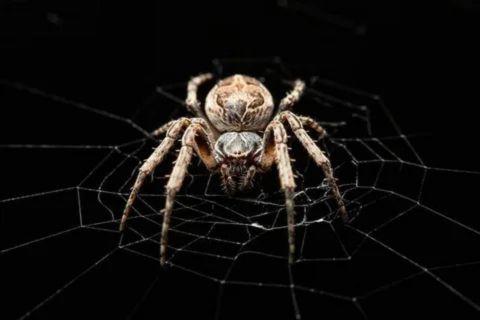
Spiders often spark fear, but they’re among the most fascinating creatures on Earth. With thousands of species and unique adaptations, spiders play an essential role in balancing ecosystems. Let’s uncover 20 interesting and surprising facts about spiders that will change the way you look at them.
Why Spiders Are Important in Nature
Spiders may seem scary, but they’re actually natural pest controllers. They feed on mosquitoes, flies, and other insects that can harm crops or spread diseases. Without spiders, insect populations would explode, disrupting the natural balance.
Quick Facts About Spiders
| Feature | Information |
|---|---|
| Common Name | Spider |
| Scientific Name | Araneae |
| Class | Arachnida |
| Family | Many families (e.g., Araneidae, Theraphosidae, Lycosidae) |
| Average Life Span | 1–3 years (some tarantulas up to 30 years) |
| Habitat | Found worldwide in forests, grasslands, deserts, caves, and homes |
| Distinctive Features | 8 legs, 2 body parts (cephalothorax & abdomen), most produce silk, many have venom |
20 Surprising Facts About Spiders
1. Spiders are not insects
They belong to a different class called Arachnida, which also includes scorpions, ticks, and mites. Spiders have two main body segments and eight legs, while insects have three body segments and six legs.
2. Spider blood is blue
Unlike human blood, which uses iron to bind oxygen (giving it a red color), spider blood (called hemolymph) uses a copper-based molecule called hemocyanin, which gives it a pale blue or greenish-blue tint.
Did you know??
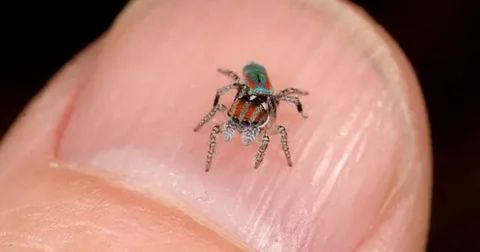
Male peacock spiders perform colorful dances, similar to peacocks spreading their feathers.
3. They move using hydraulics
Spiders do not have extensor muscles to push their legs outward. Instead, they pump fluid (hemolymph) into their legs to extend them, using a hydraulic system. This is why a dead spider’s legs often curl up.
4. A single spider can produce multiple types of silk
Some spiders can produce up to seven different types of silk from different glands, each with a specific use (e.g., sticky silk for the snare, strong silk for the frame, and soft silk for egg sacs).
5. A vegetarian spider
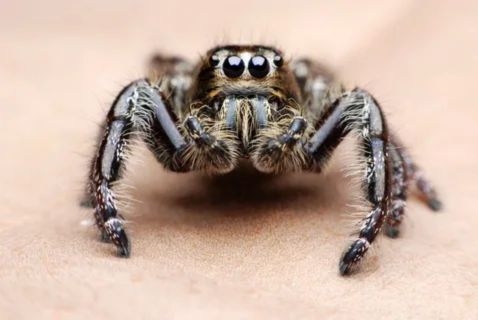
The Bagheera kiplingi jumping spider is the only known spider species with a mostly herbivorous diet, primarily eating protein-rich buds on acacia plants. All other known spider species are carnivores.
Did you know??
Jumping Spiders Have Excellent Vision. They can see in color and even recognize shapes. Their sharp vision helps them hunt with precision.
6. Spider silk is incredibly strong
A strand of spider silk is five times stronger than a piece of steel of the same diameter, making it one of the strongest materials in the world.
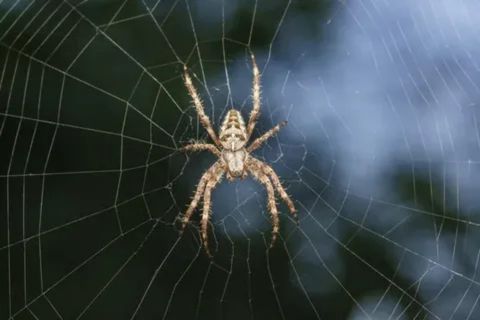
7. Spiders can “balloon.”
Young and small spiders often disperse by climbing to a high point, releasing silk into the air, and letting the wind carry them away, sometimes for miles. This is known as “ballooning.”
8. They digest food externally
Spiders cannot chew solid food. They inject digestive enzymes into their captured prey, which liquefies the internal tissues, and then they suck up the resulting liquid.
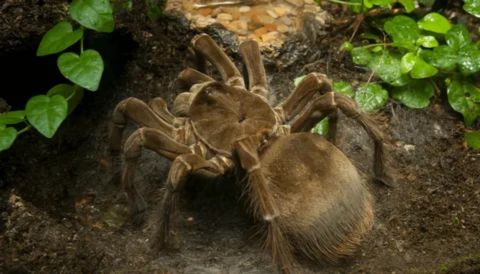
9. The world’s largest spider is the Goliath birdeater tarantula
It has a leg span that can reach up to 30 cm (12 inches) and can weigh over 170 grams (6 oz). Despite its name, it rarely eats birds. The Largest Spider Can Be the Size of a Dinner Plate.
10. Spiders can “taste” with their feet
Sensory hairs on a spider’s legs and pedipalps are so sensitive that they allow the spider to detect chemicals in the air and on surfaces. They can essentially “taste” a potential meal or a mate just by touching it.
11. Masters of color change
Certain ambush predators, like the Goldenrod Crab Spider (Misumena vatia), can actively change their body color from white to yellow and back again. This allows them to perfectly camouflage themselves while waiting on flowers to ambush pollinating insects.
12. The smallest known spider is tiny
The Patu digua spider measures just 0.37 millimeters, making it nearly invisible. Patu marplesi is so small that 10 of them could fit on the end of a pencil.
13. Spiders can self-amputate their legs
Like lizards with their tails, spiders can perform autotomy (self-amputation). If a predator grabs one of their legs, they can deliberately detach it at a specific joint to escape and live to regenerate the limb if they are still young enough to molt.
14. Spiders Can Detect Vibrations Through Their Webs
Webs act like giant antennas, helping spiders sense movement instantly.
15. Spiders can “hear” you talking from across the room
Despite lacking eardrums, jumping spiders use the super-sensitive hairs on their legs to detect airborne vibrations. Studies have shown they can pick up low-frequency sounds, such as a deep voice or a clapping sound, from several meters away
16. They have “book lungs.”
Unlike human lungs, many spiders breathe using specialized structures called book lungs. These are stacks of thin, alternating air pockets and tissue filled with hemolymph (blood), resembling the pages of a book, which greatly increases the surface area for gas exchange.
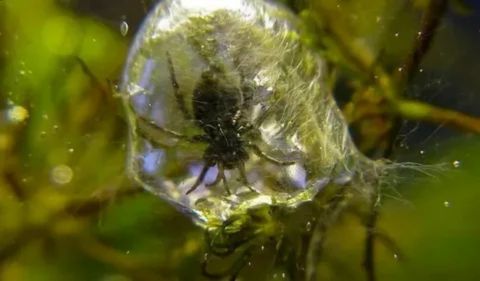
17. Some spiders build “diving bells.
The incredible water spider (Argyroneta aquatica) lives its entire life underwater in slow-moving water. It weaves a dome-shaped web between aquatic plants and fills it with air carried down from the surface on its hairy abdomen, creating a “diving bell” to live and feed inside.
18. Over 48,000 Spider Species
Scientists have discovered more than 48,000 species, and new ones are still being found every year
19. Spiders are found everywhere except Antarctica
They have adapted to live in nearly every type of habitat on Earth, from deserts to rainforests and even freshwater aquatic environments.
20. Male spiders often bring gifts to their mates
In some species, like the nursery web spider, the male presents the female with a wrapped-up insect (a “nuptial gift”) to distract her from eating him during mating.
FAQs
Q1: Do all spiders make webs?
No, many species hunt without webs.
Q2: Are all spiders poisonous?
Almost all have venom, but only a few are harmful to humans.
Q3: Can spiders be kept as pets?
Yes, tarantulas and jumping spiders are popular exotic pets.
Q4: How long do spiders live?
Most live 1–2 years, but some tarantulas survive up to 20 years.
Q5: Why do spiders scare people?
Arachnophobia is common and may come from evolutionary survival instincts.
Q6: Are spiders good for gardens?
Yes, they reduce harmful insect populations naturally.

Curious by nature, storyteller by choice. I run Interesting Facts to bring you mind-blowing stories, hidden truths, and fascinating insights from around the globe. If it makes you say “Wow, I never knew that!”—my job is done.
Laiba Hanif is a professional fact-finder and the writer behind “Interesting Facts.” Fueled by a degree in Anthropology and over five years of experience unearthing hidden truths, she specializes in digging up the most bizarre, fascinating, and mind-bending tidbits the world has to offer. She’s here to prove that reality is stranger—and more amazing—than fiction.