Peanuts are one of the world’s favorite snacks—crunchy, delicious, and packed with nutrients. Though often called nuts, they’re actually legumes, related to beans and lentils.
Originating from South America, peanuts are rich in protein, healthy fats, and vitamins, making them a tasty and wholesome choice enjoyed across the globe.
Quick Facts About Peanuts
| Category | Details |
|---|---|
| Common Name | Peanut |
| Scientific Name | Arachis hypogaea |
| Family | Fabaceae (Legume family) |
| Plant Type | Legume (not a true nut) |
| Origin | South America (likely Peru or Brazil) |
| Major Producers | China, India, United States, Nigeria, Sudan |
| Average Height | 12–18 inches (30–45 cm) |
| Growing Method | Flowers above ground; pods develop underground |
| Harvest Season | Late summer to early autumn |
| Main Varieties | Runner, Virginia, Spanish, Valencia |
25 Delicious Facts About Peanuts
1. They’re Not Nuts! Botanically, the peanut is a legume, related to beans and lentils, not tree nuts.
2. The flower must burrow underground after pollination for the seed pod to develop. A truly “earth-nut.”
3. A single ounce of peanuts packs about 7 grams of protein, making them a great energy booster.
4. It takes about 540 peanuts to make a 12-ounce jar of peanut butter.
5. The world’s largest peanut monument stands in Ashburn, Georgia.
The first peanut butter was invented by Dr. John Harvey Kellogg in 1895.
6. Peanuts first originated in South America, over 7,600 years ago.
7. The average American eats more than 7 pounds of peanuts per year.
8. In the U.S., any product labeled “peanut butter” must be at least 90% peanuts by law.
9. The peanut plant is a natural soil-improver; it fixes atmospheric nitrogen, enriching the earth.
10. Astronaut Alan Shepard famously brought a peanut with him to space on America’s first manned spaceflight in 1961.
The official mascot of Planters, Mr. Peanut, was created by a 13-year-old boy in a 1916 contest.
11. Two U.S. Presidents were once peanut farmers: Thomas Jefferson and Jimmy Carter.
12. Peanuts can be transformed into diamonds under extreme, high-pressure laboratory conditions!
13. The nickname “Goober” comes from ‘nguba’, the Congo language word for peanut.
14. An acre of peanuts can yield enough to make 35,000 peanut butter and jelly sandwiches
15. Peanuts are a major source of resveratrol, the antioxidant famous for being in red wine.
The world’s largest peanut butter and jelly sandwich weighed over 1,300 pounds.
16. The furthest peanut throw on record is an astounding 124.4 feet (37.92 meters).
17. The majority of peanuts in the U.S. are grown for peanut butter.
18. Reese’s Peanut Butter Cups were created in the 1920s by H.B. Reese, a Hershey employee.
19. Peanut shells are far from trash; they’re used to make items like kitty litter and fire kindling.
20. Peanuts were often used as a crucial high-protein survival food by enslaved people brought to North America.
Peanuts can be made into biodiesel fuel.
21. There are six cities in the U.S. named “Peanut,” spread across California, Pennsylvania, Tennessee, and West Virginia.
22. Peanuts contain resveratrol, the same heart-healthy compound found in red wine.
23. The nub between two peanut halves is actually the tiny embryo of the new plant
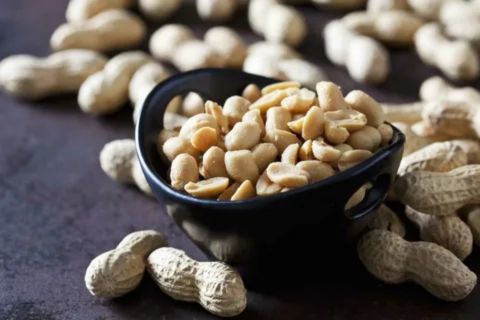
24. Peanuts are a powerhouse of niacin (Vitamin B3), linked to lowering the risk of Alzheimer’s disease.
25. Peanuts contain a potent antioxidant called p-coumaric acid, which may help reduce stomach cancer risk.
The peanut plant’s lifecycle is remarkably fast, taking just 120-150 days from planting to harvest.
FAQs
1. Are peanuts really nuts?
No, peanuts aren’t true nuts. They belong to the legume family, just like beans and lentils, because they grow underground rather than on trees.
2. Are peanuts good for your health?
Yes! Peanuts are enriched with protein, fiber, healthy fats, and essential vitamins. They help support heart health, brain function, and energy levels when eaten in moderation.
3. What are the main types of peanuts?
There are four major types—Runner, Virginia, Spanish, and Valencia. Each type differs in size, flavor, and best use (like snacks, peanut butter, or candies).
4. How are peanuts grown?
Peanuts flower above ground, but their pods develop underground. This unique growing process makes them different from tree nuts.
References
https://www.healthline.com/nutrition/peanuts#vitamins-minerals

Curious by nature, storyteller by choice. I run Interesting Facts to bring you mind-blowing stories, hidden truths, and fascinating insights from around the globe. If it makes you say “Wow, I never knew that!”—my job is done.
Laiba Hanif is a professional fact-finder and the writer behind “Interesting Facts.” Fueled by a degree in Anthropology and over five years of experience unearthing hidden truths, she specializes in digging up the most bizarre, fascinating, and mind-bending tidbits the world has to offer. She’s here to prove that reality is stranger—and more amazing—than fiction.