Why This Is Not Your Average December List
We all know December means Christmas, Hanukkah, and New Year’s Eve. That is the surface story. But beneath the twinkling lights and gift wrap lies a month steeped in the truly bizarre: from ancient calendar confusion that gives the month its name to the specific date once deemed the unluckiest day of the entire year—a date where it was believed you shouldn’t start a new job or relationship. Here are quick facts about December:
| Category | December Data |
|---|---|
| Month Number | 12th month of the year |
| Number of Days | 31 days |
| Name Origin | Latin “decem” = “ten” |
| Season (Northern Hemisphere) | Winter begins (Winter Solstice) |
| Season (Southern Hemisphere) | Summer |
| Full Moon Name | Cold Moon |
| Major Meteor Shower | Geminids (Dec 13–14 peak) |
| Shortest Day of the Year | Winter Solstice (Dec 21–22) |
| Birthstones | Turquoise, Tanzanite, Zircon |
| Birth Flowers | Holly & Narcissus |
| Zodiac Signs | Sagittarius (Nov 22–Dec 21), Capricorn (Dec 22–Jan 19) |
| Major Holidays | Christmas, Hanukkah, Kwanzaa, Boxing Day, Yule |
We have bypassed the common trivia to bring you 15 extraordinary, deeply researched, and genuinely surprising facts about December month that will change how you view the final chapter of the year.
The Roman Riddle & Ancient Origins: Interesting Facts About December
The history of December is a story of ancient clerical errors and astronomical alignment. The fact that the twelfth month is named after the Latin word for “ten” is just the beginning of the absurdity.
1. The Tenth Month: December’s Name is a Calendar Blunder
The name December comes from the Latin word “decem,” meaning ten. This is the most famous calendar quirk. In the original Roman Calendar of Romulus (circa 750 BC), the year had only ten months, starting with March, which meant December was, correctly, the tenth month.
- The Hidden Detail: When the Romans later added January and February to the beginning of the year (around 45 BC), December was pushed to the twelfth spot, but it kept its original name. The Romans, it seems, prioritized tradition over chronological logic, gifting us a linguistic paradox that persists two millennia later.
2. The Month That Didn’t Exist (For a While)
In the earliest Roman system, the period following December was not part of any month. It was simply a monthless period—a long, brutal winter gap—before the calendar restarted with March. It was considered a period of non-productivity, not worth tracking, until the months of January and February were created and inserted later.
3. December’s Darker, Older Name: Yule Month
Before the Roman names took hold in England, the Anglo-Saxons had names like Ƿintir-mōnaþ (Winter Month) and Ġēolamonaþ (Yule Month).
- The Fascinating Tie-In: The word ‘Yule’ and the celebration of the Yule Log are rooted in this ancient Germanic and Norse tradition, which centered around celebrating the Winter Solstice and the return of the sun’s light. Our modern, secular term “jolly” may even be derived from the Old Norse word “jól,” demonstrating a direct linguistic link from an ancient pagan feast to our modern holiday mood.
Celestial Secrets and Scientific Wonders
December is not just a month of history; it is an astronomical turning point that dramatically affects life in the Northern Hemisphere.
4. The Shortest Day (and Longest Night) in the Northern Hemisphere
The Winter Solstice (usually December 21st or 22nd) is the day the Northern Hemisphere is tilted farthest away from the Sun.
- The Hidden Detail: On the flip side, December in the Northern Hemisphere is the astronomical equivalent of June in the Southern Hemisphere. When New Yorkers are bundling up for the solstice, residents of Sydney, Australia, are celebrating their Summer Solstice and enjoying the longest day of the year.
5. The $1.2 Billion Typo That Started in December
One of the most spectacular, non-festive facts tied to this month is the colossal computer glitch that occurred on December 14th, 1999, at a major New York-based financial institution. Due to a single misplaced date stamp in a data transfer, the trading software interpreted a multi-billion dollar swap as being 30 years older than it was.
- The Unbelievable Consequence: This caused an instant $1.2 billion loss. The error wasn’t a complex calculation but a single, infinitesimal data entry error—a reminder that in high-stakes finance, the smallest detail can carry the largest price tag.
6. The World’s Most Active Meteor Shower
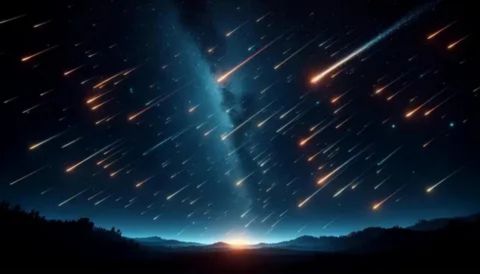
If you look up in mid-December, you have the best chance of witnessing the Geminid meteor shower. Peaking around December 13th and 14th, it is considered the most reliable and active meteor shower of the entire year.
- The Difference: Unlike most showers, which are debris from comets, the Geminids are debris from an asteroid named 3200 Phaethon, giving the streaks of light a unique, bright, and often colorful appearance.
Culture, Tradition & The Strange
December holidays have absorbed traditions from countless eras, resulting in some truly unusual facts that few know.
7. Jingle Bells Was Written for Thanksgiving
One of the most recognizable December songs was originally composed by James Lord Pierpont in 1857, not for Christmas, but for Thanksgiving. The song, initially titled “The One Horse Open Sleigh,” was meant to celebrate the famous sleigh races of Medford, Massachusetts, and was first performed at a Thanksgiving church service.
8. The Patron Saint of Thieves and Pawnbrokers
Saint Nicholas, the historical inspiration for Santa Claus, was a 4th-century Greek bishop. While famously known as the patron saint of children, he is also the patron saint of a far more colorful mix of people, including sailors, archers, repentant prostitutes, merchants, and, most famously, pawnbrokers and thieves. This duality adds a rich complexity to the figure behind the modern icon.
9. The Unluckiest Day of the Year is December 28th
According to ancient European folklore, December 28th (The Day of the Holy Innocents) was deemed the unluckiest day of the year. In some traditions, it was believed that no important endeavor should be started on this day, or it would end in failure. For centuries, people were warned against starting a new job, moving house, or even getting married on December 28th.
10. The Christmas Ban That Lasted 13 Years
In England, celebrating Christmas was once illegal. In 1647, the Puritan-led English Parliament, under the leadership of Oliver Cromwell, banned all festivities associated with Christmas because they were viewed as immoral, unholy, and pagan. The ban was strictly enforced and lasted for 13 years, until 1660, demonstrating the deep division over holiday merriment in history.

11. Tinsel Was Originally Made from Real Silver
Tinsel, the glittery metallic garland that adorns millions of trees, was originally invented in Nuremberg, Germany, around 1610. To achieve the brightest sparkle, it was made by slicing up thin strands of real silver. Because silver tarnishes quickly, manufacturers later switched to cheaper, less reactive metals, ultimately leading to the plastic-based product we know today.
12. Basketball Was Invented in December
On a cold December day in 1891, Canadian sports instructor James Naismith invented the game of basketball in Springfield, Massachusetts, by tacking two peach baskets to a gym railing. He created the game to keep his students physically active during the harsh New England winter—a classic case of ingenuity born from December’s chill.
December’s Global Milestones
Beyond the holidays, December has been the stage for several monumental, world-changing events.
13. The Birth of Human Flight
On December 17, 1903, at Kitty Hawk, North Carolina, the Wright Brothers successfully completed the first sustained flight of a powered, heavier-than-air machine. This single, 12-second flight fundamentally changed human history and ushered in the age of aviation.
14. Apollo 8’s Christmas Gift to Earth
On December 24, 1968, the crew of NASA’s Apollo 8—the first mission to orbit the Moon—broadcast the famous “Earthrise” photo back to the planet. The image, taken on Christmas Eve, showed the stunning sight of Earth rising over the lunar horizon, dramatically changing humanity’s perspective on its own place in the cosmos.
15. The Final Collapse of a Global Superpower
On December 26, 1991, the Supreme Soviet officially dissolved the Soviet Union, marking the formal end of the Cold War and a monumental geopolitical shift. Though the process took months, December was the final, decisive month that closed the book on one of the world’s most influential and powerful empires.
Major Events & Fun Observances in December
| Date | Event / Holiday | Type | Notes |
|---|---|---|---|
| December 1 | World AIDS Day | Global Health | UN-recognized awareness day |
| December 3 | International Day of Persons with Disabilities | Global | Promotes disability inclusion |
| December 4 | National Cookie Day (U.S.) | Fun Food Day | Popular social-media trend |
| December 6 | St. Nicholas Day | Cultural/Religious | Celebrated in Europe & parts of U.S. |
| December 8 | Bodhi Day | Religious | Buddhist holiday honoring enlightenment |
| December 10 | Human Rights Day | Global | UN observance |
| December 12 | Gingerbread House Day | Fun Food Day | Holiday baking favorite |
| December 13 | National Cocoa Day (U.S.) | Fun Food Day | Popular during winter season |
| December 14 | Monkey Day | Fun/Cultural | Celebrates primates worldwide |
| December 15 | Bill of Rights Day (U.S.) | National | Observation of constitutional rights |
| December 17 | Wright Brothers Day (U.S.) | National | Celebrates first powered flight |
| December 21–22 | Winter Solstice | Seasonal | Shortest day of the year (Northern Hemisphere) |
| December 24 | Christmas Eve | Holiday | Global celebration |
| December 25 | Christmas Day | Major Holiday | Celebrated worldwide |
| December 26 | Boxing Day | Holiday | Celebrated in UK, Canada, Australia |
| December 26 – Jan 1 | Kwanzaa | Cultural | African-American celebration of heritage |
| December (varies) | Hanukkah | Religious | Eight-day Jewish Festival of Lights |
| December 28 | National Card Playing Day | Fun Day | Rising in popularity |
| December 31 | New Year’s Eve | Global Holiday | Year-end celebration |
FAQs About December
1. Why is December called December?
The name comes from the Latin word decem, meaning “ten.” In the early Roman calendar, December was the tenth month, and the name stayed even after the calendar shifted.
2. What makes December unique?
December includes the winter solstice, major global holidays, and seasonal traditions that mark both the end of the year and the start of new beginnings.
3. What holidays are celebrated in December?
Some of the most recognized include Christmas, Hanukkah, Kwanzaa, Boxing Day, and various winter solstice festivals worldwide.

Curious by nature, storyteller by choice. I run Interesting Facts to bring you mind-blowing stories, hidden truths, and fascinating insights from around the globe. If it makes you say “Wow, I never knew that!”—my job is done.
Laiba Hanif is a professional fact-finder and the writer behind “Interesting Facts.” Fueled by a degree in Anthropology and over five years of experience unearthing hidden truths, she specializes in digging up the most bizarre, fascinating, and mind-bending tidbits the world has to offer. She’s here to prove that reality is stranger—and more amazing—than fiction.