Gold’s rarity, beauty, and unmatched physical properties ensure its lasting status as a symbol of wealth and innovation. Whether treasured as jewelry, traded as an asset, or used in advanced technology, gold remains one of the world’s most fascinating elements. Here are quick facts about Gold
Quick Facts About Gold
| Property | Value / Description |
|---|---|
| Chemical Symbol | Au |
| Atomic Number | 79 |
| Atomic Weight | 196.97 u |
| Density | 19.32 g/cm³ |
| Melting Point | 1,064°C (1,947°F) |
| Boiling Point | 2,856°C (5,173°F) |
| Color | Metallic Yellow |
| Malleability | Most malleable metal; 1 oz = sheet of 9 m² |
| Conductivity | Excellent electrical conductor |
| Abundance | ~0.004 parts per million in Earth’s crust |
10 Intriguing Facts About Gold-You Must Read
1. Gold Is One of the Oldest Metals Known to Humans
Gold was discovered long before recorded history. Archaeologists have found gold artifacts dating back more than 5,000 years, showing that ancient cultures prized the metal for its beauty and rarity.
2. Nearly All Gold Came From a Cosmic Collision
Gold is not formed on Earth. It’s an element so dense and energy-rich that scientists believe all gold on our planet (and in the universe) was forged in the violent collision of two neutron stars. These explosive events, called kilonovas, scatter the heavy elements across the cosmos, which later coalesce into planets. In a true sense, every piece of gold you see is stardust—an amazing fact among facts about gold.
Did You Know?? If all the gold ever mined were melted down, it would fill only about three Olympic-sized swimming pools.
3. All Mined Gold Fits Into a Single Cube
If every ounce of gold ever mined throughout history were melted down, it would form a single cube with sides of only about 21 to 22 meters (approximately 69 to 72 feet). This visualization underscores the metal’s scarcity and helps explain its enduring value and high price point.
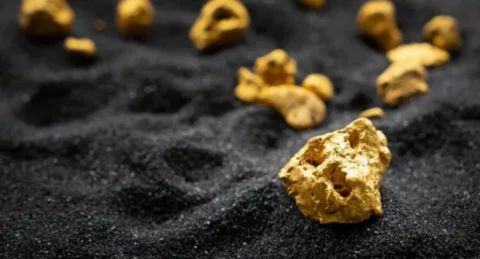
4. Gold is Biologically Inert and Edible
Pure gold is considered biologically inert, meaning it passes through the human digestive system without being absorbed. This is why microscopic gold flakes are used safely in some expensive foods and beverages (vark in South Asian sweets) and why gold is used extensively in non-reactive medical and dental implants.
6. Every iPhone Contains Trace Amounts of Gold
Gold’s superior electrical conductivity and resistance to corrosion make it essential for reliable connections in electronic devices. A smartphone, like an iPhone, contains a tiny amount of gold in its internal circuitry, primarily in the connectors and wiring. While small, the cumulative amount makes electronics recycling a growing source of gold recovery.
Nations like the United States, Germany, and Italy hold massive gold reserves to support economic confidence and safeguard against inflation.
7. The World’s Largest Gold Repository is in the US
The Federal Reserve Bank of New York (FRBNY) vault, located 80 feet below street level in Manhattan, holds the world’s largest known accumulation of gold. It stores hundreds of thousands of gold bars, mostly owned by foreign governments, central banks, and international organizations.
8. Gold is the Most Malleable Metal
Gold is the most ductile and malleable of all known metals. A single ounce of gold (about 28.3 grams) can be drawn into a wire 5 miles long or hammered into a translucent sheet called gold leaf, measuring only 0.00018 millimeters thick. This extreme malleability allows it to be shaped without breaking.
Edible gold flakes—known as 24K gold leaf—are used in luxury desserts, drinks, and gourmet dishes worldwide because they are chemically inert.
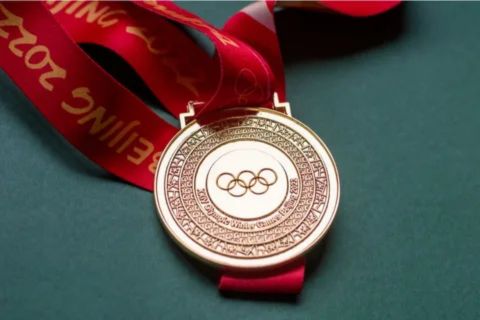
9. Olympic Gold Medals Haven’t Been Pure Gold Since 1912
The last Olympic gold medals made entirely of gold were awarded at the 1912 Stockholm Games. Modern Olympic “gold” medals are actually sterling silver, coated with at least 6 grams of pure gold (24 karats), as mandated by the International Olympic Committee (IOC).
10. The Oceans Hold Trillions of Dollars in Gold
Earth’s oceans contain an estimated 20 million tons of gold, dissolved in extremely low concentrations. While it sounds like a treasure, current technology makes it too costly to extract.
FAQs
1. Where is gold found on Earth?
Gold is typically found in underground mines, riverbeds, and placer deposits. Major gold-producing countries include China, Australia, Russia, and the United States.
2. Is gold a good investment?
Many investors consider gold a safe-haven asset. It tends to hold its value during economic uncertainty and is often used to diversify investment portfolios.
3. What is the difference between 24K, 22K, and 18K gold?
- 24K gold is pure gold (99.9%).
- 22K gold contains 91.6% gold and 8.4% alloy.
- 18K gold contains 75% gold mixed with other metals for strength.
4. How is gold used besides jewelry?
Gold is used in electronics, dentistry, aerospace technology, medical devices, and even gourmet food decorations like gold leaf.
5. Can gold tarnish or rust?
No. Pure gold does not tarnish, rust, or corrode. However, lower-karat gold may tarnish slightly due to alloy metals.
6. Is there gold in seawater?
Yes, the oceans contain millions of tons of dissolved gold, but the concentration is too low for profitable extraction with current technology.

Curious by nature, storyteller by choice. I run Interesting Facts to bring you mind-blowing stories, hidden truths, and fascinating insights from around the globe. If it makes you say “Wow, I never knew that!”—my job is done.
Laiba Hanif is a professional fact-finder and the writer behind “Interesting Facts.” Fueled by a degree in Anthropology and over five years of experience unearthing hidden truths, she specializes in digging up the most bizarre, fascinating, and mind-bending tidbits the world has to offer. She’s here to prove that reality is stranger—and more amazing—than fiction.