Islam is a major world religion followed by over 2 billion people. It began in 7th-century Mecca with the teachings of Prophet Muhammad and the revelation of the Qur’an. The term “Islam” literally means “submission to God,” and its adherents are known as Muslims.
The faith is founded on the belief in the absolute oneness of God (Allah), daily prayer, charity, fasting, and pilgrimage. The faith inspired major achievements in science, medicine, mathematics, and architecture during the Islamic Golden Age. Islam promotes justice, compassion, ethical living, and care for the poor.
We’ve compiled 30 carefully curated facts about Islam that peel back the layers of history, science, culture, and ethics, revealing truths that may fundamentally change your perspective.
Quick Facts About Islam
| Category | Information |
|---|---|
| Founded | 7th century CE |
| Founder | Prophet Muhammad |
| Holy Book | Qur’an |
| Core Belief | One God (Allah) |
| Main Practices | Five Pillars of Islam |
| Followers Worldwide | ~2 billion+ |
| Major Branches | Sunni & Shia |
| Holy Cities | Mecca, Medina, Jerusalem |
| Main Festivals | Eid al-Fitr, Eid al-Adha |
| Language of Scripture | Classical Arabic |
30 Facts About Islam That Will Challenge Everything You Think You Know
1: The Zero You Use Was Perfected by Muslims. The concept of the numerical zero was essential for modern mathematics. While Indian mathematicians invented it, it was the Persian polymath Al-Khwarizmi who, in the 9th century, introduced and popularized the use of the Hindu-Arabic numeral system, including the zero, to the Western world.
2: Algebra Gets Its Name From an Arabic Book. The term “Algebra” derives directly from the title of Al-Khwarizmi’s influential book: Kitāb al-mukhtaṣar fī ḥisāb al-jabr wa’l-muqābala (The Compendious Book on Calculation by Completion and Balancing). He is effectively the “Father of Algebra.”
3: The Oldest University Was Founded by a Muslim Woman. The University of Al Quaraouiyine in Fez, Morocco, founded in 859 CE, is recognized by the Guinness World Records as the oldest continuously operating educational institution. Its founder was Fatima al-Fihri, a Muslim woman who used her inheritance to establish the mosque and madrasa (school).
4: The Original Concept of Quarantine is Islamic. The idea of isolating the sick to prevent the spread of disease, which became globally crucial during modern pandemics, was established in the teachings of Prophet Muhammad (PBUH). He is recorded as advising, “If you hear of an outbreak of plague in a land, do not enter it; and if the plague breaks out in a place while you are in it, do not leave that place.”
Fact 5: The “Father of Modern Surgery” Was a Muslim Scholar. Abu al-Qasim al-Zahrawi (Albucasis) wrote the monumental 30-volume medical encyclopedia Al-Tasrif. It detailed surgical procedures, described instruments like scalpels and forceps, and even included the use of catgut for internal sutures—a material still used today.
6: Your Morning Coffee is a Muslim Innovation. Though coffee beans originated in Ethiopia, the earliest concrete evidence of coffee drinking as we know it comes from Yemen in the 15th century, where Sufi mystics used it to stay awake during long night-time devotions.
7: Early Islamic Hospitals Were Architecturally Advanced. The first purpose-built hospitals (Bimaristans) were established in the Islamic world. They featured separate wards for different diseases, internal courtyards, outpatient clinics and offered care to everyone regardless of their background or faith—a revolutionary concept for the time.
8: The Vast Majority of Muslims Are Not Arab. Only about 20% of the world’s Muslims are ethnically Arab. The single country with the world’s largest Muslim population is Indonesia (Southeast Asia), followed by India and Pakistan (South Asia).
9: Islam is the World’s Fastest-Growing Major Religion. Driven by a younger demographic structure and high fertility rates, projections show that Islam is on track to surpass Christianity as the largest religion globally by the second half of the 21st century.
10: “Allah” is Simply the Arabic Word for “God.” It is the same word used by Arabic-speaking Jews and Christians. It is not the name of a different, distinct deity; it is the definitive term for the One God (Al-Ilāh).
11: The Quran Encourages Inter-Religious Respect. The Quran states, “There shall be no compulsion in [acceptance of] the religion” (2:256), a key verse upholding the fundamental freedom of conscience. Furthermore, it refers to Jews and Christians as “People of the Book,” recognizing the shared lineage through Abrahamic prophets.
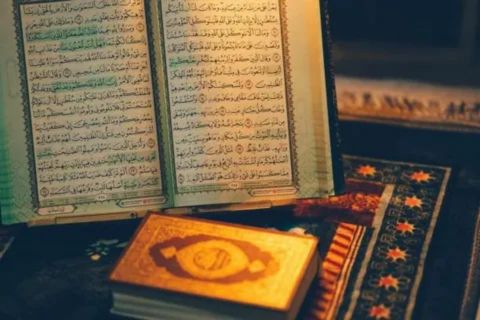
12: Islam Mandates Education for Both Genders. A famous prophetic saying declares that “Seeking knowledge is an obligation upon every Muslim, male and female.” This decree has historically fueled Islamic scholarship and literacy for both men and women.
13: Islamic Law (Sharia) Protects the Wife’s Finances. In Islam, a woman’s money, earnings, and property acquired before and during marriage are exclusively hers. She is not obligated to spend any of it on household expenses, as the husband is solely responsible for the financial maintenance of the family.
14: “Jihad” Primarily Means “Struggle,” Not “Holy War.” The literal meaning of “jihad” is “struggle” or “exertion.” The greater Jihad refers to the internal struggle against one’s own ego, sin, and base desires. The lesser Jihad refers to external defense. The term “Holy War” is a non-Islamic European construct.
15: The Quran Has Been Memorized by Millions, Word-for-Word. Individuals known as Hāfiẓ (male) or Hāfiẓah (female) have committed the entire 600+ page text of the Quran to memory. This centuries-old tradition has ensured the preservation of the text in its original form.
16: The Quran’s Core Miraculous Quality is Linguistic. For Arabs of the time, the i’jāz (inimitability) of the Quran lay not just in its message but in its unparalleled and impossible eloquence, surpassing the greatest poets and orators.
17: The Chapter Order is Not Chronological. The 114 chapters (Sūrahs) of the Quran are generally arranged by length (longest first), not by the order in which they were revealed to the Prophet Muhammad (PBUH) over 23 years.
18: The Prophet Muhammad Did Not Write the Quran. Muslims believe the Quran is the direct, verbatim Word of God (Allah), revealed through the Angel Gabriel to Muhammad, who was primarily the messenger and transmitter, not the author.
19: The Quran Contains the Names of Other Prophets. The text repeatedly mentions and honors major figures from Judaism and Christianity, including Adam, Noah, Abraham, Moses (Musa), David (Dawud), Solomon (Sulayman), and Jesus (Isa), viewing them all as part of a single chain of divine revelation.
20: There Are Scientific Observations in the Quran. Muslim scholars point to verses describing the embryonic development (e.g., “clinging clot”), the expansion of the universe (cosmic inflation), and the water cycle that predate their modern scientific discovery.
21: The Quran Outlines Rules of Engagement and Warfare. Islamic teachings strictly forbid the killing of non-combatants, the deliberate destruction of crops, trees, or livestock, and the harming of women, children, and the elderly during conflict.
22: Zakat is Not Charity; It’s a Wealth Tax. Zakat is the mandatory third pillar of Islam, an annual obligation to donate 2.5% of one’s excess wealth (savings, assets, gold, etc.) to the poor and needy. It functions as a foundational social security and wealth redistribution mechanism.
23: The Islamic Calendar is Based on the Lunar Cycle. The Hijri calendar consists of 354 or sometimes 355 days. This is why the month of Ramadan (the month of fasting) shifts earlier by about 11 days each year on the Western (Gregorian) calendar, cycling through all seasons over time.
24: There Are 99 Beautiful Names of God (Allah). These names, known as Asmā’ ul-Ḥusnā, describe the attributes of God, such as Ar-Rahmān (The Most Compassionate), Al-Ghanī (The Self-Sufficient), and Al-Wakīl (The Trustee). Learning these names is considered a way to better know and understand the Creator.
25: The Greeting ‘As-Salamu Alaykum’ Literally Means ‘Peace Be Upon You.’ This universal Muslim greeting, whether spoken or heard, is an instantaneous prayer for peace and is considered an important social obligation.
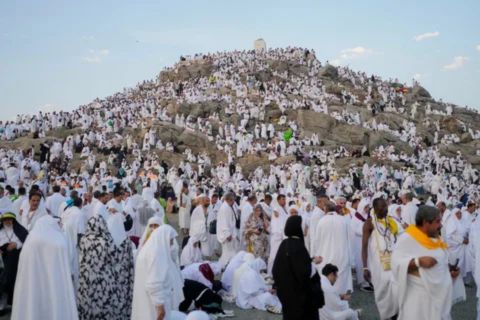
26: The Hajj Pilgrimage is the World’s Largest Annual Gathering. The Hajj, the fifth Pillar of Islam (a pilgrimage to Mecca), draws millions of people every year, making it one of the largest and most sustained gatherings of humanity on Earth.
27: Monasticism is Forbidden in Islam. There is no equivalent of a priesthood or ascetic retreat from society. Islam is designed as a complete way of life that encompasses family, commerce, politics, and social interaction. There is no intermediary required between a person and God.
28: Early Muslims Developed Sophisticated Banking Systems. During the Golden Age, concepts like cheques (derived from the Arabic sakk), letters of credit, and complex partnership contracts were developed, facilitating trade across the vast Islamic empire from Spain to India.
29: Islam Emphasizes Environmental Stewardship (Khalifah). Muslims are taught that humanity is a steward (Khalifah) over the Earth, entrusted with maintaining its balance. The Prophet Muhammad (PBUH) forbade wasting water and encouraged the planting of trees, linking environmental care directly to worship.
30: Islam Requires Mutual Consent in Marriage. Forced marriages are categorically forbidden. A fundamental condition for a valid Islamic marriage contract is the free and mutual consent of both the man and the woman.
FAQs About Islam
1. Do Muslims worship the Prophet Muhammad?
“Absolutely not. Muslims worship Allah (the Arabic word for God) alone. The Prophet Muhammad (PBUH) is revered as the final, most important Messenger of God, whose teachings and example (Sunnah) are followed.
2. What is Islam and what do Muslims believe?
Islam is a monotheistic religion that teaches belief in one God (Allah) and follows the Qur’an and Prophet Muhammad’s teachings.
3. What is the Qur’an about?
The Qur’an is the holy book of Islam, containing God’s guidance on worship, morality, law, and everyday life.
4. Why do Muslims pray five times a day?
Muslims pray five times daily as part of the Five Pillars of Islam, which help build discipline, gratitude, and connection with God.
5. What is the difference between Sunni and Shia Muslims?
The main difference relates to views on leadership after Prophet Muhammad, but both share core beliefs and practices.
6. Is Islam a peaceful religion?
Yes. Islam emphasizes peace, justice, compassion, and kindness to all people.
Curious by nature, storyteller by choice. I run Interesting Facts to bring you mind-blowing stories, hidden truths, and fascinating insights from around the globe. If it makes you say “Wow, I never knew that!”—my job is done.
Laiba Hanif is a professional fact-finder and the writer behind “Interesting Facts.” Fueled by a degree in Anthropology and over five years of experience unearthing hidden truths, she specializes in digging up the most bizarre, fascinating, and mind-bending tidbits the world has to offer. She’s here to prove that reality is stranger—and more amazing—than fiction.