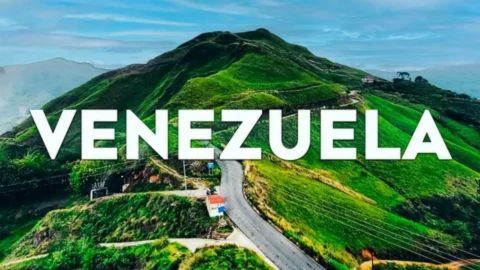
Venezuela is one of South America’s most fascinating countries—a place where surreal natural marvels, rich cultural heritage, dramatic history, and paradoxical modern reality converge to create a story unlike that of any other nation on Earth. Whether you’re a curious traveler, a geography buff, or someone enthralled by worlds less understood, Venezuela delivers awe-inspiring facts you must know.
From the world’s highest waterfalls to lightning storms that defy logic, from legendary beauty pageant dominance to ancient indigenous mythology, Venezuela is a tapestry of spectacle and depth.
Let’s explore the most compelling and captivating facts about Venezuela—with fresh insights.
Quick Facts About Venezuela
| Category | Details |
|---|---|
| Country Name | Venezuela (Bolivarian Republic of Venezuela) |
| Capital | Caracas |
| Continent | South America |
| Population | ~28 million |
| Official Language | Spanish |
| Currency | Venezuelan Bolívar |
| Famous For | Angel Falls, oil reserves, Catatumbo Lightning |
| Highest Point | Pico Bolívar (4,978 m / 16,332 ft) |
| Largest Natural Wonder | Angel Falls (world’s highest waterfall) |
| Popular Sport | Baseball |
| Coastline | Caribbean Sea |
| Nickname Meaning | “Little Venice” |
15 Interesting Facts About Venezuela—A Vibrant Land of Wonders
1. Little Venice—A Name with a Story
Venezuela’s very name is poetic. When Italian explorer Amerigo Vespucci and his crew arrived in 1499 at the coast of what is now Venezuela, they saw indigenous stilt homes built over water near Lake Maracaibo. The scene reminded them of Venice, Italy, so they called the land “Venezuela,” meaning “Little Venice” in Spanish.
This evocative name links the country forever to European explorers’ first impressions and underscores Venezuela’s long history of cultural intersections.
2. Home to the World’s Highest Waterfall
Deep within Venezuela’s lush rainforest lies Angel Falls (Salto Ángel)—the tallest uninterrupted waterfall on the planet, plunging a mind-blowing 979 meters (3,212 feet) from the dizzying heights of Auyantepui Tepui.
Imagine water cascading from nearly a kilometer above—it’s not just a natural wonder, it’s a once-in-a-lifetime experience. Angel Falls is one of the crown jewels of Canaima National Park, itself a UNESCO World Heritage Site.
3. Lightning Shows That Never Quit—The Catatumbo Phenomenon
One of the most otherworldly weather phenomena on Earth happens over Venezuela’s Lake Maracaibo: the Catatumbo Lightning.
Here, lightning storms can occur up to 300 nights a year and produce hundreds of strikes per hour, illuminating the night sky in a celestial ballet.
Locals call it “the Lighthouse of Maracaibo,” and scientists study it for atmospheric insights—this isn’t just power; it’s science and spectacle fused.
4. The Giant Beneath the Ground—World’s Largest Oil Reserves
Venezuela boasts the largest proven oil reserves in the world, far surpassing even Saudi Arabia. Most of this bounty lies in the Orinoco Belt, making the country a central player in global energy—past, present, and potentially future.
While this wealth once fueled prosperity, it also shaped decades of political and economic complexity. Regardless, at its core, Venezuela’s oil legacy is a defining chapter in global petroleum history.
5. Beaches, Islands, and Caribbean Paradise
Venezuela isn’t just about mountains and jungles—it has over 1,700 miles of Caribbean coastline and some of the most pristine beaches in Latin America.
The Los Roques Archipelago—a stunning cluster of atolls and coral reefs—competes with the Caribbean’s best, with turquoise waters and spectacular marine life. Meanwhile, Margarita Island blends beach resort luxury with vibrant nightlife.
6. A Cultural Mosaic—Festivals, Beliefs & Traditions
Venezuela’s culture is a vibrant mosaic shaped by Indigenous, African, and Spanish influences. From the rhythmic beat of joropo music to the high energy of El Callao’s carnival—a UNESCO-recognized cultural celebration—Venezuelan life pulses with color and rhythm.
And there’s spiritual depth too: the mystical figure María Lionza, a deity revered for love, nature, and harmony, symbolizes the blend of belief systems that define Venezuelan identity.
7. The Ancient Tepuis—Tabletop Mountains Beyond Time
In southeastern Venezuela, giant flat-topped mountains called tepuis rise like islands above the forest. These geological marvels are older than the Andes and create unique ecosystems, home to species found nowhere else on Earth.
One of these is Mount Roraima, the inspiration for Arthur Conan Doyle’s novel The Lost World—where prehistoric creatures could still roam. These aren’t just mountains; they’re natural enigmas etched in stone.
8. A Biodiversity Hotspot
Venezuela is one of the world’s top biodiverse nations, encompassing Caribbean shores, Andes ranges, Amazon rainforest, vast plains called the llanos, and cloud forests.
It’s home to hundreds of reptile and amphibian species, the giant capybara, unique birdlife, pink river dolphins, jaguars, and the endangered Orinoco crocodile—a testament to the rich life that thrives across its ecosystems.
9. Beauty, Pageants & Global Glamour
Few countries dominate the world of pageantry like Venezuela. With multiple Miss Universe, Miss World, Miss International, and Miss Earth crowns, Venezuela stands alongside the most successful nations in international beauty competitions.
This passion for beauty and performance isn’t just entertainment—it reflects a cultural pride and aesthetic tradition woven into daily life.
10. Baseball Fever—Not Soccer!
In a continent where soccer often reigns supreme, Venezuela breaks the stereotype: baseball is the most popular sport.
Venezuela has produced many elite Major League Baseball stars, celebrating athletic prowess from the Caribbean diamond to global arenas.
11. Caracas—A City of Contrasts
The capital, Caracas, is a city of contrasts: perched between mountains and sea breezes, it features cosmopolitan sophistication alongside deeply rooted traditions.
Caracas is not on the coast—a unique twist—yet the mountain backdrop gives it a mild “eternal spring” climate, defying typical tropical expectations.
12. Simon Bolívar—The Liberator’s Legacy
Born in Caracas in 1783, Simón Bolívar is one of history’s most revered figures—the leader who liberated much of South America from Spanish rule. His legacy is so central that Venezuela’s currency (the bolívar) honors his name.
Throughout Venezuela, his influence pulses through museums, public squares, and national pride.
13. Hyperbolic Realities—Economic Paradoxes
Modern Venezuela tells a story of extremes. It holds enormous natural riches yet experiences one of the most severe economic crises in the world—marked by hyperinflation, shortages, and social upheaval. This tension between abundance and adversity makes Venezuela one of the most complex socio-economic case studies of the 21st century.
14. Protected Wilderness—The Heart of Conservation
Venezuela dedicates a remarkable portion of its land to national parks and protected zones—among the highest percentages in the world.
This commitment makes it a guardian of biodiversity, where rare species and ecosystems are preserved in sprawling natural reserves.
15. Geography of Dramatic Diversity
Venezuela’s terrain defies a single definition: it spans deserts, mountains, savannas (llanos), rainforests, and Caribbean beaches, offering a geographic tapestry as varied as any on Earth.
From glacial remnants on mountain peaks to shifting river systems and sandy shores, it’s a land of textured landscapes and breathtaking transitions.
FAQs
What is Venezuela best known for?
Venezuela is best known for Angel Falls, the world’s highest waterfall; its massive oil reserves; rare natural phenomena like the Catatumbo Lightning; and its exceptional biodiversity spanning rainforests, mountains, plains, and Caribbean beaches.
Why is Venezuela called “Little Venice”?
The name Venezuela comes from early European explorers who saw stilt houses over water near Lake Maracaibo, which reminded them of Venice, Italy. Its name is derived from Spanish, meaning “Little Venice.”
Does Venezuela have the largest oil reserves in the world?
Yes, Venezuela holds the largest proven oil reserves globally, primarily located in the Orinoco Belt, surpassing other major oil-producing nations.
What is the Catatumbo Lightning phenomenon?
Catatumbo Lightning is a unique weather event in Venezuela where lightning storms occur up to 300 nights per year over Lake Maracaibo, making it one of the most intense lightning hotspots on Earth.
Is Venezuela rich in wildlife and nature?
Yes, Venezuela is one of the most biodiverse countries in the world, home to Amazon rainforests, Andean mountains, Caribbean reefs, giant tepui formations, and rare species like jaguars, capybaras, and pink river dolphins.
What sport is most popular in Venezuela?
Baseball is the most popular sport in Venezuela, unlike most South American countries, where soccer dominates. Venezuela has produced many internationally successful professional baseball players.
Curious by nature, storyteller by choice. I run Interesting Facts to bring you mind-blowing stories, hidden truths, and fascinating insights from around the globe. If it makes you say “Wow, I never knew that!”—my job is done.
Laiba Hanif is a professional fact-finder and the writer behind “Interesting Facts.” Fueled by a degree in Anthropology and over five years of experience unearthing hidden truths, she specializes in digging up the most bizarre, fascinating, and mind-bending tidbits the world has to offer. She’s here to prove that reality is stranger—and more amazing—than fiction.