25 fascinating facts about Germany—from gummy bears and castles to beer laws, forests, and innovation. Fun, informative, and up-to-date.
Germany often feels familiar from headlines, cars, or classical music—but there’s much more to discover once you look closer.
Did you know this country has more castles than any other in Europe, invented both the printing press and the gummy bear, and has a highway where you can legally drive without a speed limit?
Beyond stereotypes of sausages and beer, Germany is a place of forests, poets, scientists, and everyday quirks that surprise even frequent visitors.
Germany at a Glance
Germany sits in the heart of Europe and is one of the most influential countries in the world. It shares borders with nine different countries, more than any other nation in Europe. Its capital, Berlin, is both historic and modern, famous for its art, nightlife, and the remains of the Berlin Wall.
Here are a few quick facts
| Attribute | Details |
|---|---|
| Population | ~83 million |
| Currency | Euro (€) |
| Language | German |
| Economy | Europe’s largest economy |
Food & Drink—Germany’s Culinary Must-Knows
German food is far more varied than many people expect. It’s not just about sausages and beer—though those are important.
- Bread Heaven
Germany has over 3,000 different breads and 1,200 pastries. From dark rye loaves in the north to soft pretzels in Bavaria, bread is a daily staple. - Sausages Everywhere
With more than 1,200 types of sausages, every region has its specialty: Currywurst in Berlin, Weißwurst in Munich, and Bratwurst at festivals. - Beer Culture
The Beer Purity Law of 1516 is the world’s oldest food regulation still in use. Today, Germany boasts over 1,300 breweries and thousands of beers. - Sweet Surprises
The gummy bear was invented here in 1922 by Haribo, a treat that became a global hit.

Food in Germany blends tradition with fun. Whether you try a pretzel at a market or join Oktoberfest, eating here is always an adventure.
Culture, Traditions & Oddities
German culture is rich, layered, and often quirky.
- Christmas Traditions
The Christmas tree tradition was invented in Germany in the 16th century. Today, the country’s Christmas markets attract visitors worldwide with lights, music, and spiced wine. - Festivals Beyond Oktoberfest
While Oktoberfest in Munich is legendary, Germans also celebrate Carnival (Karneval/Fasching) with costumes and parades in February. - Unique Customs & Laws
- Dog Tax: Owning a dog requires paying a yearly tax.
- Prison Escape: Escaping prison isn’t a crime itself—it’s seen as a natural desire for freedom.
- Beer Gestures: In Bavarian halls, a thumb up means one beer; two fingers mean two.
German culture balances order with fun, proving that traditions can be both serious and playful.
Majestic Castles & Historical Legacy
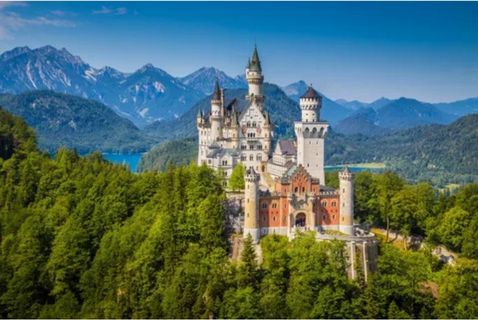
Germany is home to 20,000–25,000 castles and ruins, making it Europe’s ultimate fairytale land.
- Neuschwanstein Castle—The Bavarian castle that inspired Disney’s Cinderella Castle.
- Wartburg Castle—where Martin Luther translated the Bible into German.
- Rhine Valley Fortresses—A chain of castles overlooking vineyards and villages.
Germany also gave the world the printing press. In the 15th century, Johannes Gutenberg’s invention revolutionized learning and communication, laying the foundation for the modern world.
Every castle wall and invention carries echoes of the past, reminding visitors that history lives on here.
Nature & Landmark Highlights
Germany’s beauty lies in its mix of landscapes:
- Forests: About one-third of the country is covered in trees. The Black Forest is legendary for its dark woods and folklore.
- Mountains: The Zugspitze at 2,962 m is Germany’s tallest peak, with views into neighboring countries.
- Rivers: The Rhine and Danube flow past castles, vineyards, and towns.
- Coastlines: Beaches along the North Sea and Baltic Sea are summer favorites.
- Zoos & Museums: Over 400 zoos and 6,000 museums make Germany a cultural leader.
Few countries combine nature and heritage as seamlessly as Germany.

Language & Literary Wonders
The German language has about 100 million native speakers and is widely studied worldwide.
- Long Words: German loves compounds, like Donaudampfschifffahrtsgesellschaftskapitän (Danube steamship company captain).
- Literary Giants: Writers like Goethe and Schiller shaped world literature.
- First Magazine: Germany printed the first magazine in 1663, called Erbauliche Monaths-Unterredungen.
- Everyday Influence: Words like “kindergarten,” “rucksack,” and “doppelgänger” entered English directly from German.
The language reflects Germany’s mix of practicality and creativity.
Innovation & Global Influence
Germany has given the world many inventions that changed the way we live, study, and play. These creations show how German thinkers, scientists, and engineers have shaped modern life.
- Printing Press (1450s): Johannes Gutenberg invented the movable-type printing press. This made books affordable and spread knowledge across Europe, starting a new age of learning.
- Kindergarten (1837): Friedrich Froebel started the first kindergarten, introducing the idea that children learn best through play and exploration. This model is now used worldwide.
- X-Rays (1895): Wilhelm Conrad Röntgen discovered X-rays, a breakthrough in medicine that earned him the very first Nobel Prize in Physics. Today, X-rays are used daily in hospitals everywhere.
- Gummy Bears (1920): Hans Riegel, founder of Haribo, created the gummy bear. What started as a small sweet is now a global favorite.
- MP3 Technology (1980s–1990s): Engineers at the Fraunhofer Institute developed the MP3 format, forever changing how people listen to music.
- Engineering Excellence: Home to BMW, Mercedes-Benz, and Volkswagen, Germany is synonymous with precision cars.
- Economy: As Europe’s largest economy and the third-largest exporter globally, it remains a global leader.
From books to candy to digital sound, Germany’s inventions prove that creativity can influence both everyday life and the future.
German innovation doesn’t just shape history—it drives the present.
Sports, Events & Tourism Highlights
- Football: Germany has won four World Cups; the Bundesliga is globally popular.
- Oktoberfest: Munich’s annual beer festival attracts millions of visitors.
- Carnival: Parades and costumes light up Cologne, Mainz, and Düsseldorf each February.
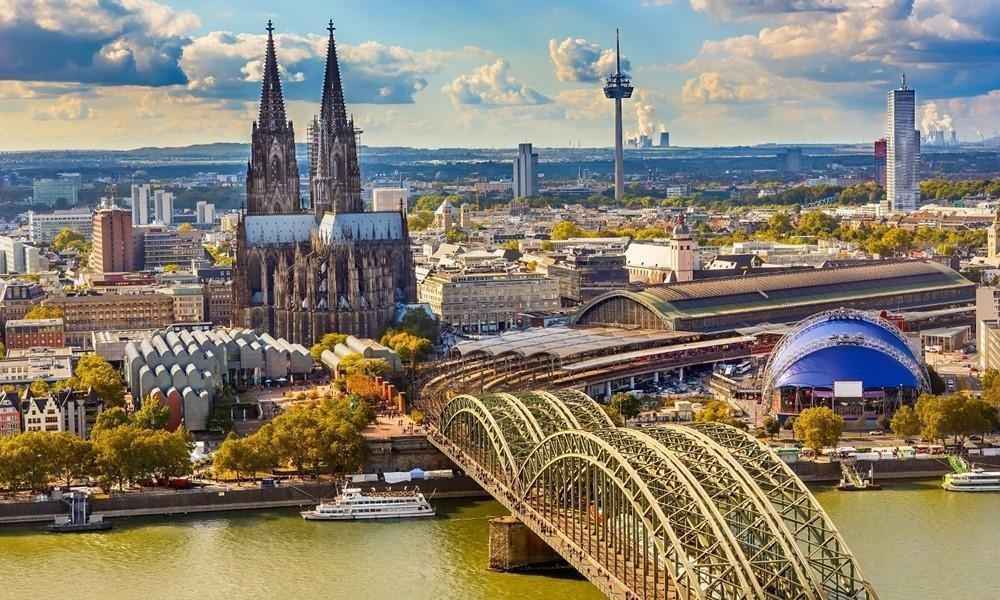
- Tourism: Highlights include Cologne Cathedral, Brandenburg Gate, and Neuschwanstein Castle.
- Winter Sports: Skiing and snowboarding thrive in the Bavarian Alps.
Sports and festivals reveal Germany’s vibrant community spirit.
Surprising Daily Quirks
- Autobahn: Some stretches have no speed limits; others are strictly regulated.
- Cash Culture: Many people still prefer cash over cards.
- Quiet Sundays: Shops close, giving families rest time.
- Recycling: Waste is sorted into multiple bins for strict recycling.
- Water Choices: Sparkling water (Sprudel) is the default.
- Punctuality: Being on time is considered essential.
These quirks shape everyday life—and often surprise visitors.
Quick Myth-Busting
- “No speed limits everywhere”—only certain Autobahn stretches are unlimited.
- “Germany is always ‘cold’—summers can be very warm.
- “Everyone wears ‘Lederhosen’—traditional clothing is for festivals, not daily life.
- “Germans aren’t friendly.” — They may be direct but are welcoming.
- “Beer is cheaper than water”—true in some places, but not everywhere.
FAQs
- Is it true there’s no speed limit in Germany?
Yes, on some Autobahn sections—but many do have limits. - How many castles are there?
Around 20,000–25,000 across the country. - What’s the most popular sport?
Football, followed by handball and winter sports. - What foods should visitors try?
Pretzels, sausages, sauerbraten, and Black Forest cake. - Is English widely spoken?
Yes, especially in cities and among young people.

Curious by nature, storyteller by choice. I run Interesting Facts to bring you mind-blowing stories, hidden truths, and fascinating insights from around the globe. If it makes you say “Wow, I never knew that!”—my job is done.
Laiba Hanif is a professional fact-finder and the writer behind “Interesting Facts.” Fueled by a degree in Anthropology and over five years of experience unearthing hidden truths, she specializes in digging up the most bizarre, fascinating, and mind-bending tidbits the world has to offer. She’s here to prove that reality is stranger—and more amazing—than fiction.