Nepal is more than just the land of Mount Everest—it’s a country packed with history, tradition, and breathtaking landscapes. In this guide, we’ll uncover 10 interesting facts about Nepal that reveal its culture, geography, and hidden wonders. From its unusual flag to living goddesses and sacred festivals, each fact shows why Nepal is unlike anywhere else.
Nepal—At a glance
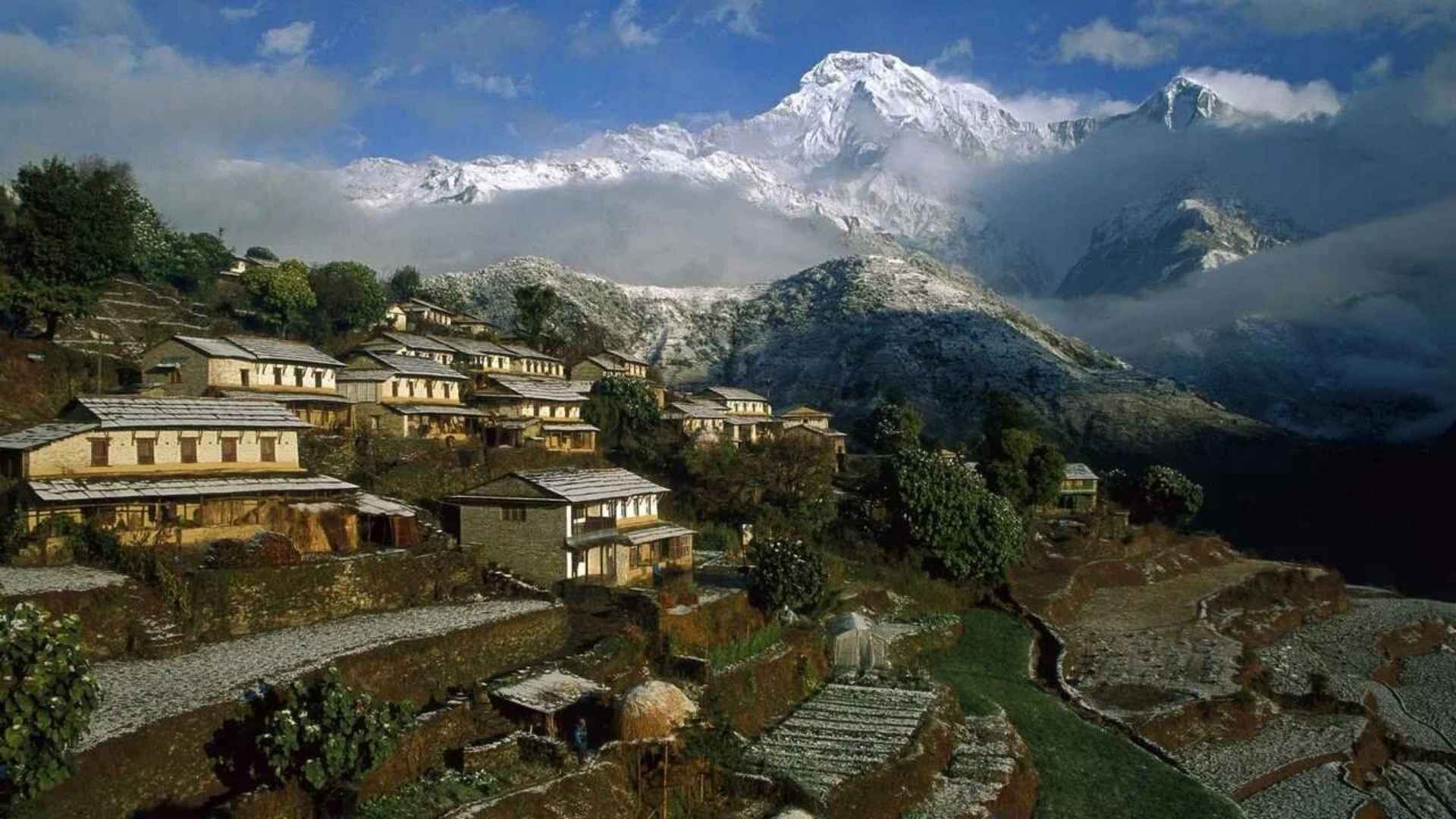
Nepal, a small landlocked country in the Himalayas, is a land of extremes. It’s home to eight of the world’s highest mountains, including Mount Everest. The diverse geography has given rise to a rich mix of cultures, languages, and religions, primarily Hinduism and Buddhism.
Known for its warm hospitality and ancient traditions, Nepal is a popular destination for trekkers, spiritual seekers, and anyone looking to experience a unique blend of adventure and heritage.
Quick Key Facts
| Feature | Detail |
|---|---|
| Official Name | Federal Democratic Republic of Nepal |
| Population | ~31.5 million (2025 est.) |
| Official Language | Nepali |
| Religion | Hinduism (approx. 81%), Buddhism (approx. 8%), Islam (approx. 5%) |
| Currency | Nepalese Rupee (NPR) |
1. At the Top of the World—Mount Everest
Mount Everest, the world’s tallest mountain, is Nepal’s most famous landmark. At 8,848 meters high, it draws climbers and hikers from all over. The first people to reach the top were Sir Edmund Hillary and Tenzing Norgay Sherpa in 1953. This made Nepal famous worldwide.
Now, hiking to Everest Base Camp is a very popular adventure, making the mountain a key part of Nepal’s story. Today, trekking routes to Everest Base Camp remain one of the most popular adventures, making this mountain central to 10 interesting facts about Nepal.
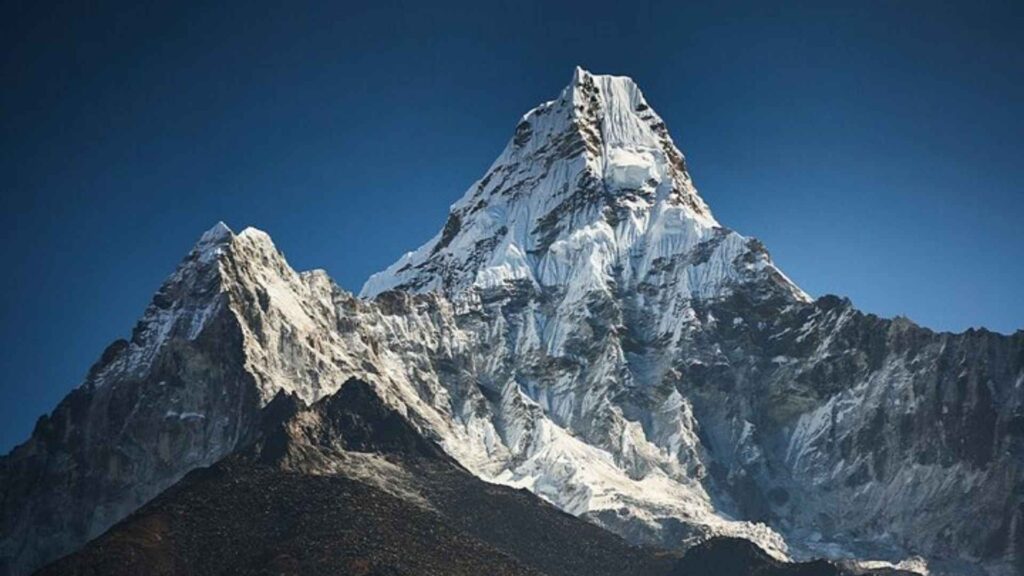
Quick Fact: Mount Everest is called “Sagarmatha” in Nepali, meaning Goddess of the Sky, and “Chomolungma” in Tibetan, meaning Goddess Mother of the World. The English name Everest was given in 1865 in honor of Sir George Everest.
2. Nepal’s Unique Flag—The Only Non-Rectangular National Flag
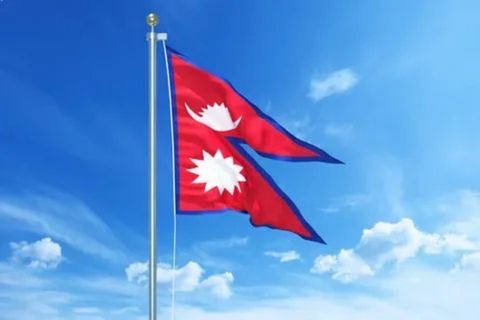
Among all the world’s nations, Nepal is the only one with a non-rectangular flag. Its double-pennon design represents the Himalaya and the symbols of the sun and moon, signifying permanence and hope.
This striking emblem is more than decoration—it’s a reminder of Nepal’s identity, making it a standout entry in 10 interesting facts about Nepal.
3. The Living Goddess Kumari
In the heart of Kathmandu, a young girl is revered as the Kumari, or “living goddess.” Selected through a traditional process, she embodies divine energy until she reaches puberty.
Visitors can sometimes glimpse her at Kumari Ghar, her residence in Durbar Square. This rare practice reflects Nepal’s blend of spirituality and culture, and it often surprises travelers learning about the 10 interesting facts about Nepal.
Quick Fact: Gautam Buddha, born Siddhartha Gautama in Lumbini (Nepal), attained enlightenment under the Bodhi tree in Bodh Gaya and founded Buddhism.
🔗 Source: Wikipedia – The Buddha
4. Eight of the World’s Ten Highest Peaks
Beyond Everest, Nepal is home to eight of the world’s ten tallest mountains, including Kanchenjunga, Lhotse, and Annapurna. These peaks dominate the skyline and attract climbers and trekkers eager for adventure.
The Annapurna Circuit and Everest Base Camp are two of the most famous trekking routes in Nepal. This concentration of dramatic Himalayan giants is why any list of 10 interesting facts about Nepal must highlight the country’s unrivaled mountain heritage.
5. A Calendar of Its Own—Vikram Samvat
Nepal follows the Vikram Samvat calendar, which runs about 56 years ahead of the Gregorian calendar. Festivals, official documents, and even daily life often use this system, so visitors may find themselves “in the future.”
This unique tradition adds to the charm of the 10 interesting facts about Nepal and reflects the country’s cultural independence.
Quick Fact: Parts of the Chitwan district in Nepal are currently facing scheduled daily electricity outages (load shedding) totaling up to 6 hours due to a sharp rise in demand—especially from irrigation systems—combined with low rainfall during the planting season. Fiscal Nepal + 1
6. Yeti Legends and Mountain Myths
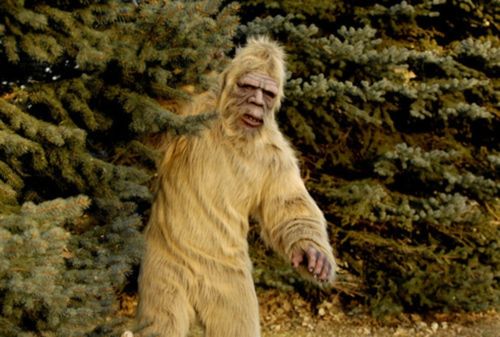
High in Nepal’s Himalaya, stories of the Yeti have fueled curiosity for generations. Locals describe mysterious footprints and legends tied to the snowy wilderness.
While science remains skeptical, the myth endures as part of Nepal’s cultural identity, adding mystery and wonder to the 10 interesting facts about Nepal.
7. How Weekends Work in Nepal
Unlike many countries, Nepal doesn’t follow the standard Saturday–Sunday weekend. Instead, Saturday is the official day of rest, while Sunday marks the start of the workweek. On Saturdays, you’ll find families filling temples, parks, and teahouses, while markets buzz with shopping and socializing.
For travelers, this schedule is worth noting—festivals, transport, and even opening hours shift around the Saturday weekend. It’s a cultural rhythm that surprises many visitors and easily earns its place alongside the 10 interesting facts about Nepal.
Quick Fact: Cow slaughter is illegal in Nepal. The cow is the national animal under Nepal’s Constitution, and killing cows is a punishable offense under Nepali law. Hindustan Times + 3 Business Standard + 3 India Today +3
8. Slow Internet in Nepal
Internet access in Nepal has grown quickly, but speeds can still feel slow compared to global standards. In rural areas, connections may drop entirely, while even in Kathmandu, streaming or video calls can be unreliable during peak hours.
Travelers often rely on local SIM cards for more stable data service. While improvements are underway, this reality shapes daily life and travel planning. It’s an unexpected detail that surprises visitors and makes “slow internet” a quirky addition to the 10 interesting facts about Nepal.
9. PDA Laws in Nepal
Public displays of affection, or PDA, are uncommon in Nepal and can even be frowned upon by law enforcement. While holding hands is generally acceptable, kissing or hugging in public may draw unwanted attention or criticism, especially in rural areas.
This reflects Nepal’s more conservative cultural values, where modesty in public is expected. Travelers should be mindful of local norms to avoid misunderstandings. The country’s stance on PDA is both a cultural insight and a practical tip that fits well within the 10 interesting facts about Nepal.

Quick Fact: Nepal is one of the world’s top producers of ginger, harvesting nearly 288,000 tonnes annually, while it also produces over 230,000 tonnes of mustard seed each year.
10. Elephant Polo in Nepal
Elephant polo was once a quirky sport that drew international attention to Nepal. Played on the flat plains of Chitwan, it featured teams riding elephants and using long mallets to hit a ball across the field. Though it gained popularity with adventurous travelers, the sport was eventually discontinued due to animal welfare concerns.
Today, it remains a fascinating piece of modern history, remembered for its unusual mix of tradition and novelty. Elephant polo is a fun addition to the 10 interesting facts about Nepal.

FAQs
Q1: What is the most interesting fact about Nepal?
Mount Everest, being the world’s highest mountain, is often the most famous, but Nepal’s unique non-rectangular flag and living goddess tradition are equally fascinating.
Q2: How many mountains does Nepal have over 8,000 meters?
Nepal has eight of the world’s ten tallest mountains, including Everest, Kanchenjunga, and Annapurna.
Q3: Why does Nepal have a different calendar?
Nepal follows the Vikram Samvat calendar, which runs about 56–57 years ahead of the Gregorian calendar.
Curious by nature, storyteller by choice. I run Interesting Facts to bring you mind-blowing stories, hidden truths, and fascinating insights from around the globe. If it makes you say “Wow, I never knew that!”—my job is done.
Laiba Hanif is a professional fact-finder and the writer behind “Interesting Facts.” Fueled by a degree in Anthropology and over five years of experience unearthing hidden truths, she specializes in digging up the most bizarre, fascinating, and mind-bending tidbits the world has to offer. She’s here to prove that reality is stranger—and more amazing—than fiction.