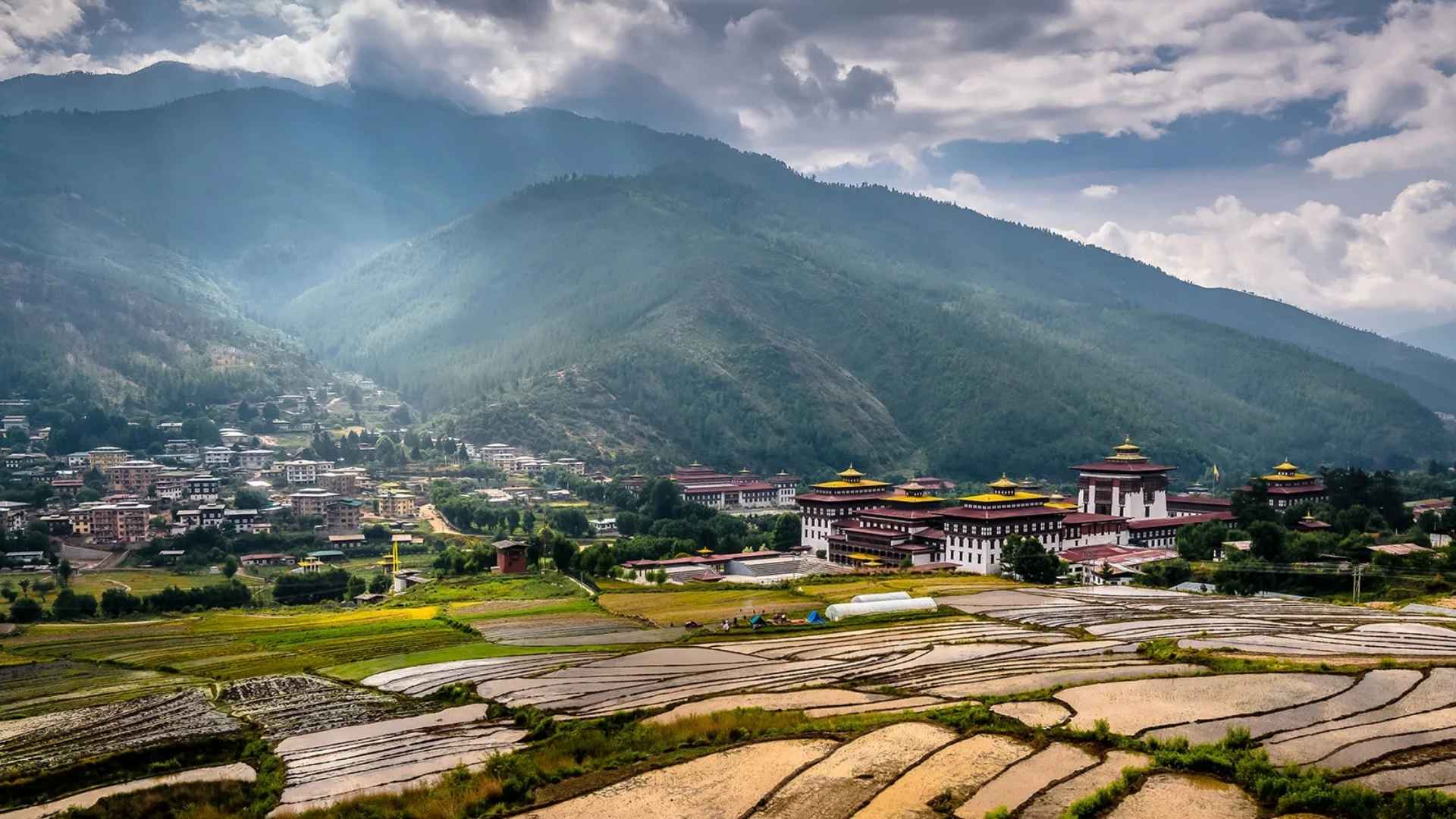
Bhutan is often called the Land of the Thunder Dragon, and for good reason. Tucked away in the Himalayas, this small kingdom has captured the world’s imagination with its traditions, landscapes, and unconventional approach to modern life.
If you think you know the country, think again—these 10 interesting facts about Bhutan will surprise you. From the world’s highest unclimbed mountain to rhyming traffic signs and a happiness index more important than money, Bhutan thrives on being different.
Bhutan—At a Glance
It’s the world’s only carbon-negative country, home to the highest unclimbed mountain, and guided by a philosophy called Gross National Happiness. At a glance, Bhutan may seem small, but its bold choices, breathtaking landscapes, and unique traditions make it one of the most fascinating nations on Earth.
Quick Key Facts
| Feature | Details |
|---|---|
| Country Name | Kingdom of Bhutan (Druk Yul – Land of the Thunder Dragon) |
| Population | ~787,000 (2023 estimate) |
| Capital | Thimphu |
| Official Language | Dzongkha |
| Major Religion | Vajrayana Buddhism (official); Hinduism also practiced |
| Currency | Ngultrum (BTN), pegged to Indian Rupee (INR) |
1. Bhutan Is the World’s Only Carbon-Negative Country
Another of the 10 interesting facts about Bhutan is its extraordinary environmental achievement: it is the world’s only carbon-negative country. While most nations struggle to cut emissions, Bhutan absorbs more carbon dioxide than it produces.
Over 70% of its land remains covered by forests, and the constitution requires this to never fall below 60%. Hydropower from mountain rivers provides clean energy, while strict Bhutan environmental policies and an early plastic ban reinforce sustainability.
For travelers, this means breathing some of the cleanest air in the world and witnessing a nation where protecting nature is a way of life.
Additional Fact: In Bhutan, phallus paintings on houses are symbols of protection and fertility, inspired by the 15th-century saint Drukpa Kunley, the “Divine Madman.”
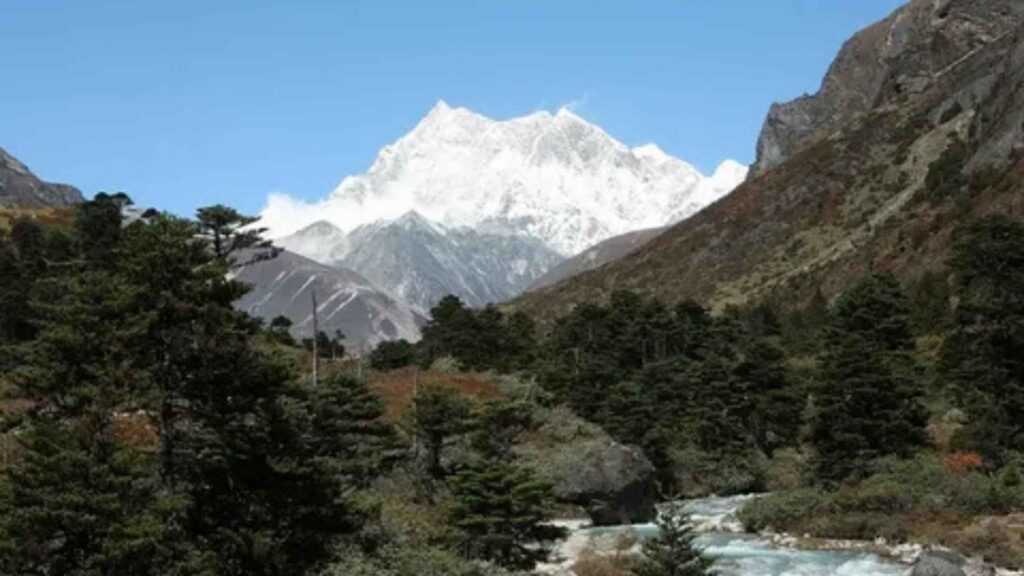
2. Gangkhar Puensum: The World’s Highest Unclimbed Mountain
Among the 10 interesting facts about Bhutan, this one tops the list for adventure seekers. Bhutan is home to Gangkhar Puensum, the world’s highest unclimbed mountain, standing at an elevation of 7,570 meters (24,836 feet).
While mountaineers worldwide dream of scaling its snowy ridges, Bhutan has permanently banned climbing peaks above 6,000 meters out of respect for local spiritual beliefs. For Bhutanese people, mountains are sacred homes of deities, not playgrounds for conquest.
This decision has preserved Gangkhar Puensum’s pristine beauty, making it a powerful symbol of Bhutan’s reverence for nature and tradition.
3. TV and Radio Arrived Only in 1999
One of the most surprising of the 10 interesting facts about Bhutan is how late modern media arrived. Television and radio were officially introduced only in 1999, making Bhutan one of the last countries in the world to embrace them.
Before then, stories, festivals, and traditions were the main ways people shared news and entertainment. The government cautiously allowed TV to connect Bhutan with the outside world while still protecting its culture. This balance between modernity and tradition is a recurring theme in Bhutan’s journey of development.
Additional Fact: No McDonald’s Here: Bhutan is one of the few countries with no global fast-food chains—local cuisine takes center stage.
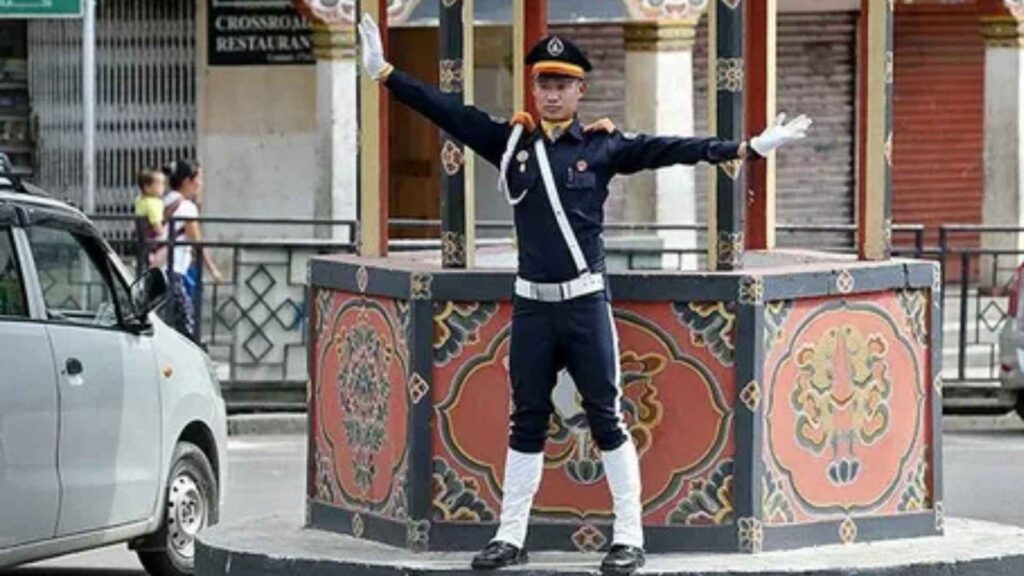
4. Thimphu: The Capital With No Traffic Lights
Here’s a quirky addition to the list of 10 interesting facts about Bhutan:The capital city, Thimphu, has no traffic lights at all. Instead, intersections are managed by police officers using hand signals, a system residents prefer over machines.
When a set of lights was once installed, people found them too impersonal and insisted on their removal. This unusual choice reflects Bhutan’s small-town charm and its preference for human connection, even in the heart of the capital.
5. Quirky Rhyming Traffic Safety Signs
Bhutan’s traffic signs are a far cry from the usual. Instead of generic warnings, they offer quirky, witty, and often profound advice. Managed by India’s Project Dantak, the signs aim to promote road safety with a gentle, philosophical touch.
Messages like “If you are married, divorce quickly,” “Life is a journey; complete it,” “Be gentle on my curves,“ and “This is a highway, not a runway“ are designed to make drivers smile and think, reducing accidents on the country’s winding mountain roads.
Additional Fact: Bhutan is famous for its unique stamps, including 3D designs, scented issues, and even the world’s first “talking stamps” that could be played on a record player.
6. Gross National Happiness Over GDP
Perhaps the most famous of the 10 interesting facts about Bhutan is its decision to measure progress differently. Instead of focusing only on money, Gross National Happiness (GNH) is Bhutan’s guiding principle. This unique Bhutan development philosophy balances economic growth with culture, spirituality, community well-being, and environmental protection.
Policies are assessed not just by profit but by whether they improve people’s lives and preserve the nation’s identity. The idea has inspired global debates about alternative ways to measure success, proving that Bhutan’s happiness-first model offers lessons for the rest of the world.
7. The Custom of Politely Refusing Food
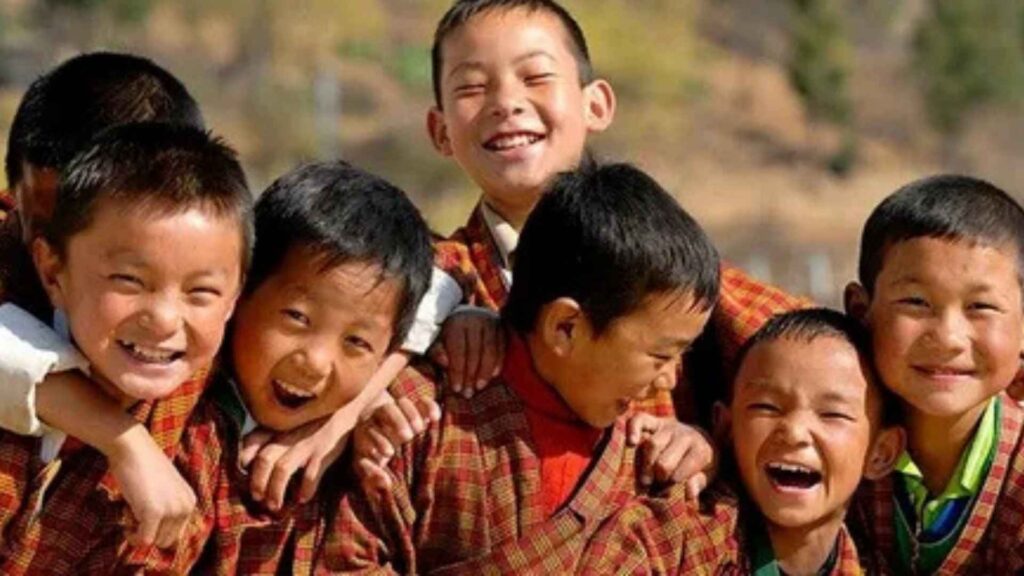
Hospitality in Bhutan comes with its own etiquette. One of the 10 interesting facts about Bhutan is the tradition of politely refusing food before accepting it. Known locally as the “zhay” tradition, guests are expected to decline an offer two or three times before saying yes.
This custom isn’t about rejecting kindness but about showing humility and respect to the host. It highlights how deeply courtesy is woven into Bhutanese culture, where even the act of sharing a meal carries layers of meaning.
Additional Fact: Archery is Bhutan’s official sport, often celebrated with music, dance, and plenty of cheer.
8. Plastic Ban to Protect Nature
Another remarkable entry in the 10 interesting facts about Bhutan is its early action against plastic waste. In 1999, Bhutan introduced a nationwide plastic ban, decades before many other countries even considered it.
The law was designed to protect rivers, forests, and wildlife from pollution. Although enforcement has faced challenges, the ban reflects Bhutan’s strong commitment to sustainability.
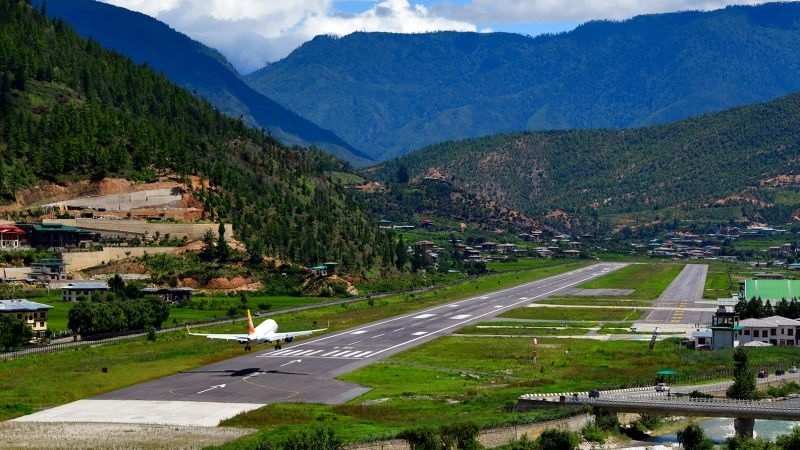
9. Paro Airport: The World’s Most Challenging Landing
High in the Himalayas sits Paro International Airport, one of the most thrilling among the 10 interesting facts about Bhutan. Surrounded by steep mountains and narrow valleys, the approach requires extraordinary skill, making it a true Paro Airport challenge.
Fewer than two dozen pilots worldwide are certified to land here, and flights can only operate in daylight with clear visibility. Despite the difficulty, passengers are rewarded with breathtaking views of snowcapped peaks and forested valleys.
Often listed among the most dangerous airports in the world, Paro offers travelers an unforgettable first impression of Bhutan.
10. Ban on Animal Slaughter
One of the more unusual of the 10 interesting facts about Bhutan is its strict stance on animal welfare. There is a nationwide animal slaughter ban, rooted in deep Buddhist values of compassion and nonviolence. This means animals cannot be killed for meat inside the country.
Instead, most meat consumed in Bhutan is imported from neighboring regions. The law reflects Bhutan’s moral and spiritual priorities, where kindness to all living beings takes precedence over convenience, reinforcing its identity as a nation guided by faith and ethics.
FAQ
Q1: Why is Gangkhar Puensum unclimbed?
Gangkhar Puensum, the world’s highest unclimbed mountain, has never been summited because Bhutan prohibits climbing sacred peaks. Local beliefs hold that deities reside there, and protecting these sites is more important than mountaineering fame.
Q2: Is Bhutan really a carbon-negative country?
Yes. Bhutan absorbs more carbon dioxide than it emits thanks to vast forests, hydropower, and progressive environmental policies. It’s one of the rare countries setting an example in global sustainability.
Q3: Why are there no traffic lights in Thimphu?
The capital prefers police officers with hand signals over machines. When lights were tested, residents felt they disrupted human connection and asked for their removal.
Q4: What is Gross National Happiness?
Gross National Happiness Bhutan is a philosophy that measures progress by well-being, culture, and environment rather than GDP. It’s a core element of the 10 interesting facts about Bhutan.
Q5: Can tourists climb Bhutan’s mountains?
No. Climbing peaks above 6,000 meters is banned to honor local spirituality and protect fragile ecosystems.

Curious by nature, storyteller by choice. I run Interesting Facts to bring you mind-blowing stories, hidden truths, and fascinating insights from around the globe. If it makes you say “Wow, I never knew that!”—my job is done.
Laiba Hanif is a professional fact-finder and the writer behind “Interesting Facts.” Fueled by a degree in Anthropology and over five years of experience unearthing hidden truths, she specializes in digging up the most bizarre, fascinating, and mind-bending tidbits the world has to offer. She’s here to prove that reality is stranger—and more amazing—than fiction.