Goats (Capra hircus) have been part of human life for thousands of years, yet most people don’t realize just how remarkable they are. Beyond producing goat milk, meat, and fiber, these animals show intelligence, adaptability, and quirky traits that set them apart from other livestock.
Quick Key Facts About Goats
| Feature | Details |
|---|---|
| Scientific Name | Capra hircus |
| Family | Bovidae |
| Average Lifespan | 10–18 years (depending on breed, care, and environment) |
| Domestication | First domesticated around 10,000 years ago in the Fertile Crescent |
| Global Population | Over 1 billion goats worldwide |
| Varieties/Breeds | 300+ recognized breeds (dairy, meat, fiber, and companion types) |
| Primary Uses | Milk, meat, fiber (cashmere, mohair), hides, land clearing |
10 Fascinating Facts About Goats are here:
1. Goats Have Rectangular Pupils
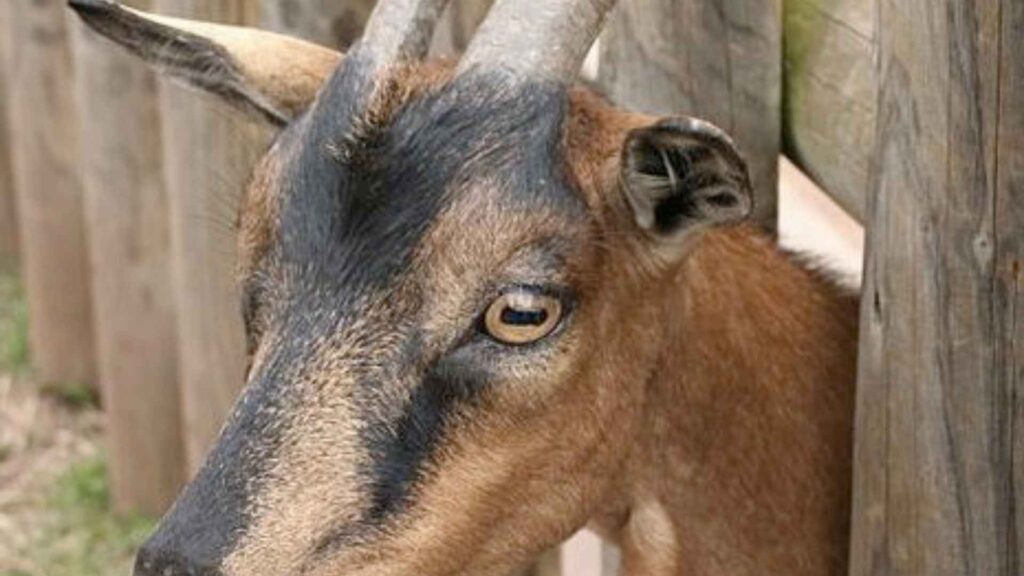
Unlike humans with circular pupils, goats have horizontal, rectangular pupils. Their unusual eyes give goats panoramic vision of up to 320°, helping them detect predators. It also helps them to see in low light, which is useful when foraging.
2. Goats Are Very Social and Smart
Goats are very social and live in groups called herds. They have been shown to form strong bonds with each other and even with humans. They are also quite intelligent and can learn their names and even solve puzzles.
3. Goats Helped Discover Coffee
Legend has it that an Ethiopian goat herder noticed his goats became very energetic after eating berries from a certain plant. This observation led to the discovery of coffee beans and their stimulating effects.
In 2009, Google used 200 goats to clear weeds and cut the grass at its headquarters in Mountain View, California, instead of using noisy mowers that run on gasoline and pollute the air. Source
4. Goats ‘Faint’ When Scared
The fainting goat, or myotonic goat, has a genetic condition called myotonia congenita. When startled, their muscles freeze for about 10 seconds. This causes them to stiffen and fall over, but they are fully conscious the entire time.
5. Beards Aren’t Just for Looks
Both male and female goats can have beards, but they’re most prominent in males. A male goat’s beard is a secondary sex characteristic, much like a lion’s mane, and helps to establish dominance within the herd.

Goat wattles: small, fleshy, hair-covered skin flaps that hang from the neck.
6. Goats Have Four Stomachs
Similar to cows, goats are ruminants, meaning they have a four-chambered stomach. This complex digestive system allows them to break down tough plant matter like grass and hay, extracting all the nutrients.
7. “The Nutritional Face-Off”
Goat milk is easier to digest than cow’s milk thanks to smaller fat globules and lower lactose. One cup provides about 170 calories, 9 g protein, and 11 g fat. Goat meat is lean, offering 143 calories, 27 g protein, and 3 g fat per 100 g—making it a nutrient-dense choice.
Goat milk typically has smaller fat globules and a slightly different protein structure, which many find easier to digest.
8. They Can Be Picky Eaters
Despite their reputation for eating anything, goats are actually quite selective. They prefer to browse on shrubs and weeds and will often avoid food that has been dropped on the ground or is dirty. They’re browsers, not grazers.
9. Goats Can Climb Trees
While not as agile as monkeys, some goats, particularly the Moroccan argan goats, have adapted to climb argan trees. They do this to eat the fruit and leaves, which are a major part of their diet. This is a behavior rarely seen in other livestock

10. Goat Bleating
Goats can develop distinct “accents” in their calls depending on the herd they live with. Much like humans adapt speech patterns, young goats (kids) adjust their vocal tones to match their social group—a rare trait in the animal kingdom.
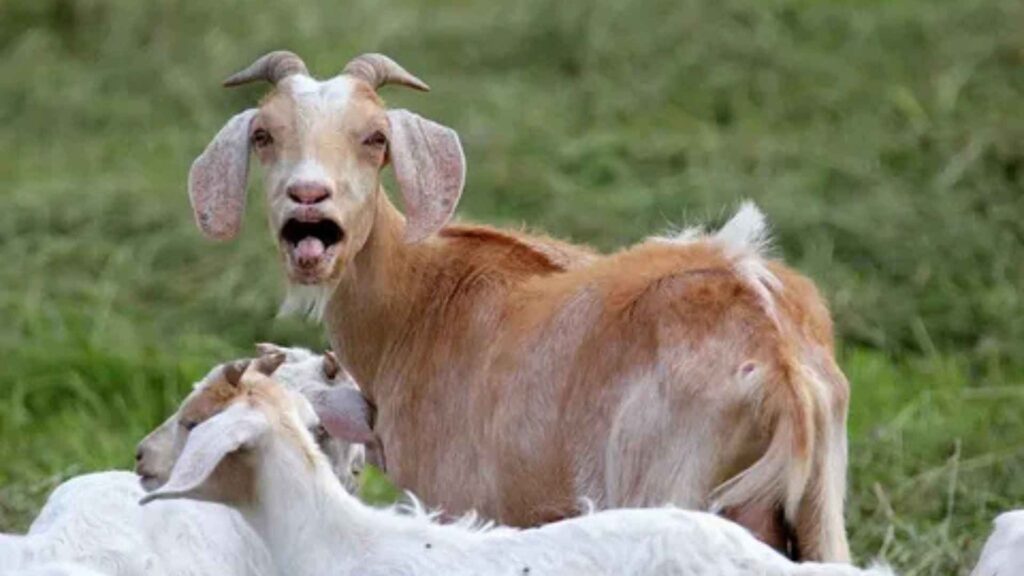
A goat’s “bleat” is just its word for a cry or sound. They use it to talk to each other, whether it’s a mom calling for her baby, a goat feeling upset, or just a simple greeting
FAQs
Q1: Can a goat’s bleat sound like a human?
Sometimes! While a goat’s bleat is its main form of communication, some goats are known to make vocalizations that can sound uncannily like a human scream or cry, often for dramatic effect when they are feeling a certain way.
Q2: Are goats smart?
Yes, goats are surprisingly intelligent animals. They are known to be curious, can learn their names, and have excellent problem-solving skills and a great long-term memory, as they can remember how to complete a task they learned a year ago.
Q3: How many different breeds of goats are there?
There are over 300 recognized breeds of goats around the world, each with its own unique characteristics. They are bred for different purposes, including milk, meat, fiber, and even as pets.

Curious by nature, storyteller by choice. I run Interesting Facts to bring you mind-blowing stories, hidden truths, and fascinating insights from around the globe. If it makes you say “Wow, I never knew that!”—my job is done.
Laiba Hanif is a professional fact-finder and the writer behind “Interesting Facts.” Fueled by a degree in Anthropology and over five years of experience unearthing hidden truths, she specializes in digging up the most bizarre, fascinating, and mind-bending tidbits the world has to offer. She’s here to prove that reality is stranger—and more amazing—than fiction.