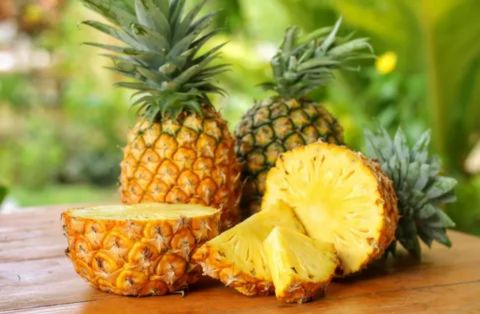
Pineapples aren’t just sweet tropical fruits; they’re full of surprises! Beyond their refreshing taste, pineapples carry a rich history, incredible nutritional value, and some quirky traits that make them one of the most fascinating fruits in the world.
Did You Know Pineapple??
Sweet, tangy, and refreshingly tropical — the pineapple is more than just a delicious fruit. Loved around the world for its unique flavor, it also comes with a fascinating history, cultural significance, and surprising health benefits. From its royal reputation as a symbol of hospitality to the quirky fact that it “eats you back,” pineapple is full of fun secrets worth exploring.
Quick Facts About Pineapple
| Category | Details |
|---|---|
| Common Name | Pineapple |
| Scientific Name | Ananas comosus |
| Kingdom | Plantae |
| Class | Monocotyledonae (Monocots) |
| Order | Poales |
| Family | Bromeliaceae |
| Genus | Ananas |
| Species | A. comosus |
12 Interesting Facts About Pineapple
1. Pineapples Aren’t Apples at All
Despite the name, pineapples don’t belong to the apple family. They’re actually composite fruits formed by many fused berries around a central core.
2. Not a Single Fruit
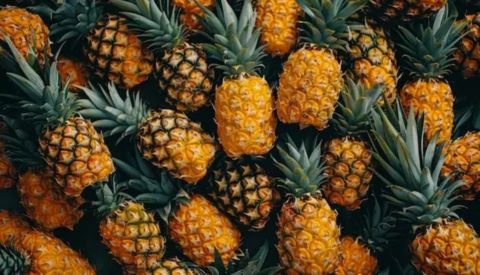
A pineapple is actually a multiple fruit, meaning it’s a cluster of hundreds of tiny individual berries that have fused together around a central core. Each ‘eye’ on the surface is a remnant of a single flower (or fruitlet).
3. Growing a Pineapple Takes Patience
It takes about 18–24 months for a single pineapple plant to produce fruit, and usually only one pineapple grows per plant.
4. Christopher Columbus Introduced Pineapples to Europe
When Columbus reached the Caribbean in 1493, he tasted pineapples and brought them back to Spain, sparking Europe’s fascination with this exotic fruit.
5. Bromelain: The Pineapple Enzyme
Pineapple contains bromelain, a mix of enzymes that can break down proteins. This enzyme helps digestion, reduces inflammation, and is even studied for medical uses.
Did you know??
The heaviest pineapple ever recorded weighed in at a massive 8.28 kg (18 lb 4 oz), which is roughly the weight of a small bowling ball! It was grown by Christine McCollum of Bakewell, Australia, and was officially recorded in 2011.
6. Natural Meat Tenderizer
Due to the bromelain content, raw pineapple and its juice are a very effective natural meat tenderizer, as the enzyme breaks down the muscle fibers in the meat.
7. Rich in Vitamin C
One cup of pineapple chunks provides over 130% of your daily vitamin C, supporting immunity, skin health, and collagen production.
Did you know??
A Sailor’s Best Friend: Packed with Vitamin C, the pineapple was a life-saver for 17th-century sailors as it helped to ward off scurvy on long sea voyages.
| Nutrient | Amount | % Daily Value* |
|---|---|---|
| Calories | 50 kcal | – |
| Carbohydrates | 13.1 g | 4% |
| Sugars | 9.9 g | – |
| Dietary Fiber | 1.4 g | 5% |
| Protein | 0.5 g | 1% |
| Fat | 0.1 g | <1% |
| Vitamin C | 47.8 mg | 80% |
| Vitamin A | 3 µg | <1% |
| Vitamin B6 | 0.1 mg | 5% |
| Calcium | 13 mg | 1% |
| Magnesium | 12 mg | 3% |
| Potassium | 109 mg | 3% |
| Manganese | 0.9 mg | 45% |
8. Grows on the Ground
Contrary to popular belief, pineapples do not grow on trees. They grow from a small, bushy plant close to the ground, with the fruit emerging from the center of the foliage on a thick stem.

9. Hawaii Made Pineapples Famous
Though not native to Hawaii, pineapples became a huge industry there in the 1800s, thanks to companies like Dole Food Company.
10. Incompatible with Gelatin
Fresh pineapple’s bromelain enzyme prevents gelatin from setting, which is why fresh pineapple chunks cannot be used in a standard gelatin dessert (like Jell-O). The heat from canning, however, deactivates the enzyme, making canned pineapple suitable.
11. Pineapple Leaves Can Be Turned Into Fabric
Pineapple leaves produce a fiber called piñatex, traditionally woven into textiles in the Philippines for clothing and accessories.

12. Does Not Ripen Off the Plant
Unlike bananas or avocados, pineapples do not continue to ripen or get sweeter after they are harvested. They must be picked when fully ripe on the plant to achieve their best flavor.
FAQs
1. Are pineapples good for health?
Yes! They’re packed with vitamins, minerals, and bromelain, making them great for digestion, immunity, and overall health.
2. Can you grow a pineapple indoors?
Yes, you can plant the crown in a pot. With enough sunlight and warmth, it will grow, though fruiting takes years.
3. Why Pineapple “Eats” Your Tongue
That tingling feeling after eating fresh pineapple? That’s bromelain breaking down proteins, including those in your mouth. Don’t worry—your body quickly repairs itself.
4. Is pineapple good for weight loss?
Yes, it’s low in calories and high in water and fiber, making it a healthy snack option.
5. Where do pineapples originally come from?
Pineapples are native to South America, particularly Paraguay and Brazil.

Curious by nature, storyteller by choice. I run Interesting Facts to bring you mind-blowing stories, hidden truths, and fascinating insights from around the globe. If it makes you say “Wow, I never knew that!”—my job is done.
Laiba Hanif is a professional fact-finder and the writer behind “Interesting Facts.” Fueled by a degree in Anthropology and over five years of experience unearthing hidden truths, she specializes in digging up the most bizarre, fascinating, and mind-bending tidbits the world has to offer. She’s here to prove that reality is stranger—and more amazing—than fiction.