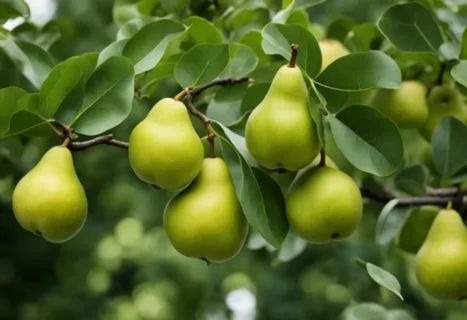
Pears are more than just a juicy, sweet fruit. They’ve been enjoyed for thousands of years, and today, they’re celebrated not only for their taste but also for their incredible health benefits. Here are 12 fascinating facts about pear you might not know.
12 Interesting Facts About Pear
Pears are one of the world’s oldest and most delightful fruits, offering a blend of subtle sweetness and a buttery texture. Here are 12 fascinating facts about pear ,-the ancient fruit:
1. A Member of the Rose Family
Pears belong to the Rosaceae family, making them botanical cousins to apples, quinces, and even roses!
2. “Butter Fruit” Nickname
Early European settlers in America sometimes nicknamed the pear “butter fruit” due due to its soft, melting texture when ripe.
3. Pears Have Ancient Roots
Pears have been cultivated for over 3,000 years, first in Europe and Asia. The ancient Greeks even called pears “gifts of the gods.”
4. China Is the Largest Producer
Over 60% of the world’s pears come from China, making it the global leader in pear production.
5. More Than 3,000 Varieties Exist
From Bartlett to Anjou to Asian pears, there are thousands of pear varieties grown worldwide.

6. Pears Ripen from the Inside Out
Unlike many fruits, pears ripen from their core, which is why they can feel soft inside while still firm on the outside.
7. Nutrient Powerhouse in the Peel
The skin of a pear contains a significantly higher concentration of beneficial compounds, like fiber and antioxidants, than the flesh, so it’s best to eat them unpeeled.
| Nutrient | Amount | % Daily Value (DV) |
|---|---|---|
| Calories | 101 kcal | 5% |
| Carbohydrates | 27 g | 9% |
| Sugars | 17 g | – |
| Dietary Fiber | 6 g | 24% |
| Protein | 1 g | 2% |
| Fat | 0.3 g | <1% |
| Vitamin C | 12% DV | |
| Vitamin K | 6% DV | |
| Potassium | 206 mg | 6% |
| Copper | 16% DV | |
| Folate (B9) | 3% DV | |
| Magnesium | 2% DV |
Source: Pear-SNAP-Ed
8. Pear Wood Is Special
The fine-grained wood of the pear tree is highly prized and has been historically used to make woodwind musical instruments, furniture, and artistic carvings.
9. Symbol of Immortality
In traditional Chinese culture, the pear (li) is a symbol of immortality. However, dividing a pear is considered a bad omen because the word for “separate” is a homophone for dividing the fruit.
10. The Official State Fruit
In the United States, the pear has been named the official state fruit of Oregon, which, along with Washington, is a top producer of fresh pears
11. Historical Tobacco Substitute
Before the widespread availability of tobacco in Europe, the leaves of the pear tree were dried and commonly smoked as a mild stimulant.
12. They Make “Perry”
While apples are used to make cider, the fermented alcoholic beverage made from pears is called Perry. It is a traditional drink, particularly popular in England and France.
FAQs
1. Are pears healthier than apples?
Both pears and apples are nutritious, but pears generally contain more fiber. Apples, however, are slightly lower in sugar. Eating a mix of both fruits provides a balance of vitamins and minerals.
2. Can people with diabetes eat pears?
Yes! Pears have a low glycemic index (GI), meaning they don’t cause rapid spikes in blood sugar. Their high fiber content also helps regulate glucose levels.
3. What is the best time to eat pears?
You can enjoy pears any time of day. Many nutritionists recommend eating them in the morning or as a mid-day snack for steady energy.
4. How do you know when a pear is ripe?
Check the area near the stem—if it feels slightly soft, the pear is ripe and ready to eat. Unlike many fruits, pears ripen best off the tree after harvest.
5. Can you eat pear skin?
Yes! Pear skin is safe to eat and contains most of the fruit’s fiber and antioxidants. Washing pears thoroughly before eating is recommended.
6. Do pears help with digestion?
Absolutely. Pears are rich in dietary fiber, which promotes healthy digestion, prevents constipation, and supports gut health.

Curious by nature, storyteller by choice. I run Interesting Facts to bring you mind-blowing stories, hidden truths, and fascinating insights from around the globe. If it makes you say “Wow, I never knew that!”—my job is done.
Laiba Hanif is a professional fact-finder and the writer behind “Interesting Facts.” Fueled by a degree in Anthropology and over five years of experience unearthing hidden truths, she specializes in digging up the most bizarre, fascinating, and mind-bending tidbits the world has to offer. She’s here to prove that reality is stranger—and more amazing—than fiction.