The humble city pigeon, often overlooked and misunderstood, harbors a secret history of intelligence, heroism, and incredible biological feats. Prepare to have your mind changed by these 20 unique and attention-grabbing facts about pigeons—the magnificent birds.
The Geniuses of the Air—Quick Facts About Pigeons
Pigeons are often called the “geniuses of the air” for good reason. These intelligent birds can recognize human faces, navigate hundreds of miles back home, and even understand abstract concepts like time and space. Have a glance at quick facts about pigeons
| Category | Details |
|---|---|
| Common Name | Pigeon / Rock Dove |
| Scientific Name | Columba livia |
| Kingdom | Animalia |
| Phylum | Chordata |
| Class | Aves |
| Species | C. livia |
| Average Lifespan | 3–5 years (wild), up to 15 years (captivity) |
| Habitat | Urban areas, cliffs, and open countryside |
| Diet | Seeds, grains, fruits, and small insects |
20 Fascinating Facts About Pigeons
1. They are “Art Critics”: Pigeons have been trained by researchers to distinguish between the paintings of artists like Monet and Picasso and even categorize new artwork into the correct artistic style (e.g., Impressionism or Cubism).
2. They Passed the “Mirror Test”: Pigeons are one of the very few non-mammalian species, along with dolphins, elephants, and some primates, that can recognize their own reflection in a mirror. This is a primary indicator of self-awareness.
3. They Can Multitask Better Than You: Studies have shown that pigeons are more efficient at switching between different tasks than humans and some primates, demonstrating a higher capacity for simultaneous, complex mental operations.
4. They Have a Built-in “GPS”: A pigeon’s homing ability is so profound it’s still being studied. They use a complex system that includes sensing the Earth’s magnetic fields, using the sun’s position as a compass, and possibly even navigating by detecting extremely low-frequency sounds (infrasound) that humans can’t hear.
5. They Can Differentiate Human Faces: Pigeons can learn to recognize individual humans and remember them, even when they change clothes. They are essentially capable of identifying their “favorite” or “least favorite” people.
6. They Understand Space and Time: Like humans and other primates, pigeons have been shown to have a simultaneous understanding of the concepts of space and time. A longer line shown to them, for instance, makes them perceive it as having lasted for a longer duration.
7. They are the World’s First Domesticated Bird: Archeological evidence shows that the common Rock Pigeon was likely the first bird ever domesticated by humans, dating back as far as 4500 BCE in ancient Mesopotamia.
8. They Saved Thousands of Lives in War: Homing pigeons were vital messengers in both World War I and II, successfully delivering critical messages through battlefields. They have been awarded the Dickin Medal (the “animal’s Victoria Cross”) 32 times, more than any other species.
9. They are Long-Distance Flyers: Pigeons have an unparalleled homing instinct, capable of finding their way back to their nest from as far as 1,300 miles away, even after being transported in total isolation.

10. Once Pigeon Stopped a Bombing Raid: A World War II hero named G.I. Joe flew 20 miles to deliver a message in Italy, stopping an Allied bombing raid on a town that had been unexpectedly evacuated by German troops, thereby saving the lives of over 1,000 townsfolk.
11. They are Sprint Racers: While common flight speed is around 50-60 mph, racing pigeons can reach astonishing speeds of up to 92.5 mph over short distances.
12. They Produce “Milk” for Their Babies: Both the male and female pigeon produce a special, high-protein, high-fat substance called crop milk (or pigeon milk) in their crop lining to feed their young, known as squabs. This ability is exceptionally rare in the animal kingdom.
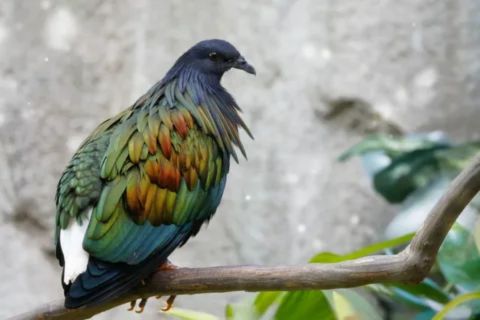
13. The Dodo Bird Was Their Cousin: The tragically extinct Dodo bird belongs to the same order of birds as the pigeon and dove family, making the little-known and iridescent Nicobar pigeon its closest living relative.
14. They Drink Like Humans, Not Birds: Most birds take a sip of water and then tilt their head back to let gravity wash the water down. Pigeons are one of the few bird species that can suck up water using their beak like a straw.
15. They See the Invisible: Pigeons possess ultraviolet (UV) vision, which allows them to see light in a spectrum that is invisible to the human eye. This likely aids in navigation and locating food.
16. They Mate For Life: Pigeons are typically monogamous and will form lifelong pair bonds, with both parents cooperating to build the nest, incubate the eggs, and feed the young.
17. Famous Fanciers Were Obsessed: Some of history’s greatest minds and most recognizable figures were devout pigeon enthusiasts, or “fanciers,” including Charles Darwin, who owned a diverse flock and devoted two chapters of his book The Variation of Animals and Plants Under Domestication to them, and Nikola Tesla, who passionately cared for and spoke of his favorite white pigeon.
18. They Are Clean Birds: Contrary to the “flying rat” stereotype, pigeons are surprisingly clean. They spend a large portion of their day grooming and are highly organized in their flock and nesting habits.
19. You Rarely See a “Baby Pigeon”: The reason you don’t see tiny pigeon chicks (squabs) on the street is that they stay in the nest for an exceptionally long time—about four to six weeks—until they are nearly full-grown and ready for independent flight.

20. Their Poop Was Once Highly Valuable: In 16th- to 19th-century England, pigeon guano (droppings) was so prized as an efficient fertilizer and source of potassium nitrate (for gunpowder) that armed guards were often hired to protect the birds’ nesting areas. Sources
FAQs
1. Are pigeons smart?
Yes! Pigeons show remarkable intelligence, capable of solving puzzles, recognizing people, and understanding concepts like space and time.
2. What do pigeons eat?
They enjoy seeds, grains, and small insects but can adapt to urban diets when necessary.
3. How long do pigeons live?
In the wild, pigeons live around 5 years, but in captivity, they can reach 15 years or more.
4. Why do pigeons bob their heads?
Head-bobbing helps them stabilize their vision while walking, giving them better depth perception.
5. Can pigeons be kept as pets?
Absolutely! Many pigeon enthusiasts keep fancy breeds for racing, showing, or companionship.
6. Do pigeons really find their way home?
Yes. Their exceptional navigation skills allow them to return home even from unfamiliar locations hundreds of miles away.
References
https://www.historic-uk.com/HistoryUK/HistoryofBritain/War-Pigeons
https://www.sciencedaily.com/releases/2017/09/170926090528.htm

Curious by nature, storyteller by choice. I run Interesting Facts to bring you mind-blowing stories, hidden truths, and fascinating insights from around the globe. If it makes you say “Wow, I never knew that!”—my job is done.
Laiba Hanif is a professional fact-finder and the writer behind “Interesting Facts.” Fueled by a degree in Anthropology and over five years of experience unearthing hidden truths, she specializes in digging up the most bizarre, fascinating, and mind-bending tidbits the world has to offer. She’s here to prove that reality is stranger—and more amazing—than fiction.