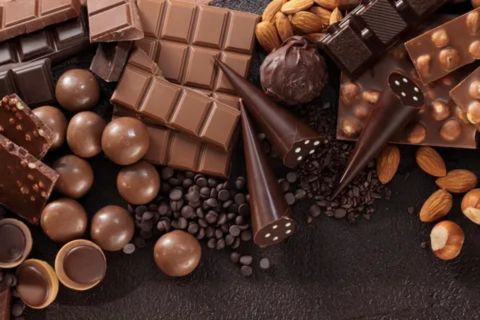
Chocolate, often referred to as the “Food of the Gods,” has a history as rich and layered as its flavor. Beyond its status as a beloved treat, the world of Theobroma cacao is full of fascinating, unique, and often little-known facts spanning from ancient rituals to modern science.
Cosmetic Uses: Cocoa butter is a common and essential ingredient in cosmetics and skincare products, prized for its excellent moisturizing and emollient properties.
Today, let’s unwrap 40 fascinating and little-known facts about chocolate that’ll make you appreciate every bite even more.
Historical & Cultural Facts About Chocolate
1. Ancient Currency: Cacao beans were so valuable to the Aztecs and Mayans that they were used as a form of currency. A single rabbit could be bought for about 10 beans, while a canoe could cost 100.
2. Bitter Beginnings: For thousands of years in Mesoamerica, chocolate was primarily consumed as a bitter, frothy, unsweetened beverage, often mixed with spices like chili peppers, annatto, and cornmeal.
3. The Name’s Origin: The botanical name for the cacao tree is Theobroma Cacao, which literally translates from Greek to “Food of the Gods.”
4. Aztec Power Drink: The Aztec Emperor Montezuma II reportedly drank up to 50 cups of xocolatl (the bitter chocolate drink) daily to boost his energy and as an aphrodisiac.
5. A European Secret: After being introduced to Europe by the Spanish in the 16th century, chocolate remained a heavily guarded secret and an exclusive luxury drink for the aristocracy and elite for nearly a century.
The Chocolate River: In the famous film Willy Wonka & the Chocolate Factory (1971), the iconic chocolate river was made of about 150,000 gallons of water mixed with real chocolate and cream, though it spoiled quickly.
6. Chocolate in the Church: During the Spanish Inquisition, Catholic monks were among the first to sweeten chocolate with honey and sugar, transforming its taste and aiding its spread across Europe.
7. Medical Marvel: Early European uses of chocolate were often medicinal; it was prescribed by doctors to treat various ailments, from fatigue to digestive issues, and to generally boost energy.
8. The First Chocolate House: Similar to coffee houses, the first “Chocolate Houses” in London emerged in the 17th century as fashionable social and political meeting spots for the wealthy.
9. A Royal Gift: Chocolate was introduced to the French court in 1615 when King Louis XIII married Anne of Austria, the daughter of Spanish King Philip III, bringing it as part of her bridal dowry.
10. Revolutionary Ration: Chocolate was included in the daily rations of American soldiers during the Revolutionary War, and later, during World War II, it was a morale-boosting component of K-rations.
A Chocolate Museum: The world’s largest chocolate museum is the Lindt Home of Chocolate in Kilchberg, Switzerland, featuring the world’s largest free-standing chocolate fountain.
11. White Chocolate Debate: White chocolate is technically not “true” chocolate because it contains no cocoa solids, only cocoa butter, sugar, and milk solids.
12. The Accident of the Cookie: The invention of the chocolate chip cookie in 1930 was an accident. Ruth Graves Wakefield, who ran the Toll House Inn, ran out of baking chocolate and used semi-sweet chocolate chunks instead, expecting them to melt, but they held their shape.
13. A New Color: In 2017, a fourth type of chocolate, Ruby Chocolate, was unveiled. It gets its naturally pink color and fruity, slightly sour flavor from carefully selected cocoa beans without any added berries or colorants.
14. Chocolate in Savory Dishes: In Mexico, chocolate is a key ingredient in traditional Mole Poblano sauce, a rich, complex sauce often served over turkey or chicken.
15. The World’s Largest Bar: The world’s largest chocolate bar on record weighed over 12,000 pounds.
Gifting in Japan: In Japan, on Valentine’s Day, it is customary for women to give chocolate to men. The men then return the favor one month later on a holiday called White Day.
Unique Production & Science Facts About Chocolate
16. The Melting Point Secret: Chocolate’s unique appeal is partly due to its melting point, which is just below the average human body temperature (33.8°C or 92°F), causing it to literally melt in your mouth.
17. Fermentation is Key: The distinctive chocolate flavor does not exist in the raw cacao bean; it is developed through a complex fermentation process lasting several days after the beans are harvested.
18. A Fragile Tree: The cacao tree, or Theobroma Cacao, is an understory plant, meaning it grows best in the shade of larger trees and is very sensitive to environmental changes.
19. Tree Lifespan and Yield: Cacao trees can live for up to 200 years, but they only produce marketable cocoa beans for about 25 years.
20. Bean Count: It takes approximately 400 cacao beans to produce just one pound (about 454 grams) of finished chocolate.
Chocolate and Space: Astronauts on the Apollo 13 mission had a chocolate bar among their limited rations, highlighting its value as a compact, high-energy food.
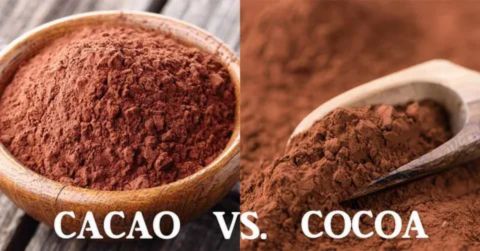
21. Cacao vs. Cocoa: “Cacao” generally refers to the bean and its derivatives in their raw or less-processed form, while “cocoa” refers to the powder after the beans have been roasted and processed.
22. The Three Bean Types: The three main varieties of cacao bean are Criollo (rare and highly prized, with a delicate flavor), Forastero (most common, making up about 80−90% of the world’s supply), and Trinitario (a hybrid of the two).
23. Conching’s Role: The process called conching, invented by Rodolphe Lindt in 1879, involves mixing and grinding the chocolate mixture for hours or even days to achieve the ultra-smooth, velvety texture we know today.
24. Crystallization: Chocolate needs to be carefully tempered—a process of heating and cooling—to ensure the cocoa butter molecules crystallize correctly, giving it a shiny finish and a satisfying “snap.”
25. The Blooming Misunderstanding: The white or grey film that sometimes appears on old chocolate is called “bloom.” It is not mold but the result of either sugar or fat separating and recrystallizing on the surface, making it safe to eat, though the texture may be affected.
The World’s Largest Producer: Côte d’Ivoire (Ivory Coast) in West Africa is the single largest producer of cocoa beans globally, providing roughly 40% of the world’s supply.
Psychological & Physiological Facts About Chocolate
26. The Bliss Molecule: Chocolate contains small amounts of anandamide, a naturally occurring cannabinoid neurotransmitter named after the Sanskrit word for “bliss.”
27. The Love Drug: Chocolate also contains phenylethylamine (PEA), a mild stimulant and psychoactive compound that is released in the brain when a person is in love.
28. Stress Relief: The scent of chocolate alone has been shown to increase theta brain waves, which are associated with relaxation and stress reduction.
29. Natural Painkiller: Chewing dark chocolate can act as a natural cough suppressant due to the presence of theobromine, which is more effective than codeine in calming persistent coughs.
30. Brain Boost: The flavanols in dark chocolate increase blood flow to the brain, which can temporarily improve cognitive function, memory, and attention span.
The Most Expensive: The world’s most expensive commercially available chocolate is often reported to be the “Chocopologie by Knipschildt,” which can be custom-made and costs thousands of dollars per pound.
31. Magnesium Powerhouse: Dark chocolate is an excellent source of several important minerals, particularly magnesium, which is crucial for over 300 bodily functions.
32. The Pet Danger: Theobromine, which is beneficial to humans, is toxic to dogs and cats because their bodies process it much slower, allowing it to build up to dangerous levels.
33. Blood Pressure Aid: The nitric oxide produced in response to cocoa flavanols signals blood vessels to relax, potentially leading to lower blood pressure.
34. Antioxidant King: Cocoa is one of the foods with the highest concentration of antioxidants, particularly polyphenols, which help fight free radicals and reduce inflammation.
35. The Caffeine Content: While containing caffeine, the amount is relatively low. An average milk chocolate bar has less than a cup of decaf coffee, while a dark chocolate bar has significantly less than a standard cup of brewed coffee.
A Long Wait for Beans: A cacao pod takes about six months to mature, and even then, only about 40 to 50 beans are found inside each pod.
Statistics & Modern Facts About Chocolate
36. Global Consumption Leader: Switzerland consistently tops the list of countries with the highest per capita chocolate consumption, proving the world’s love for Swiss chocolate is truly boundless.
37. Seasonal Spikes: Valentine’s Day and Easter account for massive spikes in global chocolate sales, with Easter being particularly significant due to the sheer volume of chocolate bunnies and eggs sold.
38. The World’s Largest Producer: Côte d’Ivoire (Ivory Coast) in West Africa is the single largest producer of cocoa beans globally, providing roughly 40% of the world’s supply.
39. Fear of No Chocolate: The fear of running out of chocolate has an unofficial, humorous name: “chocoholism” or “xocolatophobia” (though this term is not clinically recognized).
40. Anti-Explosive Plot: During WWII, Nazi plotters attempted to assassinate Winston Churchill by rigging a specialized chocolate bar to explode upon breaking.
The $100 Billion Industry: The global chocolate industry is an economic powerhouse, estimated to be worth well over $100 billion annually, supporting millions of livelihoods worldwide.

Curious by nature, storyteller by choice. I run Interesting Facts to bring you mind-blowing stories, hidden truths, and fascinating insights from around the globe. If it makes you say “Wow, I never knew that!”—my job is done.
Laiba Hanif is a professional fact-finder and the writer behind “Interesting Facts.” Fueled by a degree in Anthropology and over five years of experience unearthing hidden truths, she specializes in digging up the most bizarre, fascinating, and mind-bending tidbits the world has to offer. She’s here to prove that reality is stranger—and more amazing—than fiction.