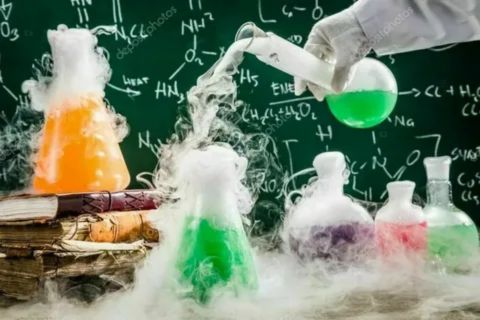
Chemistry isn’t just about test tubes and lab coats—it’s the science that explains why the sky is blue, why your soda fizzes, and even how your body stays alive. These 35 interesting facts about chemistry will make you look at the world in a completely new way. Ready?
35 Amazing Facts About Chemistry
1. You’re Made of Stardust!
Almost every atom in your body, from the iron in your blood to the calcium in your bones, was cooked up inside a star that exploded long, long ago. How cool is that?
Gold is edible—it’s non-toxic and even used to decorate luxury desserts and drinks.
2. Atoms are Mostly Empty Space!
If an atom were the size of a football stadium, the nucleus (the center) would be like a tiny marble in the middle. The rest is just whoosh—empty!
3. Invisible Super Glue!
The “stuff” that holds atoms together to form molecules (like water) is called a chemical bond. These bonds are like super-strong, invisible glue!
4. Diamonds and Pencil Lead Are Cousins!
Pencil lead (graphite) and super-hard diamonds are both made almost entirely of the element Carbon (C). The only difference is how the Carbon atoms are arranged. In diamonds, carbon atoms form a strong 3D lattice, while in graphite, they’re arranged in flat sheets.
The average human body has enough carbon to make 9,000 pencils.
5. The Only Metal That’s Liquid at Room Temperature
Mercury is the only metal that’s naturally liquid at room temperature. It’s shiny, silvery, and mesmerizing—but don’t touch it! It’s also extremely toxic.
6. The Smell of Rain Is Caused by Chemistry
That fresh, earthy scent after it rains? It’s caused by geosmin, a chemical released by soil bacteria, and ozone, created when lightning splits oxygen molecules.
7. Bananas Are Naturally Radioactive
Bananas contain potassium-40, a radioactive isotope. Don’t worry—you’d need to eat millions of bananas in one sitting to experience any harmful effects!
8. Hot Ice Exists—and It’s Mind-Bending
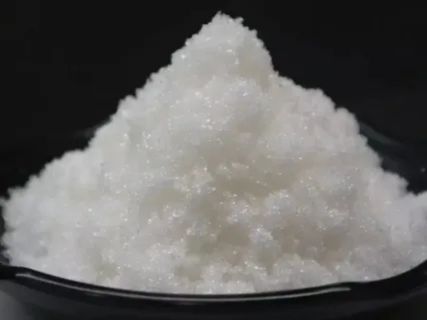
There’s a substance called sodium acetate trihydrate that can be supercooled and then solidifies instantly when triggered. It looks like ice but feels warm to the touch—hence the name “hot ice.”
9. Mercury Can “Dissolve” Gold
When gold is placed in mercury, it dissolves to form a soft mixture called an amalgam. This was once used to extract gold from ores, though it’s now banned due to mercury’s toxicity.
10. Fire Has No Shadow
Fire emits its own light, which means it doesn’t cast a shadow like solid objects do. Next time you’re near a flame, take a look—it’s pure chemistry in action.
Chemistry can make colors disappear—acids and bases can turn red cabbage juice into every color of the rainbow!
11. Glass Is Technically a Liquid (Sort Of)
Although glass looks solid, it’s actually an amorphous solid—meaning its molecules are arranged more like a slow-moving liquid than a true crystal.
12. Your Breath Contains Atoms from Dinosaurs
Every time you exhale, some of your breath’s atoms will remain in Earth’s atmosphere for millions of years. Statistically, each breath you take contains atoms once breathed by dinosaurs!
13. The World’s Strongest Acid Can Melt Through Glass
Fluoroantimonic acid is over a billion times stronger than sulfuric acid. It’s so powerful it can even eat through glass, so it’s stored in Teflon containers.
14. There’s Metal That Can Float on Water
Lithium, sodium, and potassium are metals that are less dense than water—so they float! But don’t try dropping them in a pond—they react violently with water and can explode.
15. Chocolate Contains the Same Chemical as Love
Chocolate contains phenylethylamine, the same chemical your brain releases when you’re in love. No wonder it feels so good to eat!
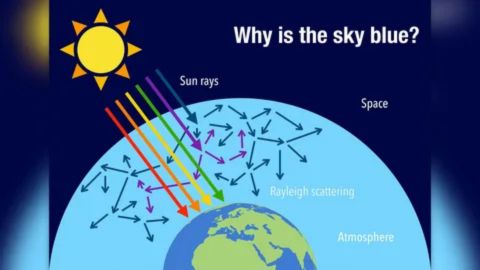
16. The Blue of the Sky Is a Result of Molecular Scattering
Sunlight interacts with air molecules, scattering shorter blue wavelengths more than red—a phenomenon known as Rayleigh scattering. That’s why the sky looks blue!
17. Smell is Shape
You can smell different things because tiny molecules of those things have different shapes. They fit into “slots” in your nose, kind of like keys fitting into locks, and that’s how your brain knows if you’re smelling a cookie or a flower!
18. Onions Make You Cry with Acid
When you cut an onion, it releases a gas that floats up and touches the water in your eyes. This makes a tiny bit of sulfuric acid—the chemical that makes you cry!
19. Baking Soda’s Super Power
When you mix baking soda (sodium bicarbonate) and vinegar (acetic acid), they have a party! They mix and release a gas called carbon dioxide (CO₂), which is what makes cakes fluffy or volcanoes fizz!
There’s a form of ice that burns—called methane hydrate, found deep under the ocean.
20. Hot Water Freezes Faster than Cold Water
Sometimes, if conditions are just right, hot water can turn to ice quicker than cold water. This strange effect is called the Mpemba effect, and scientists still debate exactly why it happens!
21. Rust is Slow Fire
When iron (Fe) metal mixes with oxygen (O2) from the air, it’s called oxidation, or rusting. It’s the exact same chemical process as fire, but it happens so slowly that you don’t see any flames or feel the heat!
22. Fire Needs Three Things
A fire isn’t just one thing. It’s a chemical reaction that needs a ‘fire triangle’: Fuel (something to burn), Oxygen (to keep the reaction going), and Heat (to start it). Remove one factor, and the fire ceases to exist!
23. Pop Rocks Make Gas
The crackle you feel when eating Pop Rocks isn’t magic. It’s because tiny bubbles of carbon dioxide gas (CO2) were trapped inside the candy when it was made. When you chew, they pop!
24. Your Stomach is a Tank of Acid
Your stomach uses a super-strong acid called hydrochloric acid (HCl) to help break down food. If it wasn’t for a thick layer of mucus, your stomach would digest itself.
25. Chemicals Help Us See!
The color-detecting cells in your eyes, called rods and cones, use a chemical called rhodopsin. When light hits it, it changes shape, and that signal is what your brain reads as “sight“!
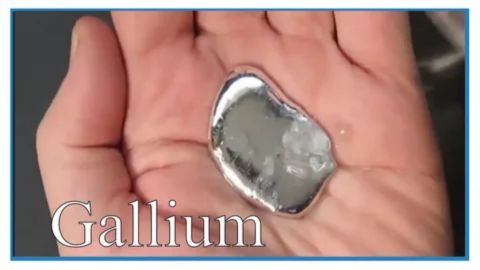
26. The Hand-Melting Metal
The element Gallium (Ga) has a melting point of only 29.76°C, meaning it will turn into liquid metal if you simply hold a lump of it in the warmth of your hand.
27. The Most Reactive Element
The element Fluorine (F) is so eager to react with other elements that it’s the most reactive element in the whole Periodic Table! It’s like the kid who always wants to play.
28. Water Shrinks the Volume of Alcohol
If you mix half a liter of ethanol (alcohol) with half a liter of water, the resulting liquid volume will be less than one liter! The smaller water molecules fit perfectly into the structural gaps between the larger alcohol molecules.
29. Salt Makes Water Disappear
Pouring a handful of table salt (NaCl) into a full glass of water won’t make it overflow. Instead, the total volume of the liquid will actually decrease slightly. The salt ions attract water molecules, packing them more tightly.
30. Invisible Ink Magic
You can make “invisible ink” using lemon juice. The ink is invisible until you heat it up, which causes the chemicals in the juice to turn brown (oxidize), like a very slow, tiny burn.
31. Dynamite Contains Peanuts
Some early formulas of Alfred Nobel’s original dynamite used peanut shells or other food-grade materials to create diatomaceous earth, which was used to stabilize the extremely volatile nitroglycerin.
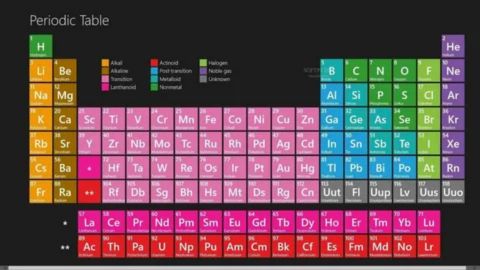
32. The Rarest Natural Element
Astatine (At) is so rare that it is estimated the Earth’s entire crust contains less than 28 grams of it at any given time.
33. The Only Missing Letter
The letter ‘J’ is the only letter of the English alphabet that does not appear anywhere on the official Periodic Table of Elements.
34. Batteries are Chemical Lunch Boxes
A battery works because of a chemical reaction happening inside it. This reaction creates extra electrons, which are tiny particles of electricity, and sends them out to power your toys!
35. Helium Hates Other Atoms
The gas that fills birthday balloons, Helium (He), is a “Noble Gas.“ It almost never wants to react or stick to any other atom. It likes to keep to itself!
FAQs
Q1: What is the most explosive element in chemistry?
A: Cesium is one of the most reactive metals, exploding on contact with water.
Q2: Why does ice float?
A: Ice is less dense than liquid water due to its unique crystalline structure.
Q3: What’s the most dangerous chemical on Earth?
A: Fluoroantimonic acid—it’s over a billion times stronger than sulfuric acid.
Q4: Is everything made of atoms?
A: Yes! Every solid, liquid, gas, and even plasma is made of atoms.
Q5: Why is chemistry important in daily life?
A: Chemistry explains cooking, cleaning, breathing, medicine, and nearly every human activity.
Q6: Can chemistry explain emotions?
A: Absolutely. Emotions are linked to chemicals like serotonin, dopamine, and oxytocin.

Curious by nature, storyteller by choice. I run Interesting Facts to bring you mind-blowing stories, hidden truths, and fascinating insights from around the globe. If it makes you say “Wow, I never knew that!”—my job is done.
Laiba Hanif is a professional fact-finder and the writer behind “Interesting Facts.” Fueled by a degree in Anthropology and over five years of experience unearthing hidden truths, she specializes in digging up the most bizarre, fascinating, and mind-bending tidbits the world has to offer. She’s here to prove that reality is stranger—and more amazing—than fiction.