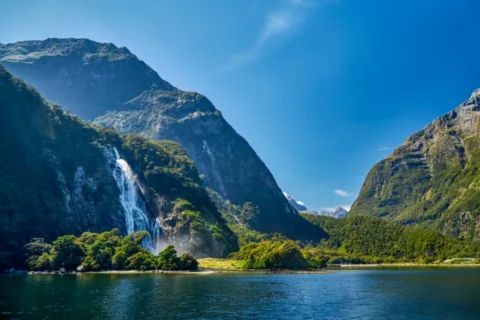
New Zealand, known in Māori as Aotearoa (“The Land of the Long White Cloud”), is a breathtaking island nation located in the southwestern Pacific Ocean. Famed for its dramatic landscapes—from snow-capped mountains and lush forests to pristine beaches and rolling green hills—it’s a paradise for nature lovers and adventure seekers alike. Here are some quick facts about New Zealand:
| Category | Details |
|---|---|
| Official Name | New Zealand (Aotearoa in Māori) |
| Capital City | Wellington |
| Largest City | Auckland |
| Population | Approximately 5 million |
| Official Languages | English, Māori, New Zealand Sign Language |
| Currency | New Zealand Dollar (NZD) |
| Government Type | Parliamentary Democracy and Constitutional Monarchy |
| Prime Minister (2025) | Christopher Luxon |
| National Symbol | Kiwi bird |
| Famous For | Stunning landscapes, Māori culture, adventure tourism, The Lord of the Rings filming locations |
| Major Islands | North Island, South Island |
| Highest Peak | Aoraki / Mount Cook (3,724 m) |
| Popular Sports | Rugby, Cricket, Sailing, Hiking |
10 Interesting Facts About New Zealand
1. A Biologically Unique World of Bats and Birds
Due to its isolation, most New Zealand wildlife evolved without the presence of land mammals. Before human arrival, the only native land mammals were two species of bat (the long-tailed and lesser short-tailed bats). This lack of predators allowed birds, like the iconic kiwi, to become flightless, filling ecological niches usually taken by mammals.
2. Home to the World’s Only Alpine Parrot
The kea is an extremely intelligent, large parrot endemic to the South Island. It’s known for its mischievous and curious nature, which often leads it to interact—and sometimes dismantle—human belongings in mountain environments. Kea are often observed pulling windscreen wipers off cars and tearing rubber seals off windows.
In New Zealand, “Kiwi” uniquely represents the national bird, the fruit, and the people—a proud symbol of the nation’s identity and warmth
3. The Longest Place Name in the World
New Zealand is home to a hill with the world’s longest place name (in an English-speaking country) recognized by the Guinness World Records: Taumatawhakatangihangakoauauotamateaturipukakapikimaungahoronukupokaiwhenuakitanatahu. The 85-letter Māori name roughly translates to “The summit where Tamatea, the man with the big knees, the slider, climber of mountains, and land-swallower who travelled about, played his kōauau (flute) to his loved one.”
4. Sheep Outnumber People by a Large Margin
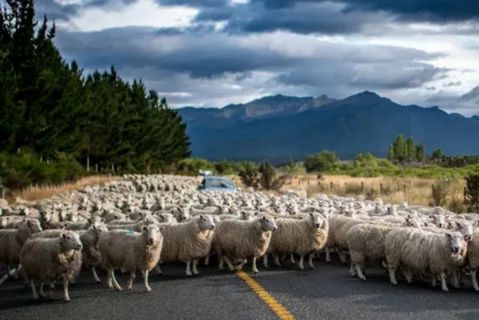
While the ratio has decreased over the decades, New Zealand still has significantly more sheep than people. As of a recent count, the ratio is about five or six sheep for every human resident, reflecting the nation’s strong agricultural heritage, particularly in wool and lamb production.
5. Hobbiton is a Permanent Movie Set and Tourist Attraction
Thanks to the filming of The Lord of the Rings and The Hobbit trilogies, New Zealand has become synonymous with “Middle–earth.” The Hobbiton Movie Set near Matamata was made permanent after the filming of the second trilogy, complete with its 44 Hobbit Holes, and remains one of the country’s most famous tourist destinations.
6. The Blue Lake Has the Clearest Water on Earth
New Zealand is home to the world’s clearest naturally occurring water body. Blue Lake (Rotomairewhenua) in Nelson Lakes National Park has an average visibility of up to 80 meters—a clarity comparable to distilled water—and is considered sacred by the local Māori.
7. Two Official National Anthems
New Zealand is one of only two nations globally (the other being Denmark) to have two official national anthems: “God Defend New Zealand” and “God Save The King” (or Queen). They are considered equal, though “God Defend New Zealand” is more commonly used.
8. Home to the World’s Smallest Dolphin
Hector’s dolphin, native only to New Zealand, is the smallest and rarest dolphin species on the planet. With a rounded dorsal fin that looks like Mickey Mouse ears, these charming creatures are found mainly around the South Island and are a symbol of New Zealand’s rich marine life.
9. First Country to Give Women the Right to Vote
New Zealand made history in 1893 by becoming the first nation to grant women the right to vote. This landmark move set an example for the rest of the world and remains a proud part of the country’s identity as a progressive, equality-driven nation.
In the early 2000s, New Zealand made history by having all its top state positions simultaneously held by women—a global first in leadership equality
10. Glowworm Caves That Shine Like Stars
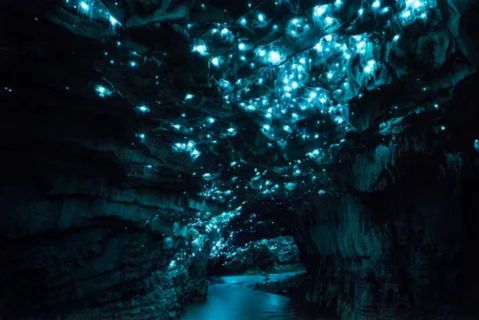
Deep in the Waitomo Caves, thousands of glowworms light up the limestone ceilings like a galaxy of stars. This otherworldly natural phenomenon draws travelers seeking a magical underground experience that can’t be found anywhere else in the world.
FAQs
1. What language is spoken in New Zealand?
English is the primary language, but Māori and New Zealand Sign Language are also official languages. Māori culture plays a significant role in the nation’s identity and daily life.
2. Is New Zealand safe for travelers?
Yes! New Zealand is one of the safest countries in the world, ranking high for low crime rates, political stability, and friendly locals
3. What are some unique things you can only do in New Zealand?
You can explore glowworm caves, visit Hobbiton, hike on active volcanoes, swim with dolphins, and even witness geysers and boiling mud pools—all within the same country. These experiences make New Zealand unlike anywhere else on Earth.
Curious by nature, storyteller by choice. I run Interesting Facts to bring you mind-blowing stories, hidden truths, and fascinating insights from around the globe. If it makes you say “Wow, I never knew that!”—my job is done.
Laiba Hanif is a professional fact-finder and the writer behind “Interesting Facts.” Fueled by a degree in Anthropology and over five years of experience unearthing hidden truths, she specializes in digging up the most bizarre, fascinating, and mind-bending tidbits the world has to offer. She’s here to prove that reality is stranger—and more amazing—than fiction.