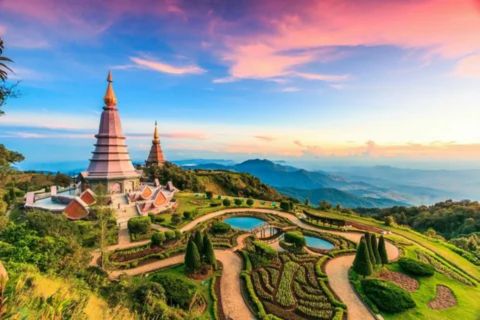
Thailand, the “Land of the Free,” is a country of captivating contrasts, rich history, and unique cultural norms. Thailand, lovingly known as the “Land of Smiles,” stands out as one of Southeast Asia’s most colorful, culturally diverse, and captivating nations.
From golden temples and tropical beaches to unusual festivals and delightful cuisine, Thailand is a country that never fails to surprise visitors. Here are some quick facts about Thailand
| Category | Details |
|---|---|
| Country Name | Thailand |
| Population | Approximately 70 million (as of 2025) |
| Currency | Thai Baht (THB) |
| Major Religion | Buddhism (around 94% of the population) |
| Official Language | Thai |
20 Amazing Facts About Thailand
Below are 20 intriguing, attention-grabbing facts that go beyond the typical travel brochure, showcasing the nation’s distinctive identity.
1.The Only Uncolonized Nation in Southeast Asia
Thailand, formerly known as Siam, boasts the remarkable distinction of being the only Southeast Asian country never formally colonized by a European power. This achievement is a source of immense national pride and is reflected in the country’s Thai name, Prathet Thai, which translates to ‘Land of the Free.’
2. The World’s Longest City Name
The capital, Bangkok, is known to Thais as Krung Thep, but its full ceremonial name is a stunning 169-character, Pali– and Sanskrit-rooted masterpiece: Krung Thep Mahanakhon Amon Rattanakosin Mahinthara Ayuthaya Mahadilok Phop Noppharat Ratchathani Burirom Udomratchaniwet Mahasathan Amon Piman Awatan Sathit Sakkathattiya Witsanukam Prasit. It holds the Guinness World Record for the longest place name.
3. An Underwater Temple
In the Kanchanaburi province, the village of Old Sangkhlaburi was submerged by a dam’s construction. During the dry season, the Buddhist temple ruins partially resurface from the water, creating a surreal and historically poignant sight akin to a watery Pompeii.
4. Stepping on Currency is a Crime
Thai banknotes and coins feature the image of the king. Due to the strict lèse-majesté laws (laws against insulting the monarchy), stepping on any currency is considered a deeply disrespectful act against the king and is illegal, punishable by law.
5. A Calendar 543 Years Ahead
Thailand officially uses the Buddhist Era (BE) calendar, which is 543 years ahead of the Gregorian calendar (e.g., the year 2025 CE is B.E. 2568). This reflects the profound influence of Buddhism on the nation’s identity and state affairs.
6. The Sacred Head and Lowly Feet
In Thai culture, the head is considered the most sacred part of the body, the seat of the soul. Therefore, touching someone’s head—even a child’s—is highly offensive. Conversely, the feet are considered the lowest and dirtiest part and should never be pointed at a person or a Buddha statue or used to gesture.
7. The Wai: More Than a Greeting
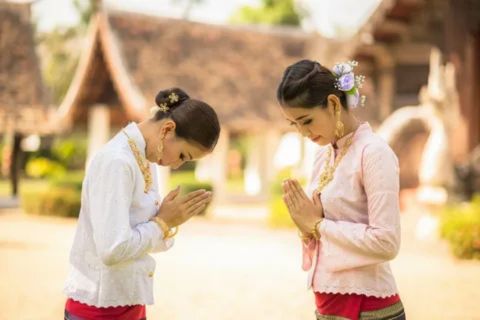
The traditional Thai greeting, known as the “wai”—where palms are pressed together in a prayer-like gesture—serves as a graceful and meaningful expression of respect in Thai culture. The height of the hands and the depth of the bow indicate the level of respect shown, varying based on the age, status, or position of the person being greeted.
8. Nicknames are the norm.
It’s a widespread Thai custom to use short, often whimsical nicknames instead of their formal, sometimes very long, given names. These nicknames can be anything from simple syllables (like “Noi” or “Aon”) to words for colors, fruits, or animals and are often used throughout a person’s life, even professionally.
9. National Anthem’s Daily Ritual
The Thai National Anthem is played publicly twice a day—at 8:00 AM and 6:00 PM—in places like parks, schools, and train stations. When it plays, it’s customary for everyone to stop whatever they are doing and stand respectfully until the music concludes, a public display of national reverence.
10. The Monkey Buffet Festival
Every November, the town of Lopburi hosts an extravagant ‘Monkey Buffet Festival’ in honor of the local macaque population. Locals lay out over two tons of fruits, vegetables, and treats, believing that feeding the monkeys brings good luck and prosperity.
11. Home to the World’s Smallest Mammal
Thailand is the home of the Bumblebee Bat (Kitti’s Hog-Nosed Bat), found only in a few limestone caves. Weighing just about two grams—less than a penny—it holds the title for the smallest mammal on Earth.
12. The World’s Largest Solid Gold Buddha
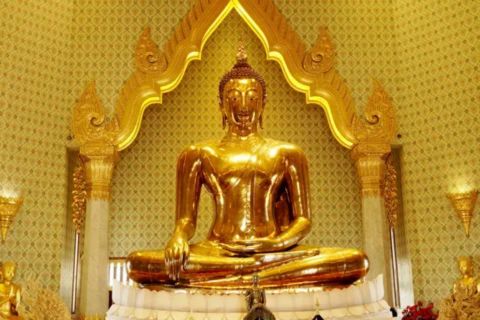
The Golden Buddha of Wat Traimit in Bangkok is the world’s largest solid gold statue, weighing approximately 5.5 tons. For centuries, its true nature was hidden under a thick plaster coating to conceal its value from invaders, a secret only revealed by accident in 1955 when the plaster cracked.
13. A Global Orchid Exporter
The national flower of Thailand is the orchid. With over 1,500 native species, Thailand is a world leader in the export of exotic orchids and tropical cut flowers, with the beautiful blooms being an everyday sight.
14. Over 1,400 Islands
Thailand boasts a staggering archipelago of approximately 1,430 islands, ranging from famous tourist magnets like Phuket and Koh Samui to countless uninhabited, pristine specks of land. This makes island-hopping a foundational element of the Thai experience.
15. The Walking Fish
Thailand’s caves are home to the Cryptotora thamicola, an endangered species of blind cave fish that can “walk” up waterfalls. It uses its two front and two rear fins in a way that allows it to crawl on land, a rare anatomical feature among fish.
16. Red Bull’s Thai Roots
The global energy drink phenomenon, Red Bull, has its origins in Thailand. It was based on Krating Daeng (meaning ‘red bull’), a sweet, non-carbonated drink sold in Thailand since 1975, which was later adapted for Western tastes.
17. A Temple Made of Beer Bottles
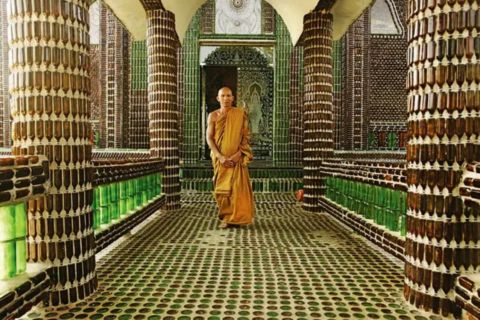
The Wat Pa Maha Chedi Kaew, a Buddhist temple in Sisaket province, is entirely constructed from approximately 1.5 million discarded beer bottles—mostly green Heineken and brown local Singha bottles. This unique structure highlights an innovative approach to recycling and sustainability.
18. Thailand Has a Floating Market Culture
Floating markets, such as Damnoen Saduak, have been part of Thai life for centuries. Locals sell fruits, flowers, and noodles from boats, creating a colorful and lively atmosphere that feels like stepping back in time.
19. A Festival Dedicated to Ghosts
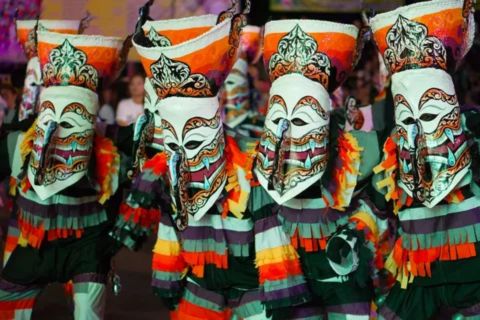
In the Isan region, Thailand celebrates the Phi Ta Khon Festival, also known as the “Ghost Festival.” Locals dress in colorful ghost masks and parade through the streets to honor spirits and bring good fortune.
20. No Haircuts on Wednesdays (Traditionally)
An old superstition holds that getting a haircut on a Wednesday brings bad luck. This belief is rooted in the tradition that the King and other members of the Royal Family used to have their hair cut on Wednesdays, making it a day for royal matters and therefore inauspicious for commoners to cut their hair. Many barbershops are still closed on Wednesdays.
FAQs
1. What makes Thailand special?
Thailand stands out for its rich culture, friendly people, tropical beauty, and never-colonized history.
2. What language do people speak in Thailand?
The official language is Thai, though English is widely spoken in tourist areas.
3. When is the best time to visit Thailand?
The best time to visit is between November and February, during the cool, dry season.
4. What are Thailand’s most popular foods?
Favorites include Pad Thai, Tom Yum Goong (spicy shrimp soup), and Green Curry.
5. Do you need a visa to visit Thailand?
Many countries receive visa-free entry for short stays, but always check current requirements before traveling.
6. What currency is used in Thailand?
The Thai Baht (THB) is the official currency.
Curious by nature, storyteller by choice. I run Interesting Facts to bring you mind-blowing stories, hidden truths, and fascinating insights from around the globe. If it makes you say “Wow, I never knew that!”—my job is done.
Laiba Hanif is a professional fact-finder and the writer behind “Interesting Facts.” Fueled by a degree in Anthropology and over five years of experience unearthing hidden truths, she specializes in digging up the most bizarre, fascinating, and mind-bending tidbits the world has to offer. She’s here to prove that reality is stranger—and more amazing—than fiction.