Physics isn’t just about formulas and blackboards—it’s the very language of the universe. From how stars burn to why time flows, physics explains everything around us. In this article, we’ll explore 12 interesting physics facts that are guaranteed to blow your mind, surprise your curiosity, and make you see reality in a whole new light.
Interesting Physics Facts To Spark Curiosity
1. Time Slows Down When You Move Faster
According to Einstein’s theory of relativity, time is flexible. When you travel close to the speed of light, time for you moves slower compared to someone standing still. Astronauts in orbit actually experience this—they age a few milliseconds slower than people on Earth!
2. You Are Literally Made of Stardust
Every atom in your body once belonged to a star. When massive stars explode in supernovas, they scatter elements like carbon, oxygen, and iron across space—the same materials that form your body. So yes, you’re a walking piece of the cosmos!

3. Quantum Particles Exist in Two Places at Once
In the strange world of quantum mechanics, particles don’t follow normal rules. Through superposition, an electron can exist in two places or states simultaneously—until it’s observed. It’s one of the weirdest, most mind-bending truths in all of physics.
Bonus Fact: Black holes aren’t completely black—they emit a faint glow called Hawking Radiation, slowly evaporating over billions of years.
4. You Can Create Light by Moving Faster Than Light (in Water)
Known as Cherenkov radiation, this happens when charged particles move through a medium (like water) faster than light can travel through that same medium. The result? A glowing blue light that looks like something straight out of a sci-fi movie—but it’s 100% real.
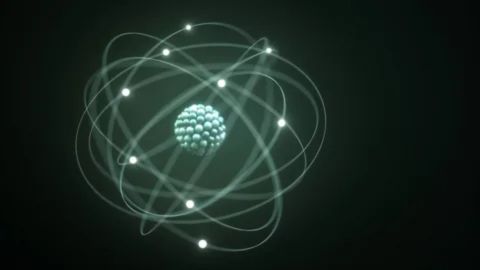
5. Atoms Are Mostly Empty Space
Everything around you feels solid, yet the truth is mind-blowing: atoms are 99.9999999% empty space. If you removed all the empty space from every atom in humanity, we’d fit inside a single sugar cube. Reality isn’t as solid as it seems!
6. Gravity Doesn’t Actually Pull You Down in Space
Astronauts float not because there’s no gravity, but because they’re in continuous free fall around Earth. This creates microgravity, making them weightless even though gravity is still acting on them.
Quick Fact: Gravity isn’t a force—it’s the curvature of spacetime caused by mass and energy, making planets orbit the Sun by following warped space, not by being “pulled.”
7. Sound Can Be Transformed Into Light
Through sonoluminescence, intense sound waves can cause microscopic bubbles in water to collapse, releasing tiny flashes of light. It’s like turning sound energy into a mini lightning bolt—a natural phenomenon scientists are still studying.
8. Light Can Be Stopped Completely
In special conditions using Bose-Einstein condensates (matter cooled near absolute zero), scientists have managed to slow light down to a few meters per second and even bring it to a complete halt. It’s a real-world “pause button” for light!
9. Quantum Tunneling Lets Particles Walk Through Walls
In classical physics, nothing can pass through solid barriers. But in quantum physics, particles can “tunnel” through obstacles—an effect that makes modern tech like flash drives and nuclear fusion possible.
10. The Universe Might Be a Hologram
Some theories suggest our three-dimensional universe is actually a hologram, with all information stored on a distant two-dimensional surface. The “holographic principle” could be the key to connecting quantum mechanics and gravity—a true cosmic mystery.
No black hole is stationary; they all spin! The fastest-known black hole, called GRS 1915+105, rotates at over 1,000 rotations per second, dragging the surrounding spacetime with it in a phenomenon called frame-dragging.
11. Time Travel to the Future Is Real
While backward time travel is still theoretical, moving forward in time is possible through time dilation. If you traveled at near-light speed and returned, you’d find that more time passed on Earth than for you—effectively traveling into the future.
12. The Universe Is Expanding Faster Every Day
Instead of slowing down, the universe is actually speeding up in its expansion. Scientists believe this is caused by dark energy, a mysterious force that makes up nearly 68% of the universe—and yet, we still don’t understand what it is.
FAQs
1. What is the most mind-blowing physics fact?
That time slows down depending on your speed or gravity—meaning time isn’t the same for everyone!
2. Is time travel possible according to physics?
Yes—time travel to the future is scientifically possible through time dilation, though traveling to the past remains theoretical.
3. What’s the weirdest concept in quantum physics?
Probably superposition—where particles can exist in multiple states or locations at once until observed.
4. Why do astronauts float in space?
They float because they’re in free fall around Earth, not because gravity is absent. It’s a constant “falling motion” that creates weightlessness.
5. Can sound really create light?
Yes! The process called sonoluminescence converts powerful sound waves into visible light flashes.
6. What percentage of the universe is dark matter and dark energy?
About 95%—roughly 68% dark energy and 27% dark matter, leaving only 5% as visible matter (stars, planets, etc.).

Curious by nature, storyteller by choice. I run Interesting Facts to bring you mind-blowing stories, hidden truths, and fascinating insights from around the globe. If it makes you say “Wow, I never knew that!”—my job is done.
Laiba Hanif is a professional fact-finder and the writer behind “Interesting Facts.” Fueled by a degree in Anthropology and over five years of experience unearthing hidden truths, she specializes in digging up the most bizarre, fascinating, and mind-bending tidbits the world has to offer. She’s here to prove that reality is stranger—and more amazing—than fiction.