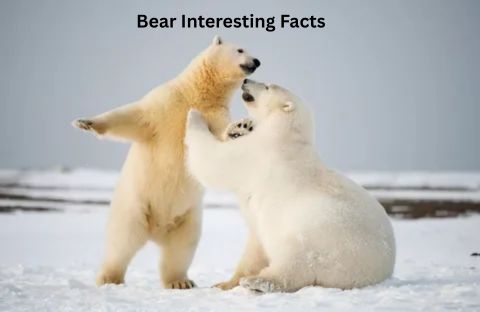
When you think of bears, you might picture a cuddly teddy bear or the honey-loving Winnie the Pooh. But the reality of the Ursidae family is far more fascinating—and fearsome—than fiction.
Whether you are a wildlife enthusiast or a student looking for data, you are likely searching for bear interesting facts that go beyond the basics. For example, did you know that a bear’s sense of smell is seven times stronger than a bloodhound’s? Or that some bears possess “super thumbs“?
Top 5 Bear Interesting Facts
If you are in a hurry, here are the most essential facts to know right now:
- They are surprisingly fast: A Grizzly bear can run up to 35 mph—faster than Usain Bolt.
- They are smarter than dogs: Bears have large brains and complex social hierarchies.
- Polar Bears aren’t white: Their skin is black, and their fur is transparent/hollow.
- Hibernation is a medical miracle: Bears can go 100+ days without eating, drinking, or passing waste.
- They come in all sizes: The Sun Bear is dog-sized, while the Polar Bear can weigh over 1,500 lbs.
Bear Interesting Facts: 25 Surprising Things You Never Knew About Bears
1. The Intelligence of Bears: Smarter Than Your Average Dog
One of the most overlooked bear interesting facts is their cognitive ability. We often perceive bears as brute forces of nature, but they are intellectually complex.
Brain Size and Problem Solving
Bears have relatively large brains compared to their body size. Biologists and animal behaviorists have observed bears using tools (like rocks to scratch their faces or open shells) and navigating vast territories without getting lost.
In terms of IQ, many experts rank bears on par with great apes and significantly higher than domestic dogs. They have excellent long-term memory, remembering food sources across thousands of miles of terrain years later.

Emotional Depth
Bears are not unfeeling monsters. They have been observed grieving for lost family members. Cubs stay with their mothers for up to three years, not just for protection, but to “learn the ropes” of survival, indicating a transfer of knowledge that requires high intelligence.
2. Physical Superpowers: Senses and Strength
To survive in the wild, from the freezing Arctic to the humid rainforests of Southeast Asia, bears have evolved physical traits that seem like superpowers.
The Incredible Sense of Smell
If you thought a dog had a good nose, think again.
- The Silvertip Grizzly has a sense of smell 2,100 times better than a human.
- They can smell a carcass from up to 20 miles away.
- They can detect scents underwater.
This olfactory system is their primary way of “seeing” the world. While their eyesight is decent (roughly the same as a human’s), their nose tells them who has been in the area, where the food is, and if danger is approaching long before they see it.
Bite Force and Strength
Bears are incredibly strong. A Grizzly bear has a bite force of over 1,100 PSI (Pounds per Square Inch). To put that in perspective, that is strong enough to crush a bowling ball or bite through a cast-iron skillet.
Their physical strength is equally terrifying. A distinct hump on the back of a Grizzly bear isn’t fat—it’s a massive muscle used for digging up roots and tearing apart logs.
Did You Know? Despite their heavy build, bears are excellent swimmers. Polar bears can swim for days at a time without stopping, covering hundreds of miles in freezing water.
3. Species Spotlight: Interesting Facts by Bear Type
There are eight bear species found around the world.While they share DNA, their lifestyles are radically different. Here are specific bear interesting facts broken down by species.
The Polar Bear: The Arctic Ghost
Polar bears are the largest land carnivores on Earth, but they are technically classified as marine mammals because they spend so much time in the sea.
- The Optical Illusion: Polar bear fur is not white. It is pigment-free and transparent. Each hair shaft is hollow, reflecting light to make the bear appear white (similar to how snow works).
- Black Skin: Under that fur, their skin is jet black to absorb heat from the sun.
- Overheating: They are so well insulated with blubber (up to 4 inches thick) that they are more likely to die from overheating than freezing.

The Giant Panda: The Vegetarian Carnivore
Pandas are the outliers of the bear family. Their digestive system is that of a carnivore, yet 99% of their diet is bamboo.
- The “Pseudo-Thumb”: Pandas have a modified wrist bone that acts like a thumb. This helps them grasp bamboo stalks with human-like dexterity.
- Eating Machine: Because bamboo offers very little nutrition, a Panda must eat for 12 to 16 hours a day to stay alive.
The Sun Bear: Small but Mighty
The Sun Bear is the smallest bear species, found in the tropical forests of Southeast Asia.
- Tongue Length: They have an exceptionally long tongue, ranging from 8 to 10 inches long. They use this to extract honey and insects from deep inside trees.
- Loose Skin: They have very loose skin around their necks. If a tiger bites them on the back of the neck, the Sun Bear can actually turn completely around inside its own skin to bite the attacker back.
The Sloth Bear: The Vacuum Cleaner
Native to India, the Sloth Bear has evolved specifically to eat termites and ants.
- Missing Teeth: They are missing their top two front incisors. This creates a gap that allows them to suck up termites like a high-powered vacuum cleaner.
- Noise: You can hear a Sloth Bear sucking up insects from over 300 feet away!
4. The Truth About Hibernation
When discussing bear interesting facts, hibernation is the most commonly cited topic, yet it is also the most misunderstood.
It’s Not a Coma
Bears do not sleep the entire winter away in a comatose state. They enter a state called torpor. In this state, they can wake up quickly if threatened. This is distinctly different from “true hibernators” like chipmunks, who drop their body temperature to near freezing and are almost impossible to wake up.
The Biological Miracle
During hibernation (which can last up to 7 months for some Grizzlies):
- Their heart rate drops from 40 beats per minute to just 8.
- They do not eat or drink.
- They do not urinate or defecate. Their bodies recycle urea into protein to maintain muscle mass. This process is of great interest to medical scientists studying muscle atrophy and kidney failure in humans.
Birth During Sleep
Perhaps the most wild fact: Female bears often give birth during hibernation. The cubs nurse on the sleeping mother and grow until she wakes up in the spring.
5. Baby Bear Facts (Cubs)
Bear cubs are arguably the cutest baby animals in the wild, but their start to life is fragile.
- Microscopic Size: At birth, a bear cub is shockingly small. A giant Panda mother weighs 200 lbs, but her baby weighs only 3 to 5 ounces—about the size of a stick of butter. This is the largest size discrepancy between mother and newborn of any placental mammal.
- Blind and Bald: Cubs are born blind, hairless, and helpless. They rely entirely on their mother’s milk, which is incredibly rich in fat (up to 30% fat content in Polar bears) to help them grow rapidly.
6. Myths vs. Reality
To our understanding of bears, we need to bust a few myths that movies have perpetuated.
Myth 1: Bears have poor eyesight.
Reality: As mentioned earlier, bears see in color and have vision comparable to humans. They are not blind; they just trust their nose more.
Myth 2: Standing up means they are about to attack.
Reality: When a bear stands on its hind legs, it is usually just trying to get a better look or smell of something. It is a sign of curiosity, not necessarily aggression. Bears usually charge on all fours.
Myth 3: Play dead for all bears.
Reality: This is dangerous advice if applied broadly.
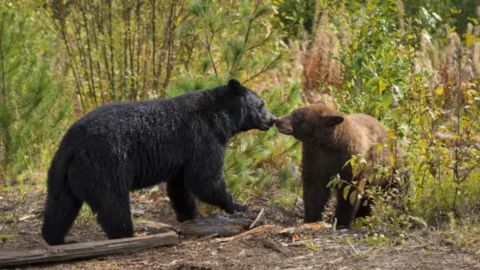
- Grizzly/Brown Bear: If attacked, playing dead can work because they are often attacking to neutralize a threat to their cubs.
- Black Bear: Do NOT play dead. Black bears are smaller and if they attack, it is often predatory. You should fight back with everything you have.
7. The Diet of a Bear: It’s Not Just Honey
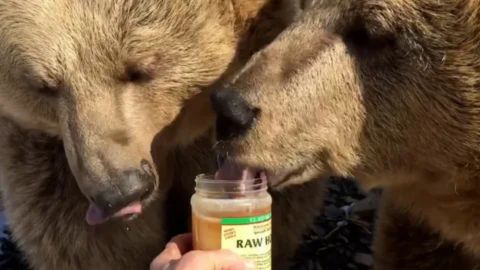
While cartoons suggest bears live on honey, the reality is much more diverse. Most bears are omnivores.
- Opportunistic Eaters: A Black Bear’s diet is roughly 85% vegetation (berries, nuts, roots, grasses). They only eat meat when it is easy to catch (like fish or carrion).
- The Salmon Run: Brown bears in Alaska rely heavily on the salmon run. They only eat the skin, brain, and eggs of the fish—the fattiest parts—and discard the rest to maximize calorie intake for winter.
- Moths: In the Rocky Mountains, Grizzly bears climb to high elevations to eat Army Cutworm Moths. A bear can eat up to 40,000 moths in a single day!
FAQs
Here are the answers to the most common questions people ask regarding bear interesting facts.
Q: Which bear is the strongest? A: The Polar Bear is generally considered the strongest due to its massive size and ability to kill seals with a single blow. However, the Grizzly Bear has a slightly higher bite force relative to skull size.
Q: Are bears related to dogs? A: Distantly, yes. Bears and dogs belong to the order Carnivora and share a common ancestor from about 50 million years ago. They are part of the suborder Caniformia (dog-like carnivores).
Q: Can a human outrun a bear? A: Absolutely not. The fastest human tops out at roughly 27 mph. A bear can sustain 30-35 mph. Furthermore, bears can run up trees and swim fast. Your best defense is bear spray and noise, not speed.
Final Thoughts about Bear Interesting Facts
From the microscopic size of a newborn cub to the earth-shaking power of a full-grown Grizzly, these bear interesting facts prove that Ursidae are some of the most complex animals on the planet. They are intelligent, emotional, and physiologically unique creatures that play a vital role in our ecosystems.
Hopefully, this guide has given you a newfound respect for these giants of the wild.
Do you have a favorite bear fact we missed? Let us know in the comments below!

Curious by nature, storyteller by choice. I run Interesting Facts to bring you mind-blowing stories, hidden truths, and fascinating insights from around the globe. If it makes you say “Wow, I never knew that!”—my job is done.
Laiba Hanif is a professional fact-finder and the writer behind “Interesting Facts.” Fueled by a degree in Anthropology and over five years of experience unearthing hidden truths, she specializes in digging up the most bizarre, fascinating, and mind-bending tidbits the world has to offer. She’s here to prove that reality is stranger—and more amazing—than fiction.