November, the eleventh month of the year, sits at the crossroads between autumn’s fiery finale and winter’s quiet arrival, a month filled with symbolism, shifting weather, traditions, celebrations, and historical milestones.
Although sometimes overshadowed by the excitement of December, November carries its own unique identity—rooted in ancient customs, astronomical transitions, and cultural significance.
November: A Month of Transition/Quick Facts About November
November is a unique time of year. Sitting between the warmth of early fall and the icy touch of winter, it’s full of color, cultural meaning, and natural wonder. Many people associate November with gratitude, gathering, shifting temperatures, and the feeling that the year is slowly winding down.
| Category | Information |
|---|---|
| Name Origin | From Latin novem meaning “nine” |
| Month Number | 11th month of the year |
| Season (Northern Hemisphere) | Last month of autumn |
| Zodiac Signs | Scorpio (Oct 23–Nov 21) / Sagittarius (Nov 22–Dec 21) |
| Birthstones | Topaz, Citrine |
| Birth Flower | Chrysanthemum |
| Major Events/Holidays | Thanksgiving (U.S.), Veterans/Remembrance Day (Nov 11), Bonfire Night (UK), Día de los Muertos |
| Meteor Shower | Leonids |
| Awareness Month | Movember (men’s health) |
| Common Themes | Gratitude, reflection, colder weather, end-of-harvest |
15 Interesting Facts About November
Here are 15 interesting facts about November; you’ll see just how rich this month truly is.
1. November was originally the ninth month
In the ancient Roman calendar, November was the ninth month of the year. Its name comes from the Latin ”novem.” When January and February were added around 700 BCE, November was pushed to the eleventh position, but its name remained unchanged. Many Roman religious festivals still aligned with its original seasonal purpose.
November comes from the Latin word novem, meaning “nine.”
2. November was once considered the month of peace
In medieval Europe, November was traditionally a time to settle disputes before winter made travel difficult. Many communities held tribunals or gatherings specifically for resolving conflicts, leading some cultures to refer to November as the “month of peace.”
3. Daylight changes dramatically
In many countries, November marks the end of Daylight Saving Time. This causes evenings to become noticeably darker earlier, symbolizing the deepening progression toward winter. For some, it brings cozy nights; for others, it marks the challenge of adjusting to shorter days.
4. Thanksgiving is November’s signature celebration
Thanksgiving, observed on the fourth Thursday of November in the United States, began as a harvest celebration. It marks gratitude, family gatherings, and traditions such as parades and football. For many Americans, November is inseparable from Thanksgiving.
Did You Know??? November 11 marks the end of World War I and is honored worldwide as Veterans Day or Remembrance Day.
5. The Leonid meteor shower peaks in November
Every November, Earth passes through debris left by the comet Tempel–Tuttle, resulting in the Leonid meteor shower. This celestial display is known for its speed and occasional meteor “storms.” The Leonids are among astronomy enthusiasts’ favorite annual events.
6. November is full of literary significance
November is also known for National Novel Writing Month (NaNoWriMo), an annual challenge where participants attempt to write a 50,000-word novel in 30 days. Thousands of authors, amateur and professional alike, participate each year, making November a global celebration of creativity and storytelling.
7. Movember brings awareness to men’s health
The Movember movement encourages men to grow mustaches throughout the month to raise awareness for prostate cancer, testicular cancer, mental health, and suicide prevention. What began in Australia in 2003 has grown into a worldwide campaign.
Bonus Facts About November: UNESCO recognizes World Philosophy Day and World Science Day during November.
8. Bonfire Night is celebrated in November in the UK
On November 5, the United Kingdom celebrates Guy Fawkes Night, also called Bonfire Night. This tradition commemorates the failed Gunpowder Plot of 1605. Fireworks, bonfires, and effigies of Guy Fawkes remain part of the celebration today.
9. Many cultures honor the dead in early November
November is strongly associated with remembrance:
- Día de los Muertos (Day of the Dead) is celebrated in Mexico on November 1–2
- All Saints’ Day (November 1) and All Souls’ Day (November 2) are observed in the Christian tradition
These celebrations reflect November’s long-standing ties to memory, ancestry, and honoring loved ones.
10. November is a major month for elections
In the United States, most general elections are held on the first Tuesday after the first Monday in November. The timing was established in the 19th century to accommodate farmers’ schedules and avoid religious holidays. Today, it remains a cornerstone of American civic life.
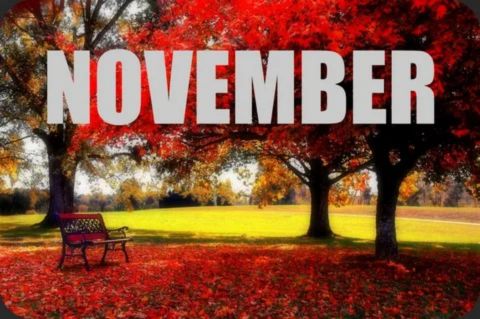
11. November is one of the cloudiest months
In many regions—especially parts of Europe and North America—November ranks among the cloudiest months of the year. Shorter days, more frequent rain, and lower sun angles contribute to a muted, gray atmosphere that many people instinctively associate with the month.
12. November has a reputation for being contemplative
Because it lies between the colorful joy of early fall and the festive energy of December, November often evokes introspection. Many writers and poets describe November as a month of reflection, gratitude, and preparation. Its quiet beauty, subdued colors, and slower pace invite an inward turn—making it a month both serene and meaningful.
13. The Year Without a November:
In 1752, when Great Britain and its colonies adopted the Gregorian calendar, they were forced to skip 11 days in September (the 3rd through the 13th). But the year itself never lost November, though the dates shifted.
14. The Month Shakespeare Forgot
Despite being a prolific writer who referenced all seasons and many months in his plays and sonnets, William Shakespeare never mentioned the month of November in any of his known works.
15. A Dog in Space
The first animal to orbit the Earth, a Soviet stray dog named Laika, was launched into space on November 3, 1957, aboard the Sputnik 2. This monumental moment in the Space Race occurred in November.
Historical Facts About November
| Name | Birthdate | Nationality | Known For |
|---|---|---|---|
| Marie Curie | November 7, 1867 | Polish–French | Pioneer in radioactivity; first woman to win a Nobel Prize |
| Leonardo DiCaprio | November 11, 1974 | American | Award-winning actor and environmental activist |
| Winston Churchill | November 30, 1874 | British | Prime Minister of the UK during WWII; Nobel Prize in Literature |
| Fyodor Dostoevsky | November 11, 1821 | Russian | Novelist; author of Crime and Punishment |
| Mark Twain | November 30, 1835 | American | Celebrated author of The Adventures of Tom Sawyer |
| Indira Gandhi | November 19, 1917 | Indian | First and only female Prime Minister of India |
| Bruce Lee | November 27, 1940 | Chinese-American | Martial artist, philosopher, and actor |
| Martin Luther | November 10, 1483 | German | Leader of the Protestant Reformation |
| Claude Monet | November 14, 1840 | French | Founder of the Impressionist art movement |
| Georgia O’Keeffe | November 15, 1887 | American | Influential modernist artist |
FAQs
1. What is special about November weather?
It marks the biggest seasonal shift toward winter.
2. Which holidays occur in November?
Thanksgiving, Veterans Day, Guy Fawkes Night, and many cultural festivals.
3. Is November a popular month for travel?
Yes—especially for holiday visits and early winter getaways.
4. What are November’s birthstones?
Topaz and citrine.
5. Why is November important historically?
It marks major historic events like the end of World War I.
Discover More
- 10 Intriguing Facts About Tongue You Never Know
- 13 Interesting Facts About Ice Cream That’ll Melt Your Mind
15 Fascinating Facts About Cardinals That You’ll Love - 15 Interesting Facts About Blueberries That You’ll Love

Curious by nature, storyteller by choice. I run Interesting Facts to bring you mind-blowing stories, hidden truths, and fascinating insights from around the globe. If it makes you say “Wow, I never knew that!”—my job is done.
Laiba Hanif is a professional fact-finder and the writer behind “Interesting Facts.” Fueled by a degree in Anthropology and over five years of experience unearthing hidden truths, she specializes in digging up the most bizarre, fascinating, and mind-bending tidbits the world has to offer. She’s here to prove that reality is stranger—and more amazing—than fiction.