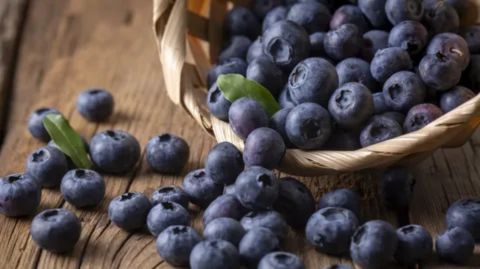
The blueberry is not just a tasty topping for your yogurt; it’s a pint-sized powerhouse, small, round, and often ending up in your smoothie bowl or muffin—but blueberries are far more fascinating than they appear. Behind their deep indigo hue lies a history of wild adventures, superfood science, and even cosmic fame. Ready to fall in love with this little blue gem?
15 Amazing Facts About Blueberries
Here are 15 interesting facts about blueberries that’ll make you see them in a whole new light.
1. Blueberries Are One of the Only Naturally Blue Foods
No, your candy doesn’t count. Blueberries are among the very few naturally blue foods found in nature. Their color comes from anthocyanin, a powerful antioxidant pigment that gives them their distinctive blue-purple shade—and helps protect your body from oxidative stress.
The world’s largest blueberry weighed nearly half a pound—a berry the size of your palm!
2. They Were Once Called “Star Berries” by Native Americans
Before supermarkets and smoothies, Native American tribes called them “star berries” because of the five-pointed star pattern on the blossom end. They used blueberries for food, medicine, and even dye. Talk about ancient superfood status!

3. They Freeze Faster Than Water
Blueberries have a remarkably low freezing point due to their composition. In commercial flash-freezing processes, it takes only about four minutes for a blueberry to freeze solid. This rapid freezing process is essential for preserving their texture and nutritional integrity, allowing us to enjoy ‘summer’s flavor’ year-round.
4. NASA Sent Blueberries to Space
Astronauts aboard the International Space Station have enjoyed blueberries as part of their diet. Why? Because they’re lightweight, nutrient-dense, and don’t need to be cooked. A perfect cosmic snack!
5. They Can Make You Smarter (Really!)
Blueberries are known as brain berries for a reason. Research shows that regular consumption may boost memory and cognitive function. The antioxidants help improve brain communication and protect against age-related decline. Your morning oatmeal just got a PhD.
The more intense the blue, the more powerful the antioxidants inside.
Nutritional Facts about Blueberries (per 100 grams)
| Nutrient/Property | Amount / Value | Key Benefit/Note |
|---|---|---|
| Calories | 57 kcal | Low in calories, great for weight management |
| Carbohydrates | 14.5 g | Natural source of energy |
| Dietary Fiber | 2.4 g | Supports digestion and gut health |
| Sugars (Natural) | 10 g | Provides natural sweetness |
| Protein | 0.7 g | Small but useful plant-based protein |
| Vitamin C | 9.7 mg (16% DV) | Boosts immune system and skin health |
| Vitamin K | 19.3 µg (24% DV) | Supports bone strength and blood clotting |
| Manganese | 0.3 mg (17% DV) | Essential for metabolism and bone formation |
| Antioxidant Level (ORAC) | 9,621 µmol TE | One of the highest among fruits |
| Water Content | 84% | Keeps you hydrated |
| pH Level | 3.1 – 3.5 | Slightly acidic; contributes to their tangy taste |
6. Blueberries Are a North American Treasure
While they’re grown worldwide today, blueberries are native to North America. Indigenous people were the first to harvest wild blueberries, and commercial cultivation began only about 100 years ago. Now, the U.S. and Canada still produce the majority of the world’s supply.
7. They’ve Been to the White House
No joke! Blueberries were a favorite of U.S. presidents, and blueberry pie was even served at state dinners. In fact, during World War II, they were promoted as a patriotic food because of their nutritional value and American roots.

8. Blueberries Can Glow (Kind Of)
Under UV light, blueberries can give off a faint fluorescent glow due to certain natural compounds in their skin. It’s not exactly a superpower, but it’s definitely cool science!
9. They’re Technically Not Blue Inside
Cut one open, and you’ll notice—it’s not blue! The inside of a blueberry is greenish or pale, showing that the rich blue hue is only skin-deep. The real magic lies in the anthocyanins concentrated in the outer layer.
10. A Blueberry Bush Can Live for Decades
A well-tended blueberry bush can live and produce fruit for up to 50 years! That’s half a century of sweet, tangy goodness from the same plant. Talk about aging gracefully.
Blueberries are technically berries, but strawberries aren’t—surprise!
11. Early American Colonists Used Them to Make… Gray Paint
Talk about a versatile ingredient! Early American colonists found a novel, non-culinary use for blueberries: they would boil the crushed berries in milk to create a durable, gray paint. This was a cheap and accessible pigment for decorating their homes, proving the blueberry’s usefulness extended far beyond the pantry.
12. Blueberries Were Used in War
During World War II, British pilots reportedly ate bilberry jam (a cousin of the blueberry) to improve night vision. While science hasn’t fully confirmed the effect, it added to the berry’s legend as a “vision booster.”

13. They Can Tell You When They’re Ripe
Blueberries don’t ripen after being picked—so if you spot green or red ones, leave them on the bush a little longer. When they turn deep blue and fall off easily, that’s nature’s way of saying: “Eat me now!”
14. Maine Is the Blueberry Capital of the World
The U.S. state of Maine produces more wild blueberries than anywhere else on Earth. Its cool climate and sandy soil make the perfect environment for these tiny powerhouses. Every summer, locals celebrate with blueberry festivals, pies, and—of course—blue-stained fingers.
15. Blueberries Have a Festival (and Even a Mascot!)
Yes, they’re that famous. From Maine to Michigan, annual blueberry festivals celebrate the harvest with parades, cooking contests, and even blueberry mascots. There’s a “Blueberry Queen,” a blueberry pancake breakfast, and sometimes even blueberry wine. Sweet celebration, right?
Bonus Fun Fact: Blueberries Can Sing
Okay, not literally—but toss a handful into a metal bowl, and you’ll hear a soft ping. That’s the sound of ripe berries bouncing off each other—like nature’s little percussion section. It’s a small moment of joy for berry lovers everywhere.
FAQs
1. Are blueberries good for weight loss?
Absolutely! They’re low in calories and high in fiber, helping you feel full longer.
2. Do frozen blueberries lose nutrients?
Not really. Freezing preserves most of their antioxidants and vitamins—so go ahead and keep that freezer stocked!
3. How many blueberries should I eat per day?
About a cup a day is a healthy serving that offers plenty of antioxidants and nutrients.
4. Are blueberries good for your heart?
Yes! Studies show they can help reduce blood pressure and improve cholesterol levels.
5. Can you grow blueberries at home?
Definitely! All you need is acidic soil, good sunlight, and some patience—you’ll be rewarded for years.
6. What’s the difference between wild and cultivated blueberries?
Wild ones are smaller and more flavorful, while cultivated ones are plumper and easier to farm.

Curious by nature, storyteller by choice. I run Interesting Facts to bring you mind-blowing stories, hidden truths, and fascinating insights from around the globe. If it makes you say “Wow, I never knew that!”—my job is done.
Laiba Hanif is a professional fact-finder and the writer behind “Interesting Facts.” Fueled by a degree in Anthropology and over five years of experience unearthing hidden truths, she specializes in digging up the most bizarre, fascinating, and mind-bending tidbits the world has to offer. She’s here to prove that reality is stranger—and more amazing—than fiction.