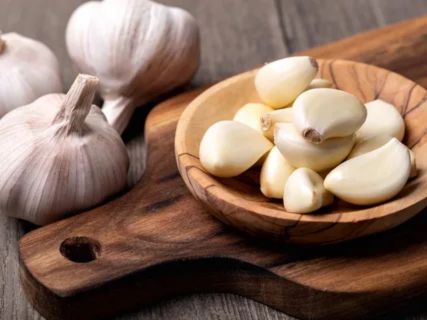
Garlic is much more than an everyday ingredient used in cooking. From ancient medicine and folklore to modern health science, these interesting facts about garlic prove how powerful and fascinating this small bulb truly is. Whether you love it for its flavor, health benefits, or history, garlic continues to earn its reputation as one of nature’s most remarkable foods.
Quick Facts About Garlic
| Category | Garlic Data |
|---|---|
| Scientific Name | Allium sativum |
| Plant Family | Amaryllidaceae (Onion family) |
| Origin | Central Asia |
| Common Use | Cooking, medicine, seasoning |
| Main Active Compound | Allicin |
| Taste Profile | Strong, pungent |
| Popular Forms | Fresh cloves, powder, paste |
| Health Benefits | Boosts immunity, heart health |
| Storage Method | Cool, dry, well-ventilated place |
| Global Popularity | Used worldwide |
10 Interesting Facts About Garlic: Surprising, Powerful, and Truly Amazing
1. The Fuel of the Pyramids
In Ancient Egypt, garlic was considered so vital for strength and endurance that it was provided in massive quantities to the laborers building the Giza pyramids.
Perhaps most interestingly, history’s first recorded labor strike was triggered by garlic. When the garlic rations for the Pharaoh’s workers were cut, they laid down their tools and refused to work until their supply was restored. To the Egyptians, garlic wasn’t a luxury; it was a performance-enhancing drug.
2. The “10-Minute Rule”: A Chemical Explosion
Garlic does not actually contain its most famous health-promoting compound, allicin, while it is whole. Instead, it contains a precursor called alliin and an enzyme called alliinase. These two are kept in separate compartments within the garlic cells.
When you crush, chop, or mince garlic, you break these cell walls, allowing the enzyme and the precursor to meet. This creates a chemical reaction that produces allicin—the compound responsible for the pungent smell and the antibacterial properties.
Pro-Tip: To get the maximum health benefits, use the “Crush and Wait” method. Let your chopped garlic sit on the cutting board for 10 minutes before heating it. This allows the allicin levels to peak. If you throw it straight into a hot pan, the heat deactivates the enzyme before the allicin can fully form.
3. The Original Olympic “Steroid”
Long before modern sports science, the athletes of Ancient Greece used garlic as a performance enhancer. It was administered to competitors before the Olympic Games to increase their stamina and cardiovascular capacity. It was also given to Greek soldiers before they went into battle, making it one of the earliest documented “performance-enhancing drugs” in human history.
4. Garlic and Superstitions
One of the most fun and interesting facts about garlic is its connection to vampires. In European folklore, people believed garlic could protect against vampires, witches, and evil spirits. That’s why garlic is often shown hanging on doors in old stories and movies.
5. “Russian Penicillin”
During both World War I and World War II, when antibiotics were scarce, garlic was used as an antiseptic to prevent gangrene. It was so effective and widely used by the Red Army that it became known as “Russian Penicillin.”
In 1858, Louis Pasteur (the father of pasteurization) officially proved that garlic could kill bacteria. In laboratory settings, raw garlic juice has been shown to be as effective as low-concentration penicillin at inhibiting the growth of certain pathogens.
6. Alliumphobia: The Fear of Garlic
While most people love it, some suffer from a genuine phobia known as Alliumphobia. This isn’t just a dislike of the taste; it is a clinical fear that can cause panic attacks or severe anxiety at the mere sight or smell of garlic. Considering garlic is a staple in almost every global cuisine, living with Alliumphobia is a significant culinary challenge!
Did You Know?? In Ancient Greece, brides didn’t carry bouquets of roses or lilies. Instead, they carried bouquets of pungent herbs and garlic to ward off evil spirits and bad luck on their wedding day.
7. Chicago is Literally Named After Garlic
If you’ve ever visited the “Windy City,” you were actually standing in the “Garlic City.” The name Chicago is derived from the word Chicagaoua, a term used by the local indigenous Miami and Potawatomi people.
It translated to “wild garlic” or “skunk cabbage,” which grew in abundance along the riverbanks where the city now stands. Before it was a metropolis of skyscrapers, the entire area was famous for the pungent, swampy scent of wild garlic.
8. The Legend of the Devil’s Footprints
While many cultures view garlic as a divine gift, Islamic and Middle Eastern folklore has a much darker (and stranger) legend about its origin.
According to one myth, when Satan was cast out of the Garden of Eden, garlic and onions sprang up from his very first steps on Earth. Specifically, it is said that garlic grew from the spot where his left foot touched the ground, and onions grew from where his right foot landed. This is one reason why, in some religious traditions, garlic is avoided before entering a place of worship—not because it’s “evil,” but because the scent is considered too distracting for holy spaces.
9. It Was Once Used as Legal Currency
In Ancient Egypt, garlic was so highly valued that it wasn’t just food—it was money. Historical records show that 15 pounds of garlic could be used to purchase a healthy male slave.
Even the wealthy took it to the afterlife; when King Tutankhamun’s tomb was excavated, archaeologists found cloves of garlic scattered throughout the rooms. It wasn’t clear if they were meant to keep the Pharaoh’s breath fresh in the next life or to serve as a form of “ghostly currency” to pay his way through the underworld.
10. Heavy Metal Defense
Garlic is a natural detoxifier. A study on employees at a car battery plant found that garlic was as effective as medical drugs at reducing lead levels in the blood (by 19%) and easing the symptoms of heavy metal poisoning, like headaches and high blood pressure.
FAQs
1. Is garlic a vegetable or a spice?
Garlic is a vegetable, but it is commonly used as a spice.
2. Can eating garlic daily be harmful?
In moderate amounts, garlic is safe and healthy. Too much may cause stomach upset.
3. Why does garlic cause bad breath?
Sulfur compounds released during digestion cause garlic breath.
4. Does cooking garlic remove its benefits?
Cooking reduces some benefits, but garlic remains nutritious.
5. Can garlic help fight infections?
Yes, garlic has natural antibacterial and antiviral properties.

Curious by nature, storyteller by choice. I run Interesting Facts to bring you mind-blowing stories, hidden truths, and fascinating insights from around the globe. If it makes you say “Wow, I never knew that!”—my job is done.
Laiba Hanif is a professional fact-finder and the writer behind “Interesting Facts.” Fueled by a degree in Anthropology and over five years of experience unearthing hidden truths, she specializes in digging up the most bizarre, fascinating, and mind-bending tidbits the world has to offer. She’s here to prove that reality is stranger—and more amazing—than fiction.