Sudan, a land where the Nile flows through deserts and history whispers through ancient ruins, is one of Africa’s most overlooked yet captivating countries. Beyond its political headlines and vast landscapes, Sudan holds stories of human resilience, lost civilizations, and surprising natural wonders.
Did You Know Sudan?? Quick Facts About Sudan
Sudan, a land steeped in ancient history and vibrant culture, often surprises visitors with its unique and captivating characteristics. Here are quick facts about Sudan.
| Category | Information |
|---|---|
| Country Name | Sudan |
| Population (2025 est.) | ~49 million |
| Currency | Sudanese Pound (SDG) |
| Religion | Islam (majority) |
| Language | Arabic, English |
| Capital City | Khartoum |
15 Fascinating Facts About Sudan
1. Sudan Has More Pyramids Than Egypt
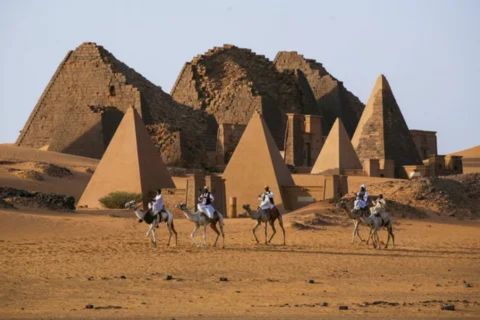
It’s true—Sudan boasts more pyramids than its northern neighbor, Egypt. The ancient Kingdom of Kush built over 200 pyramids in the region of Meroë, now a UNESCO World Heritage Site. These smaller, steep-sided pyramids served as royal tombs and stand as silent reminders of a once-mighty African empire that rivaled Egypt itself.
The name “Sudan” itself comes from the Arabic phrase bilād as-sūdān, meaning “land of the blacks,” a term used by medieval Arab geographers.
2. The Meeting Point of the Two Niles
In the heart of Sudan’s capital, Khartoum, two great rivers unite—the White Nile from Lake Victoria and the Blue Nile from Ethiopia. Their confluence forms the legendary River Nile, the lifeblood of ancient civilizations. Locals call this natural spectacle Al-Mogran, and its view at sunset is nothing short of mesmerizing.

3. Home to One of the World’s Oldest Civilizations
Long before the rise of Egypt’s pharaohs, the Kingdom of Ta-Seti (located in what is now northern Sudan) flourished along the Nile. Dating back over 5,000 years, it is considered one of the world’s earliest known civilizations and the first Nubian kingdom in recorded history.
4. The Forgotten “Black Pharaohs” Once Ruled Egypt
Few know that Sudanese kings once conquered and ruled Egypt. The 25th Dynasty, known as the era of the “Black Pharaohs,” was led by Kushite kings from Nubia who restored Egyptian traditions and built monumental temples. Their reign stretched from modern-day Khartoum all the way to the Mediterranean.
5. Sudan Has an Underwater World in the Desert
In eastern Sudan lies Port Sudan, a coastal city on the Red Sea that’s a diver’s paradise. Beneath its turquoise waters are colorful coral reefs, shipwrecks, and marine life rivaling the Caribbean. It’s one of the world’s least-explored diving destinations, offering pristine underwater scenery for adventurous travelers.
The site of Jebel Sahaba in Sudan is believed by some to be the location of one of the world’s earliest known war cemeteries, dating back around 13,000 years.
6. A Linguistic Mosaic of Over 100 Languages
Sudan’s cultural diversity is reflected in its speech. More than 100 languages and dialects are spoken across the country, belonging to the Afro–Asiatic, Nilo-Saharan, and Niger-Congo families. Arabic and English are official languages, but regional tongues like Nubian, Beja, and Fur thrive in daily life.
7. The Land Where the Sahara Meets the Nile
Sudan offers one of Earth’s most stunning natural contrasts: the endless sands of the Sahara Desert merging with the fertile green banks of the Nile River. This rare meeting of desert and river creates surreal landscapes—golden dunes beside lush palm groves and flowing water.

8. The Mysterious Jebel Barkal—A Sacred Mountain
Rising from the desert near Karima, Jebel Barkal was considered the home of the god Amun by both Egyptians and Kushites. At its base lie ancient temples carved into sandstone cliffs. Archaeologists believe this site was once the spiritual heart of the Nubian kingdom.
9. Sudan Was Once the Largest Country in Africa
Before South Sudan gained independence in 2011, Sudan was the largest nation in Africa—and the tenth largest in the world. Even today, it remains vast, spanning over 1.8 million square kilometers and encompassing deserts, savannas, and tropical forests.
10. Coffee Culture Runs Deep
Sudanese coffee, or “Jabana,” is more than a drink—it’s a ritual. Prepared with ginger and sometimes cardamom, it’s served in small clay pots surrounded by conversation and laughter. In Sudanese homes, offering Jabana is a sign of warmth, friendship, and respect.
The country’s highest point is the Deriba Caldera in the Marrah Mountains, which is a volcanic crater containing two lakes.
11. The Land of 99 Names for Rain
In parts of rural Sudan, rain isn’t just weather—it’s poetry. The people have dozens of names for different kinds of rain, from gentle drizzles to desert downpours. Each word captures a mood, a rhythm, or a season, showing how deeply nature is woven into Sudanese culture.
12. The Great Green Wall
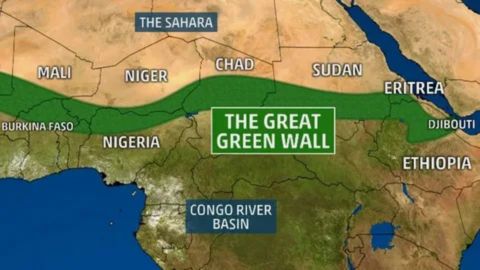
Sudan is one of the nations participating in the ambitious Great Green Wall initiative, a project to combat desertification by planting an 8,000 km belt of trees across the continent.
13. Gum Arabic Capital
Sudan is the world’s largest producer and exporter of Gum Arabic, a natural stabilizer and thickening agent used in everything from soft drinks to medicines and confectionery.
14. Sudanese Fashion Blends Ancient and Modern Grace
The traditional “toob,” worn by Sudanese women, is an elegant wrap of colorful fabric that reflects both modesty and style. Today, Sudanese designers are merging ancient Nubian patterns with modern fashion, creating a bold cultural statement that celebrates identity and beauty.
Sudanese women often wear the graceful, flowing, and richly colored traditional outer garment known as the thawb
15. Sudan’s Desert Once Bloomed with Prehistoric Life
Though now arid, Sudan’s deserts were once lush savannas teeming with wildlife. Prehistoric rock art in the Nubian Desert depicts elephants, giraffes, and crocodiles—proof that Sudan’s landscape was dramatically different thousands of years ago.
Curious by nature, storyteller by choice. I run Interesting Facts to bring you mind-blowing stories, hidden truths, and fascinating insights from around the globe. If it makes you say “Wow, I never knew that!”—my job is done.
Laiba Hanif is a professional fact-finder and the writer behind “Interesting Facts.” Fueled by a degree in Anthropology and over five years of experience unearthing hidden truths, she specializes in digging up the most bizarre, fascinating, and mind-bending tidbits the world has to offer. She’s here to prove that reality is stranger—and more amazing—than fiction.